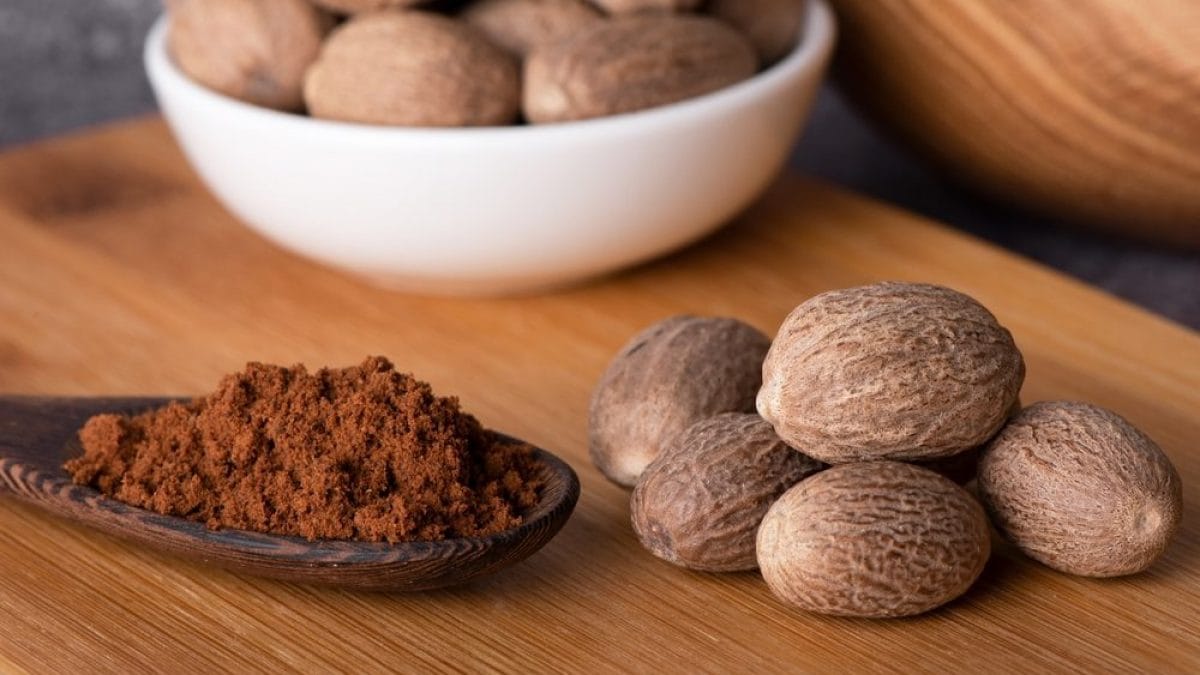
Now we are used to buying it at the grocery store, simply by reaching for the appropriate shelf, between paprika and cinnamon, but in the past it was one of the most precious, rare and expensive spices in the world, which was collected in the only place where it grew, a remote group of islands that are part of the Indonesian archipelago, known as the Moluccas, in particular the Banda Islands.
We are talking about nutmeg, fundamental in béchamel sauce, as well as in potato gratin, two pillars of European gastronomic culture, but which actually comes from Asia and which in the past (particularly in the age of exploration, between the 16th and 17th centuries) was the cause of trade wars between great maritime powers such as Portugal, the British Empire and Holland, determined to gain a monopoly on what were not coincidentally called the "spice islands", so much so that the Dutch, for the island of Run (rich in nutmeg), exchanged the island of Manhattan (where the city of New Amsterdam stood), now the hub of New York, with the English.
It was considered a luxury food, loved by aristocrats, but also a spice used in cosmetics and as a natural remedy, thanks to an ancient tradition that saw it as a protagonist not only as a condiment, but also as a medicine.
What is Nutmeg?
Growing in the Moluccas is Myristica fragrans, a tree belonging to the Myristicaceae family that is now cultivated not only in Indonesia, but is widespread in other subtropical and tropical areas, such as India and the Caribbean. Nutmeg is nothing other than the seed of the fruit (similar to an apricot) of this plant that is dried: the outside of the seed is wrapped in a bright red membrane, which is removed and used to make another spice, mace, also known as "nutmeg flower".
Nutmeg's Properties and Benefits
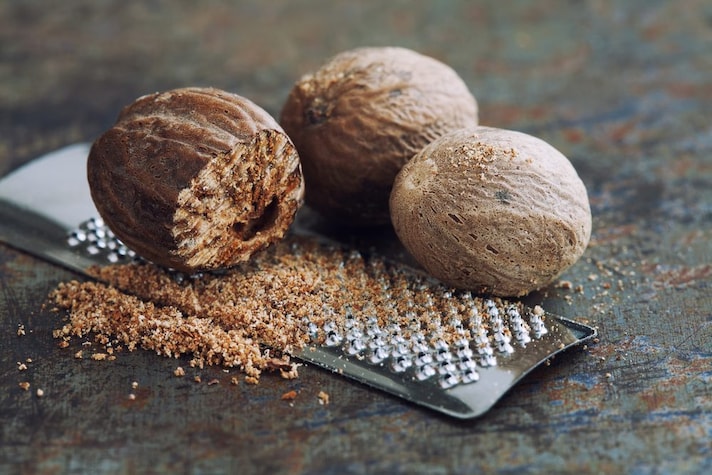
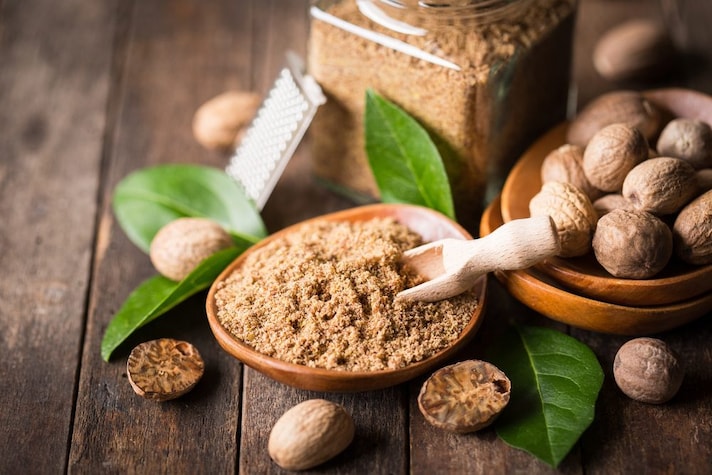
Nutmeg is available commercially in powder form, in sachets or jars, or whole to be grated on the spot using the special mini grater often included in the package: usually, the dose indicated in recipes is limited to half a teaspoon or "a pinch", as the quantities within the recipes are very small, although sufficient to ensure it does not go unnoticed. From a nutritional point of view, in fact, nutmeg is very high in calories (525 kcal per 100 g), composed mainly of carbohydrates (49.29 g) and fats (36 g), predominantly saturated fatty acids. There is, of course, another side to the coin, represented by a good presence of vitamin C, vitamin A, B vitamins, mineral salts (in particular potassium, phosphorus, calcium and magnesium) and antioxidants which make it a valid ally for well-being. In ancient times, for example in Arabic or Ayurvedic medicine, nutmeg was known for its phytotherapeutic properties for treating multiple ailments, such as nausea, vomiting, stomach pain, indigestion, joint pain, breathing difficulties, and libido problems, so much so that it was considered an aphrodisiac. Contemporary scientific studies are exploring its benefits, particularly those related to its characteristic chemical compounds, supporting some of its traditional virtues.
1. Aids Digestion
This is one of the best known and most appreciated qualities, as it can be beneficial as a carminative, to reduce intestinal swelling after meals and to alleviate meteorism and flatulence.
2. Antioxidant Action
Nutmeg contains carotenoids, vitamin A, and manganese. These substances help fight free radicals, which are responsible for cellular oxidative stress.
3. Friend of The Teeth
This spice is known to have anti-inflammatory, antifungal and antibacterial effects that act especially on the oral cavity, promoting overall hygiene and dental health.
4. Soothing Effect
The aromatic oils found in nutmeg when used externally can relieve muscle and joint pain such as rheumatism.
5. Natural Sedative
Essential oils are also said to have the ability to interact with the central nervous system, facilitating night-time sleep and general relaxation, calming states of anxiety and stress.
Nutmeg's Contraindications
The pinch of nutmeg used as a flavoring is not at all dangerous, making it a largely harmless spice if the maximum dosage of 1.5 grams is respected. However, it becomes highly toxic when the quantities exceed 10-20 grams, causing serious side effects. Excessive intake of the spice is associated with damage to the liver, heart, and nervous system due to myristicin and elemicin, two typical aromatic compounds in nutmeg that act like a true drug, causing hallucinations, palpitations, anxiety, mental confusion, and generating stimulating effects on the uterus. This poses risks to pregnant women, who are advised to use it only as a flavoring and not for therapeutic purposes.
How to Use It in Cooking
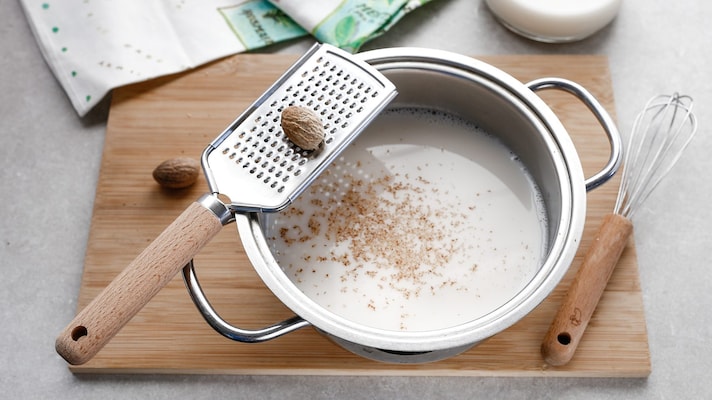
A sprinkling of it is enough to give recipes a warm and elegant aroma, with slightly pungent, unmistakable notes. In fact, we know how béchamel sauce can be bland without this spicy touch if we forget to add nutmeg. But that's not all: the powdered spice adds a unique flavor to many preparations, especially when it comes to enriching doughs or mixtures, whether savory or sweet, or those that require a mix of flavors.
For example, it goes perfectly with soft vegetable-based preparations together with butter, milk, fresh cheeses (such as ricotta), eggs – which represent the fatty part – going particularly well with potatoes (a pinch can be added to mashed potatoes, casseroles, soufflés), spinach, just think of the evergreen filling made by mixing ricotta, spinach and nutmeg, with which to bring to the table cannelloni, crêpes, ravioli and savory pies, or pumpkin, combined with its sweetness, to be tried to prepare gnocchi and flans.
A great classic, then, is to flavor tortellini filling with nutmeg, as also suggested by the great gastronome Pellegrino Artusi: it is suitable for meat dishes (especially pork and game), enriching minced meats and sausage for ragù, or stews.
Without forgetting that it is an ingredient that traditionally appears in spiced breads and biscuits that come from Northern Europe, such as the famous Christmas gingerbread, finding ideal partners in other spices such as ginger, cinnamon and cloves.

