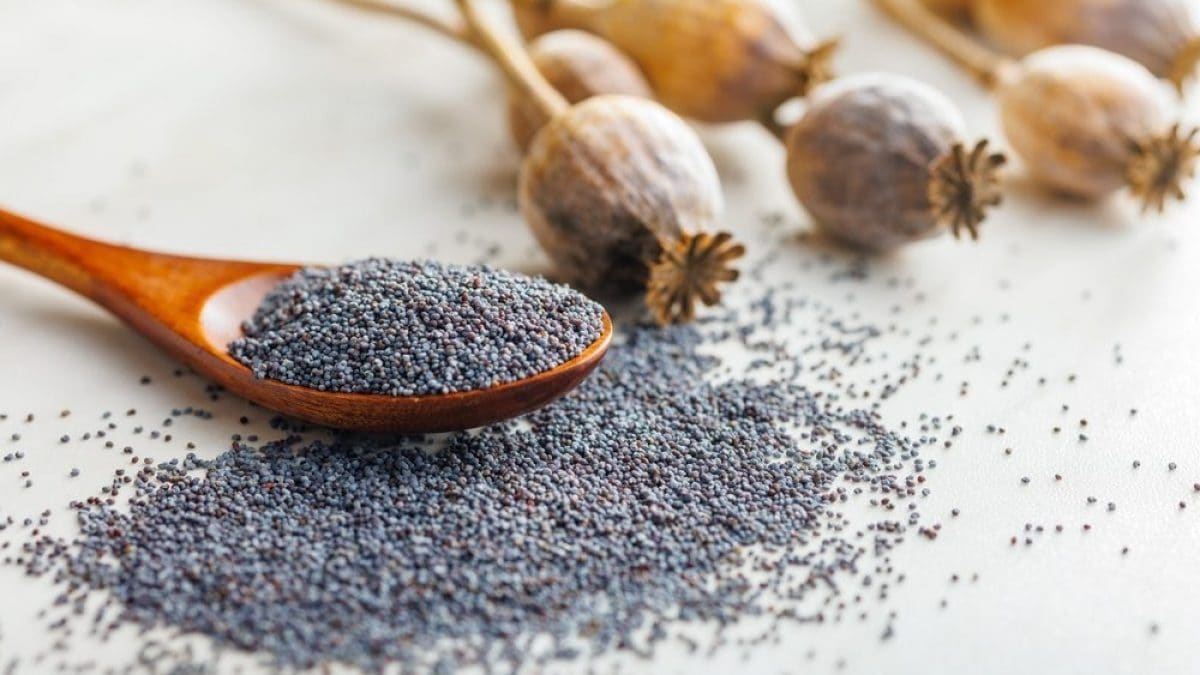
Don't be fooled by their size: poppy seeds are tiny, but their health benefits are immense. They are small, bluish-black or whitish oily seeds obtained from the ripe capsules of the Papaver somniferum, Papaver nigrum, and Papaver setigerum plants. Versatile and tasty, they are particularly popular in the kitchen and are commonly used to enrich bread, desserts, salads, and yogurt.
Beyond their flavor, however, poppy seeds are also healthy, a veritable treasure trove of nutrients beneficial to the body's well-being, with positive effects on the heart, bones, and intestines. Many cultures, in fact, use poppy seeds in natural remedies: they are primarily used in Chinese medicine and are part of the medical tradition of many peoples of Asia Minor, but their properties appear to have been known since ancient times. The Romans used them as a food but also because they were considered powerful aphrodisiacs, while the Gauls exploited their many essential oils and pressed them to obtain a healing oil.
Including poppy seeds in your diet can be a valuable way to support your health, but you should be aware of some of their contraindications. The seeds themselves don't contain opiates, but they may contain trace amounts of alkaloids from the plant and could alter your blood tests, despite being perfectly safe for consumption. What are they good for, what contraindications do they have, and how can you incorporate them healthily into your diet? Here's everything you need to know about poppy seeds.
Poppy Seeds' Properties and Benefits
Nutritionally, poppy seeds are rich in unsaturated fatty acids, particularly omega-6 and omega-9 (omega-3 is also present, but in smaller quantities), and contain a good amount of protein and fiber. They contain a good amount of minerals, including calcium, iron, and manganese, and are also rich in vitamins, especially vitamin B, which supports metabolism, and vitamin E, a powerful antioxidant useful for combating cellular aging and oxidative stress. Given their richness, poppy seeds can have various health benefits on the body: here's how they can support it if consumed regularly and in the right quantities.
1. They Promote the Control of Cholesterol and The Cardiovascular System
Poppy seeds are very rich in polyunsaturated fats, particularly omega-6 and small amounts of omega-3: these are good fats that help the body keep LDL ("bad") cholesterol low. This also benefits the cardiovascular system, helping to prevent coronary heart disease, and also aids the proper functioning of the circulatory system. Poppy seeds are also rich in magnesium and potassium, both very important for regulating blood pressure and improving blood flow.
2. They Support Bone Health
Poppy seeds are an excellent source of calcium (containing approximately 1,400 milligrams per 100 grams), making them a valuable ally in maintaining healthy teeth and bones, especially during periods of depletion. They also contain high levels of phosphorus and magnesium, which are essential for the formation and maintenance of bone tissue, preventing bone loss, and for optimizing calcium absorption.

3. They Improve Digestion and Help Intestinal Activity
Their high fiber content (almost 20 grams per 100 grams) makes poppy seeds excellent for promoting good digestion and regulating bowel function, countering constipation. The seeds' soluble fiber, in fact, increases stool volume and facilitates transit, as well as acting as a prebiotic, nourishing the intestinal flora and producing short-chain fatty acids that nourish intestinal cells.
4. They Have Antioxidant Properties
The combination of "good" fats, minerals like manganese and zinc, and vitamin E gives poppy seeds remarkable antioxidant properties, useful for counteracting the action of free radicals and cellular aging. This is a very important function for our body, as this phenomenon is responsible for the premature death of cells and the loss of their functionality, which promotes the onset of various types of diseases, including degenerative ones.
5. They Provide Energy and Satiety
Rich in healthy fats and plant-based proteins, poppy seeds are a true natural energy booster, not only providing strength but also increasing the feeling of satiety, primarily due to their fiber and healthy fat content. Added to yogurt, smoothies, salads, or bread, they're ideal for those looking to control their appetite and keep hunger pangs at bay.
6. They Promote Sleep
When used to prepare a hot infusion to drink before bed, poppy seeds can promote sleep. They are traditionally associated with relaxing effects, capable of reducing anxiety and stress thanks to their high magnesium and calcium content and the synergistic action of their nutrients on the nervous system. To prepare the drink, steep two teaspoons of seeds in boiling water for about 5-10 minutes, strain the infusion, and drink it before bed.

Poppy Seeds' Contraindications
Despite their many benefits, poppy seeds do have some contraindications that are worth considering. While considered a safe food, it's best not to overdo it: the recommended amount is one or two teaspoons a day (about 8-9 grams), as overconsumption could lead to altered blood tests due to alkaloid contamination. In fact, ingesting too many seeds could alter a drug test by testing positive for opiates.
Why? The seeds are extracted from various poppy varieties, including Papaver somniferum, the plant from which opium is extracted. The seeds themselves do not contain opiates, but they could be contaminated during the harvest. This is because they are collected when the flower loses its petals, leaving only an oblong capsule containing chambers filled with the plant's seeds. Before the capsule is ripe, farmers make a superficial incision to collect them, but this also releases the milky sap containing the alkaloids. It is this substance that oxidizes upon contact with air, turning into a dark, gummy resin, which is collected, dried, and transformed into opium. During this phase, some of the sap may end up on the seeds, contaminating them during harvest.
The amount of naturally occurring opiate compounds found on poppy seeds can vary depending on the seed variety, growing conditions, and harvesting methods. In recent years, researchers and regulators have noted that some poppy seeds may carry higher levels of these compounds due to processing practices that allow residues from the poppy pod to remain on the seed surface. For this reason, the U.S. Food and Drug Administration (FDA) has issued guidance to industry aimed at reducing opiate contamination in poppy seed products. While poppy seeds are generally considered safe when consumed in normal culinary amounts, eating very large quantities may increase the risk of detectable opiate levels in the body. As a result, individuals subject to workplace or legal drug testing should be aware that consuming poppy seed-containing foods may, in rare cases, affect test results.
Moderate consumption of poppy seeds is also recommended because they are high in calories, which is why it's best to avoid them altogether if you're following a low-calorie diet or need to carefully monitor your energy intake. Allergies to poppy seeds are quite rare, but be careful if you already suffer from allergies to hazelnuts, rye, wheat, or kiwi, as you may develop an intolerance or allergy to these seeds as well.

How to Use Poppy Seeds in The Kitchen
Instantly recognizable by their bluish-black color and intense, aromatic flavor, poppy seeds are among the smallest edible seeds in the world. Their flavor is reminiscent of hazelnuts, but stronger and sweeter. These characteristics have made them popular in the kitchen, where they are widely used to add an elegant touch of color and flavor to snacks, afternoon snacks, and light meals. Paired with yogurt, they create a perfect harmony of contrasting flavors and textures, but they can also be added to the batter (or sprinkled on top) of desserts such as muffins, loaf cakes, ring cakes, and cakes, especially yogurt-based ones. The neutral flavor of poppy seeds also makes them excellent for use in savory recipes: you can use them to enrich bread, crackers, bagels, and homemade breadsticks, but also to flavor mixed salads and even pasta dishes, especially those with vegetables.
;Resize,width=767;)
