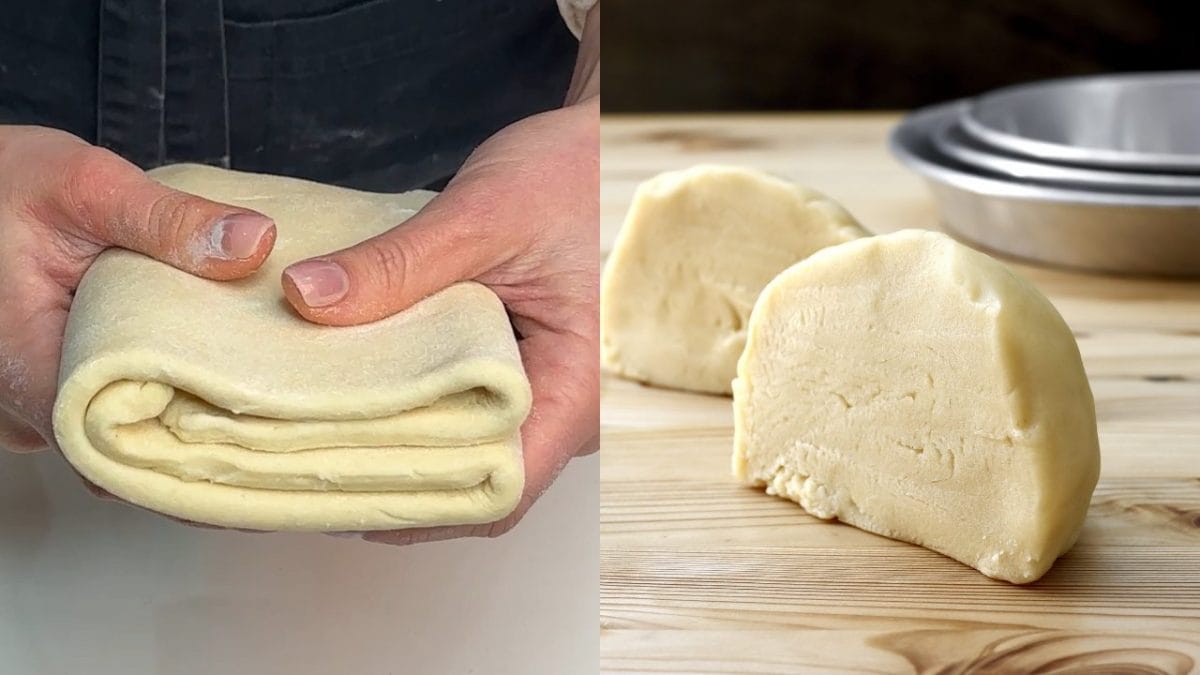
They are two of the most commonly used preparations in the kitchen, usually found ready-made at the supermarket so they can be used at the last minute but which you can easily prepare at home: puff pastry and shortcrust pastry are two of those recipes you need to learn how to handle because their application in savory and sweet dishes is truly useful in the kitchen. The two preparations are often confused and used interchangeably, and in fact they have several things in common besides versatility: they are two doughs made with the same ingredients —flour, butter, water, and salt—they are of French origin, and they have a neutral flavor. However, this doesn't mean you can use one or the other without criteria, because puff pastry and shortcrust pastry also have many differences, particularly in terms of ingredient proportions and their difficulty in preparation: for example, the puff pastry recipe calls for more butter than the shortcrust pastry and requires greater skill in the kitchen, as it is quite complex. Here are all the tips to better understand the characteristics of each of the two recipes, their differences, and how to use them in the kitchen.
Puff Pastry Characteristics
Puff pastry is a culinary and pastry preparation made from flour, water, and butter. Thanks to its neutral flavor, it is commonly used in both sweet and savory dishes. It is characterized by so-called "puff pastry layers," a combination of layers made from a lean dough (generally called pâté) with cold water, diced butter, flour, and salt, and a fatty layer, which can be a block of pure butter rolled out with a rolling pin or a mix of butter and flour, depending on whether you prefer a crumbly or crispier pastry, set in the center. This layered composition makes puff pastry time-consuming and complex to prepare, in addition to the lengthy refrigeration time of at least 6 hours required before use.
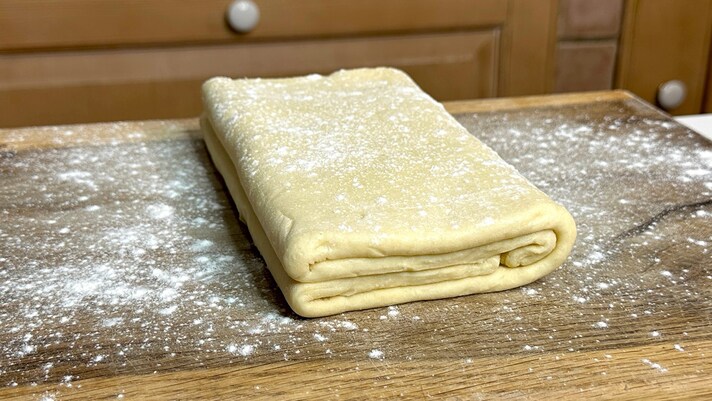
Although it has become a signature recipe of Western cuisine and was already known by the Greeks and Romans (who, however, used olive oil), the variant widespread today was actually introduced by French pastry chefs between the 17th and 18th centuries: tradition holds that the first to write the recipe for pâte feuilletée was François Pierre de La Varenne, a great revolutionizer of French gastronomy, in 1651. There isn't just one type of puff pastry, but several variations that aim to speed up and simplify the preparation process. Thus, there are various recipes for quick, clever, or "half-puff" puff pastry, such as the one invented by Iginio Massari, which involves mixing all the ingredients in a mixer with the addition of white wine, or for "inverted" puff pastry, so called because the pastry becomes the central part of the dough, enclosed between two layers of butter, resulting in a puff pastry with greater volume.
Shortcrust Pastry Characteristics
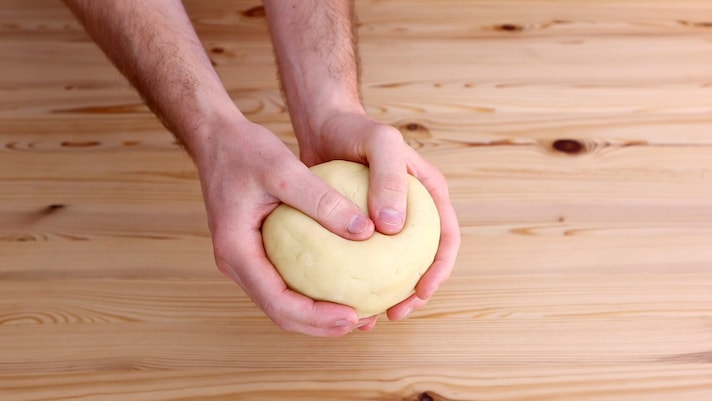
Shortcrust pastry is a versatile basic preparation made by mixing water with butter, flour, and a pinch of salt. Its flavor is neutral enough to be used in both sweet and savory recipes. Shortcrust pastry also originates from France: the term means "broken," as it first works with a mixture of butter and flour, which, when mixed, becomes a crumbly, sandy dough. The addition of water then brings it together, becoming increasingly smooth. Overall, shortcrust pastry is easier to make at home and requires less time (it should be left to rest in the refrigerator for about 45 minutes before use), but it requires two fundamental rules: first, it's important to use a food processor to blend the ingredients, as working the mixture by hand risks overheating it. The second determining factor is temperature: the water should be ice-cold and the butter cold from the refrigerator. This prevents the latter from melting too quickly during cooking in the oven and making the pasta hard.
Puff Pastry Vs. Shortcrust Pastry: Differences and Different Uses
The main differences between puff pastry and shortcrust pastry are two: the preparation method and the time required by the recipe. Puff pastry requires a lot of time and a certain amount of skill; it takes about three hours to prepare (counting the resting time during the preparation and not including the longer overnight resting time) and requires a precise technique to prepare and then combine the two doughs that will form the classic layering required for puff pastry.
Shortcrust pastry, on the other hand, is much quicker to prepare and requires less technique: first, a sandy mixture is created with water and flour, then gradually water and salt are added and kneaded until a dough forms. It only needs to rest briefly (30 minutes) in the refrigerator, after which the pastry is ready to use. Despite the same ingredients, the different processing techniques lead to two very different results: puff pastry is very light and crumbly, while shortcrust pastry is much more compact.
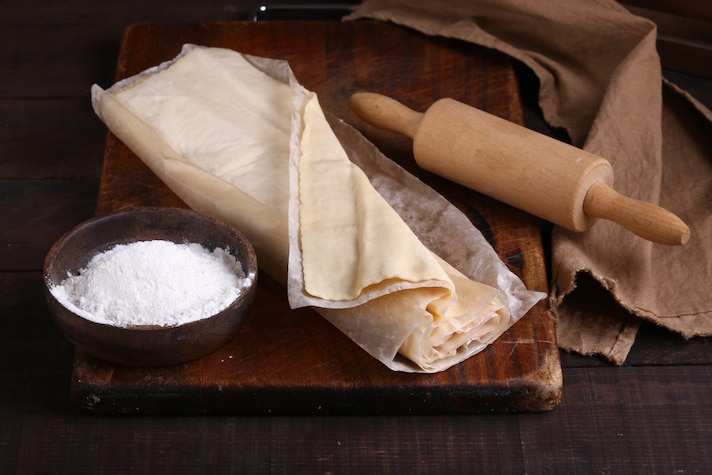
Once cooked, both take on an amber color, but puff pastry is decidedly more golden and fragrant, while shortcrust pastry is crispier and more resistant, making it more suitable for holding fillings. The difference in consistency also determines the different uses of the two preparations. Puff pastry is perfect for bringing to the table appetizers in various shapes, savory snacks, mini pizzas, as a base for croissants, savory pies, and many types of desserts, but it is also excellent as a crust in recipes such as meatloaf. Shortcrust pastry is mainly used for making quiches (such as quiche Lorraine), baskets, and savory pies, but also desserts, especially tart tatin; thanks to its solid consistency, it lends itself very well to holding fillings, so it can be stuffed with a wide variety of ingredients, both savory and sweet.
;Resize,width=767;)
