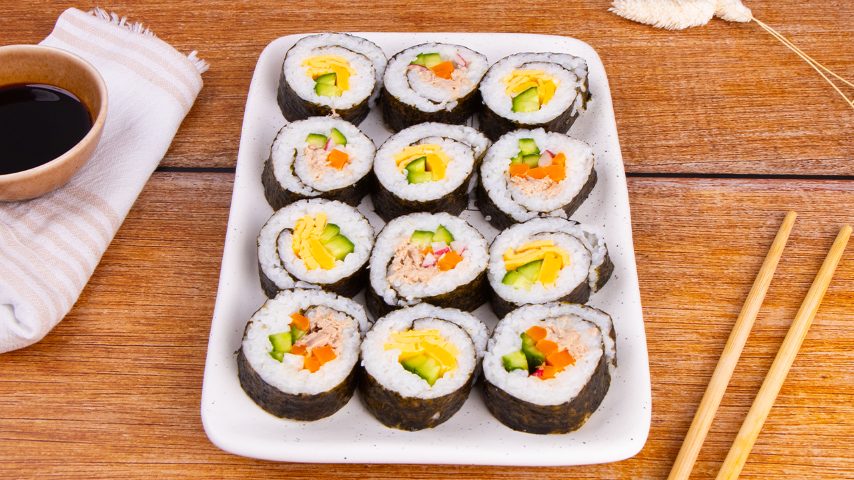
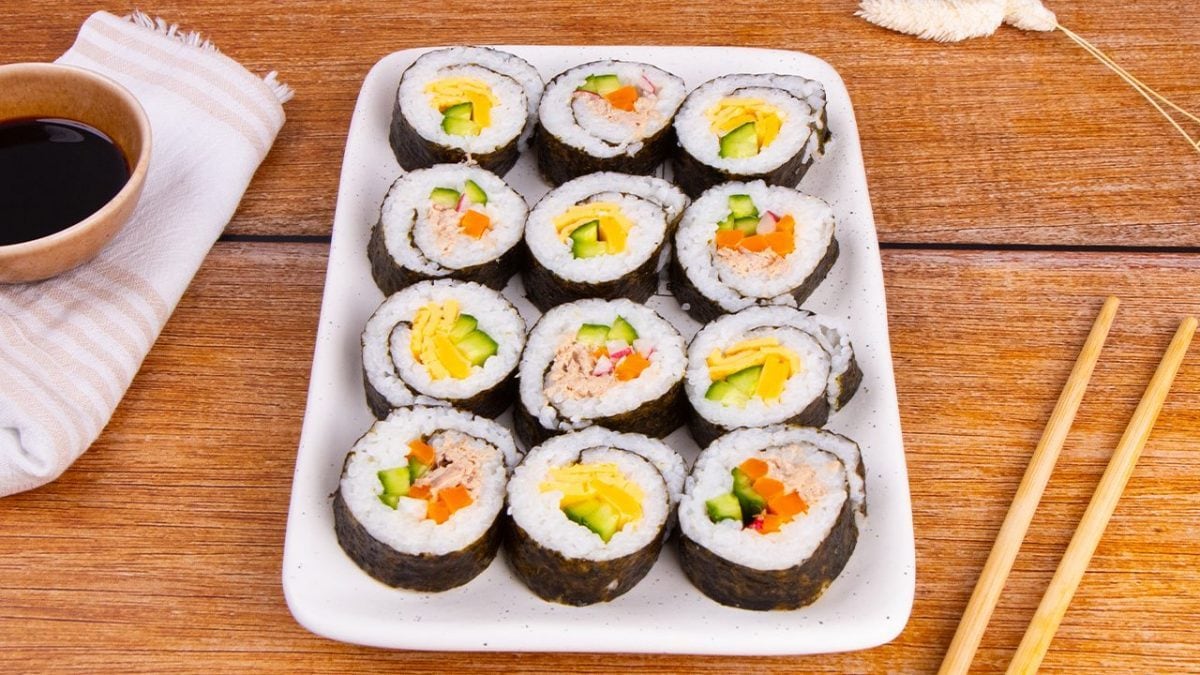
Kimbap is a versatile and colorful Korean dish made with seasoned rice, sheets of seaweed, and a variety of fillings such as tuna, omelette, cheese, and fresh vegetables. This dish is easy to prepare at home, perfect for lunchboxes, snacks, or light dinners, and offers a balance of textures, flavors, and nutrients. Rolling kimbap is a fun and visually appealing way to enjoy a healthy, portable meal.
Why Everyone Will Love This Recipe
Kimbap provides a combination of soft rice, crunchy vegetables, and flavorful proteins like tuna or eggs in every bite. It’s customizable, allowing you to swap fillings according to taste, and can be prepared ahead for a convenient meal. The rolls are not only delicious but also fun to assemble, making it ideal for cooking with family or for meal prep.
What Is Kimbap?
Kimbap (also spelled Gimbap) is a traditional Korean dish whose name literally means “seaweed rice.” It is made by rolling steamed, seasoned rice and assorted fillings in sheets of dried seaweed (nori). Historically, kimbap originated as a portable meal for picnics and travel, with fillings evolving over time from simple vegetables to include fish, eggs, and processed meats. Similar to sushi rolls in appearance, kimbap is distinguished by its unique Korean seasonings, use of sesame oil, and sweet-savory flavor profile. It reflects the Korean emphasis on balance, variety, and visually appealing meals.
Cooking Tips
- Cook the sushi rice until just tender and let it cool slightly before rolling to prevent it from becoming sticky and difficult to handle.
- Mix in a small amount of vegetable oil to the rice to make it easier to spread evenly over the seaweed sheets.
- Sauté the carrot sticks lightly to soften them slightly while maintaining a crunch, which balances the texture of the rolls.
- Place ingredients in a neat line along one side of the seaweed sheet and roll tightly using a bamboo mat to ensure the kimbap holds its shape.
- Wrap the rolls in cling film and refrigerate before slicing to firm up the roll and allow easier cutting without crushing the rice.
- Slice the rolls using a sharp knife, wiping the blade between cuts to maintain clean edges and prevent rice from sticking.
Frequently Asked Questions
Can I Use Other Fillings?
Yes, kimbap can include cooked beef, ham, crab sticks, spinach, pickled radish, or avocado depending on preference.
Can I Make Vegan Kimbap?
Absolutely. Omit the tuna and eggs, and fill the rolls with vegetables like cucumber, carrot, spinach, and mushrooms.
Can I Use Brown Rice?
Yes, brown rice can be used for a healthier twist, though it may require a slightly longer cooking time and softer texture for rolling.
Can I Prepare Kimbap Ahead of Time?
Yes, prepare the rolls, wrap in cling film, and refrigerate for up to 4–6 hours before serving. Avoid freezing, as the rice texture may change.
Can I Make Mini Rolls?
Yes, cut the nori sheets smaller or divide the rice and fillings to make bite-sized kimbap ideal for parties or snacks.
How to Store
Store prepared kimbap rolls wrapped in cling film in the refrigerator for up to 4–6 hours. Consume soon after assembling for the best texture and flavor.
How to Freeze
Freezing kimbap is not recommended, as the rice may become hard or lose its texture upon thawing. It is best served fresh or within a few hours of preparation.
Ingredients
How to Make Korean Kimbap

To prepare the gimbap, start by cooking the rice: wash the grain thoroughly, placing it in a bowl and covering it with water, changing the water until it runs clear. Then, transfer it to the pot, cover with 400 ml of water, and bring to a boil. Cover with a lid, reduce the heat to low, and cook for about 15 minutes, until the rice has absorbed all the liquid and is fluffy and tender. Set aside and let cool completely.
To prepare the gimbap, start by cooking the rice: wash the grain thoroughly, placing it in a bowl and covering it with water, changing the water until it runs clear. Then, transfer it to the pot, cover with 400 ml of water, and bring to a boil. Cover with a lid, reduce the heat to low, and cook for about 15 minutes, until the rice has absorbed all the liquid and is fluffy and tender. Set aside and let cool completely.

When the rice is cold, place it in a bowl, add the seed oil and mix well. Then, in another bowl, combine the drained tuna in oil and the mayonnaise until smooth.
When the rice is cold, place it in a bowl, add the seed oil and mix well. Then, in another bowl, combine the drained tuna in oil and the mayonnaise until smooth.

Peel the carrots, cut them into thin sticks, then sauté them in a pan with a drizzle of oil and a pinch of salt for 3-4 minutes: they should soften slightly, but still be crunchy. Remove them from the heat and let them cool. Meanwhile, also cut the cucumber and radishes into sticks.
Peel the carrots, cut them into thin sticks, then sauté them in a pan with a drizzle of oil and a pinch of salt for 3-4 minutes: they should soften slightly, but still be crunchy. Remove them from the heat and let them cool. Meanwhile, also cut the cucumber and radishes into sticks.

Make the tuna gimbap: place the nori sheet on the appropriate bamboo mat and distribute the rice, pressing it and leveling it with the back of a spoon.
Make the tuna gimbap: place the nori sheet on the appropriate bamboo mat and distribute the rice, pressing it and leveling it with the back of a spoon.

Add a few teaspoons of tuna and mayonnaise, creating a stripe of the mixture on one end of the nori sheet. Arrange the carrot, radish, and cucumber sticks, neatly aligned.
Add a few teaspoons of tuna and mayonnaise, creating a stripe of the mixture on one end of the nori sheet. Arrange the carrot, radish, and cucumber sticks, neatly aligned.

Roll the roll, tightening the bamboo mat well at each turn, until you obtain a compact cylinder. Wrap it in cling film and place it in the refrigerator for 30 minutes.
Roll the roll, tightening the bamboo mat well at each turn, until you obtain a compact cylinder. Wrap it in cling film and place it in the refrigerator for 30 minutes.

Make the omelette roll: beat two eggs in a bowl and cook the mixture in a nonstick pan greased with a drizzle of oil to form a thin omelette. Let it cool and cut it into strips. As with the previous roll, lay the nori sheet on the mat, add a thick layer of rice, then arrange the omelette, cheddar, and cucumber strips.
Make the omelette roll: beat two eggs in a bowl and cook the mixture in a nonstick pan greased with a drizzle of oil to form a thin omelette. Let it cool and cut it into strips. As with the previous roll, lay the nori sheet on the mat, add a thick layer of rice, then arrange the omelette, cheddar, and cucumber strips.

Again, roll up the roll well using the mat, then wrap it in cling film and leave it to rest in the fridge for half an hour.
Again, roll up the roll well using the mat, then wrap it in cling film and leave it to rest in the fridge for half an hour.

Once the dough has rested, cut the rolls into slices about 1 cm thick. To help you do this, use a sharp, smooth-bladed knife and wet it constantly with a little water.
Once the dough has rested, cut the rolls into slices about 1 cm thick. To help you do this, use a sharp, smooth-bladed knife and wet it constantly with a little water.

The gimbap, or kimbap, are ready: arrange them on a tray, bring them to the table and enjoy them!
The gimbap, or kimbap, are ready: arrange them on a tray, bring them to the table and enjoy them!
;Resize,width=767;)
