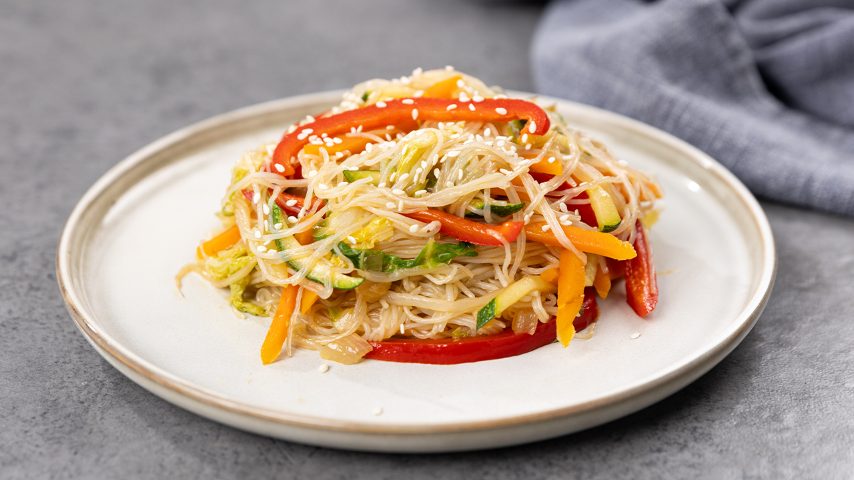
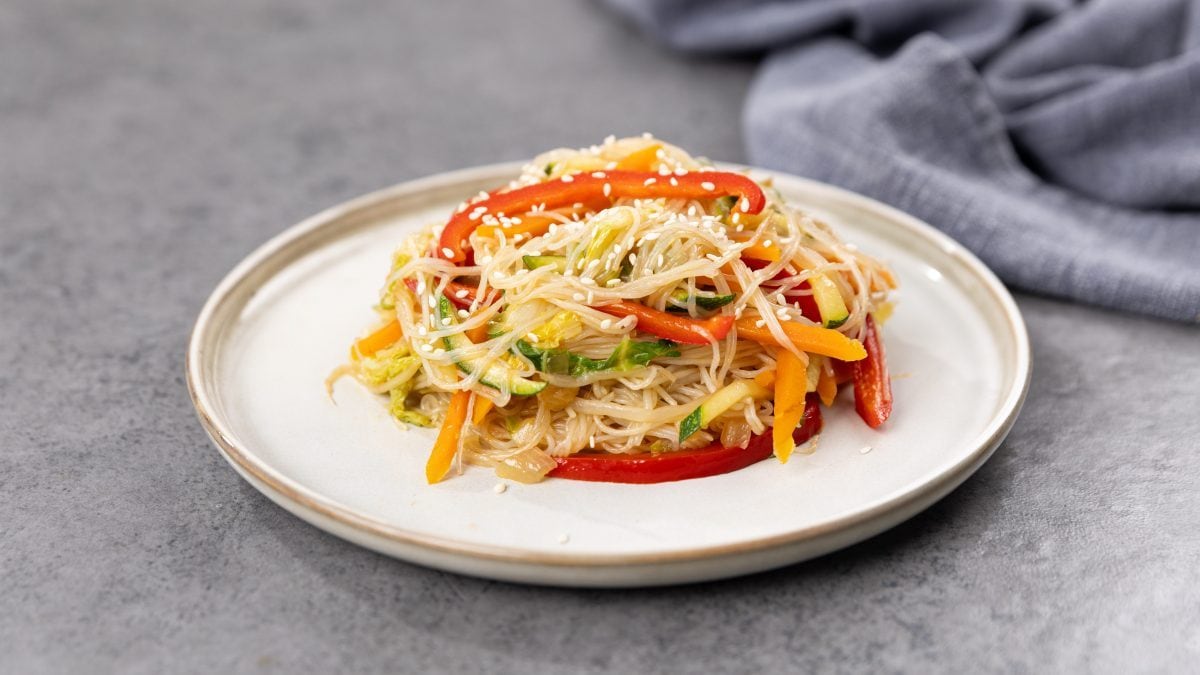
These glass noodles stir-fry with vegetables are colorful, savory, and packed with fresh vegetables and umami flavor. Light yet satisfying, this Asian-inspired dish combines delicate glass noodles with crunchy vegetables, soy sauce, and soy sprouts for a quick and delicious meal.
Perfect for lunch or dinner, this recipe is easy to customize and comes together in one pan.
Why Everyone Will Love This Recipe
This noodle dish is flavorful, vibrant, and satisfying:
- Loaded with colorful vegetables for freshness and texture.
- Light but filling thanks to the glass noodles.
- Quick stir-fry preparation perfect for busy days.
- Naturally dairy-free and easy to adapt.
- Rich umami flavor from soy sauce and stir-fried vegetables.
What Are Glass Noodles?
Glass noodles, also called cellophane noodles or bean thread noodles, are thin translucent noodles traditionally made from starches such as mung bean, potato, or sweet potato starch. Once cooked, they become glossy and almost transparent, which gives them their “glass” appearance.
They are widely used in Chinese, Korean, Thai, and other Asian cuisines in soups, stir-fries, salads, and spring rolls. Their neutral flavor makes them ideal for absorbing sauces and seasonings, especially savory ingredients like soy sauce, sesame oil, garlic, and vegetables.
Cooking Tips
- Soak the glass noodles in lukewarm water until softened but not mushy because they continue cooking in the pan later.
- Cut all the vegetables into thin, even strips so they cook quickly and evenly during stir-frying. Cook the vegetables over high heat because this helps keep them slightly crisp while developing flavor.
- Add the vegetables gradually according to cooking time so softer vegetables do not overcook before the firmer ones are ready.
- Stir frequently during cooking because glass noodles can stick together if left untouched for too long.
- Taste the noodles before adding extra soy sauce because soy sauce can vary greatly in saltiness.
- Add a splash of water during cooking if the noodles absorb too much sauce and begin sticking to the pan.
- Finish with a drizzle of oil at the end because it gives the noodles a shinier texture and richer flavor.
Frequently Asked Questions
What Are Glass Noodles Made Of?
Glass noodles are usually made from mung bean starch, potato starch, or sweet potato starch. They become translucent after soaking or cooking.
Are Glass Noodles the Same as Rice Noodles?
No. Rice noodles are made from rice flour, while glass noodles are starch-based and become transparent once cooked.
Can I Add Protein to This Recipe?
Absolutely. Chicken, shrimp, tofu, beef, pork, or scrambled eggs all pair beautifully with glass noodles and vegetables.
Why Are My Glass Noodles Sticky?
Glass noodles can become sticky if overcooked or left sitting too long without stirring. Adding a little oil and tossing frequently helps keep them separate.
Can I Make This Recipe Vegetarian or Vegan?
Yes, this recipe is naturally vegetarian and can easily be vegan if the soy sauce used is vegan-friendly.
What Vegetables Work Best with Glass Noodles?
Carrots, cabbage, bell peppers, zucchini, mushrooms, spinach, snow peas, and bean sprouts all work very well in stir-fried noodle dishes.
Can I Prepare Glass Noodles Ahead of Time?
It’s best served fresh, but you can prepare the vegetables in advance and cook everything quickly just before serving.
How Do I Add More Flavor?
Sesame oil, garlic, ginger, chili flakes, rice vinegar, or fresh herbs like cilantro can all enhance the flavor beautifully.
How to Store Glass Noodles with Vegetables
Store leftovers in an airtight container in the refrigerator for up to 2 days. Reheat gently in a pan with a splash of water or soy sauce.
How to Freeze Glass Noodles with Vegetables
Freezing is not recommended because the noodles may become soft and sticky after thawing.
Ingredients
How to Make Glass Noodles Stir-Fry With Vegetables

First, place the soybean noodle nests in a bowl and cover them with warm water. They will need to soak for 30 minutes.
First, place the soybean noodle nests in a bowl and cover them with warm water. They will need to soak for 30 minutes.

Meanwhile, prepare the vegetables. Peel a carrot, remove the ends, and cut it first into slices, then into thin strips.
Meanwhile, prepare the vegetables. Peel a carrot, remove the ends, and cut it first into slices, then into thin strips.

Peel the onion and cut it into not too large sticks.
Peel the onion and cut it into not too large sticks.

Cut the pepper pulp into strips, after removing the seeds and white filaments inside.
Cut the pepper pulp into strips, after removing the seeds and white filaments inside.

Cut the Chinese cabbage in half and use only one part, cutting it into thin slices.
Cut the Chinese cabbage in half and use only one part, cutting it into thin slices.

Pour the seed oil into the pan, let it heat up, then add the chopped onion and fry it gently, stirring often.
Pour the seed oil into the pan, let it heat up, then add the chopped onion and fry it gently, stirring often.

When the onion is soft and slightly translucent, add the cabbage, carrots and bell pepper.
When the onion is soft and slightly translucent, add the cabbage, carrots and bell pepper.

Cook for a minute, stirring, then add 4 tablespoons of water and continue cooking for another 3 minutes.
Cook for a minute, stirring, then add 4 tablespoons of water and continue cooking for another 3 minutes.

Continue with the zucchini and the bean sprouts, mix and pour 2 tbsps of soy sauce. Cook for another 2-3 minutes.
Continue with the zucchini and the bean sprouts, mix and pour 2 tbsps of soy sauce. Cook for another 2-3 minutes.

Continue pouring more soy sauce, stirring often, until the vegetables begin to soften.
Continue pouring more soy sauce, stirring often, until the vegetables begin to soften.

Drain the soy spaghetti and transfer it to the pan with the vegetables. Pour in some of the remaining soy sauce.
Drain the soy spaghetti and transfer it to the pan with the vegetables. Pour in some of the remaining soy sauce.

Mix thoroughly so that the spaghetti is perfectly flavored, cook for another 4-5 minutes and, almost at the end of cooking, add another 2 tablespoons of oil. Mix everything together again and divide into individual dishes.
Mix thoroughly so that the spaghetti is perfectly flavored, cook for another 4-5 minutes and, almost at the end of cooking, add another 2 tablespoons of oil. Mix everything together again and divide into individual dishes.

The glass noodles are ready to be served, topped with sesame seeds. Enjoy!
The glass noodles are ready to be served, topped with sesame seeds. Enjoy!
;Resize,width=767;)

