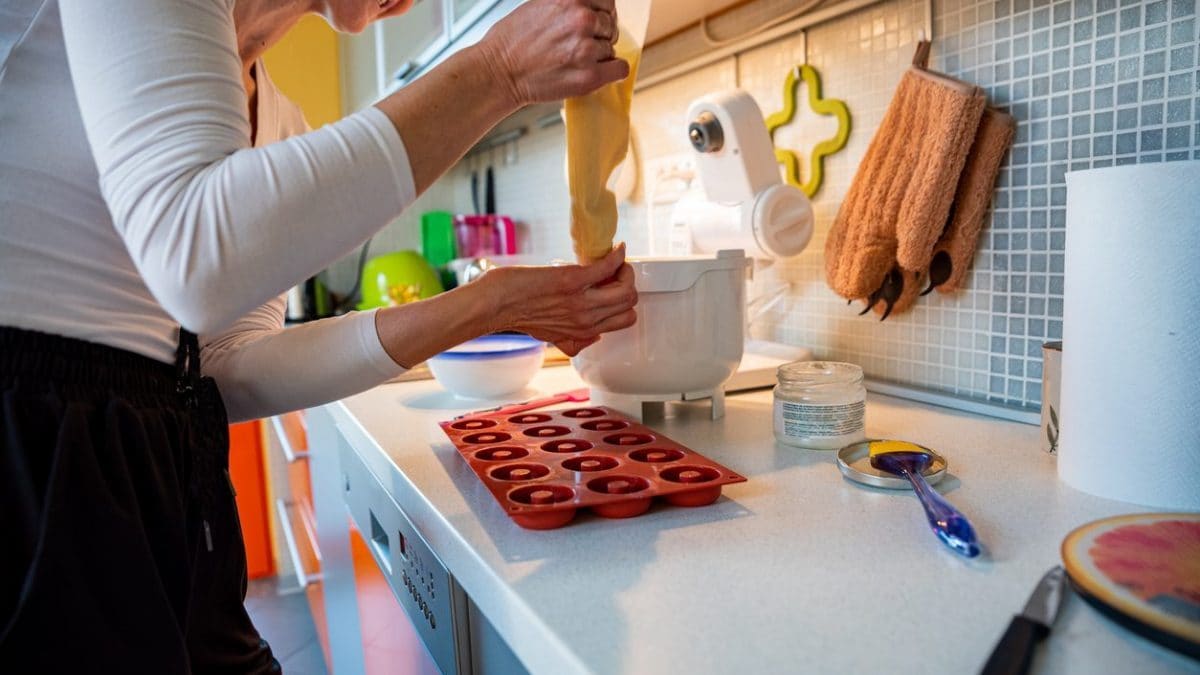
Convenient to use, easy to clean, beautiful to look at, and even eco-friendly: silicone utensils and molds are invaluable allies in the kitchen, increasingly popular precisely because they are lightweight and flexible, allow for easier mold release, are highly heat-resistant, and can be reused countless times before deterioration, which also helps reduce waste (for example, disposable aluminum baking trays). However, as convenient and useful as it is, silicone remains a plastic, and more than a few people have raised concerns about its safety, particularly regarding the possibility of the material releasing unwanted substances into food. What's true? Is food-grade silicone safe, or does using it pose a risk of contaminating food? Here's everything you need to know about this material, from the regulations governing its production to the best way to use it safely.
What is Food Grade Silicone and What It Needs to Be Up to Standard
Food-grade silicone is an elastic rubber based on silicon and oxygen, with organic groups containing carbon and hydrogen. It is a man-made silicon-based material designed to be elastic, durable, and suitable for contact with food. This composition makes it a truly unique material, capable of guaranteeing several characteristics that prove very useful in the kitchen:
- it has excellent resistance to both high and low temperatures: this is the case of cake moulds which can withstand temperatures up to 446°F/230°C and ice moulds which can be used down to -76°F/-60°C;
- allows for excellent heat distribution;
- allows electrical insulation, non-stick and water repellency;
- It has excellent elasticity and compressibility: after use, the silicone utensils can be folded up and stored in a small space;
- It is highly resistant to chemicals and deterioration, a feature that allows you to preserve silicone tools and molds for a long time.
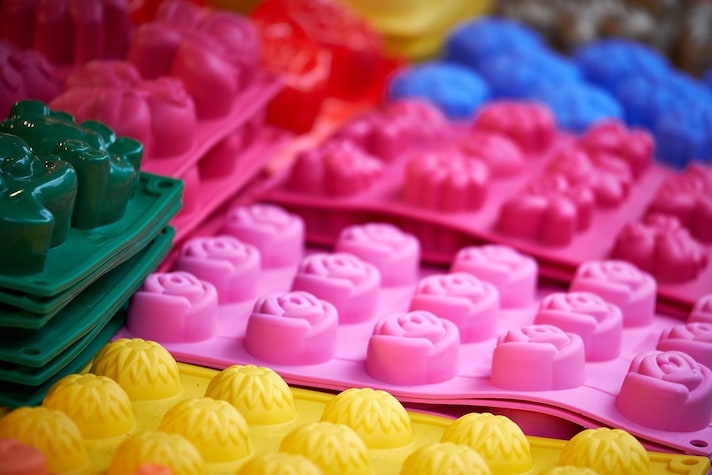
Food-grade silicone seems like the perfect material, yet questions about its safety are periodically raised, so much so that several studies are aimed at understanding whether and how many chemicals can pass from the material into the dough. A recent study, published in the Journal of Hazardous Materials, analyzed several silicone molds to understand whether and how the substances they contain can reach us. They did indeed detect the presence of cyclic siloxanes in the mold material in amounts ranging from 680 to approximately 4,300 micrograms, but these levels do not pose an immediate risk to our health. Furthermore, it was also confirmed that the percentage decreased by approximately 95% after just three baking cycles, continuing to decrease after each use.
In the United States, silicone baking molds and utensils fall under FDA rules for food-contact materials. While the FDA does not routinely publish rankings of silicone molds from different brands, it requires manufacturers to ensure that these materials are safe and do not release harmful substances into food under normal conditions of use. Independent testing in the U.S. has focused mainly on migration from food-contact materials, highlighting the importance of choosing food-grade silicone products from reputable manufacturers and respecting temperature limits indicated on the packaging.
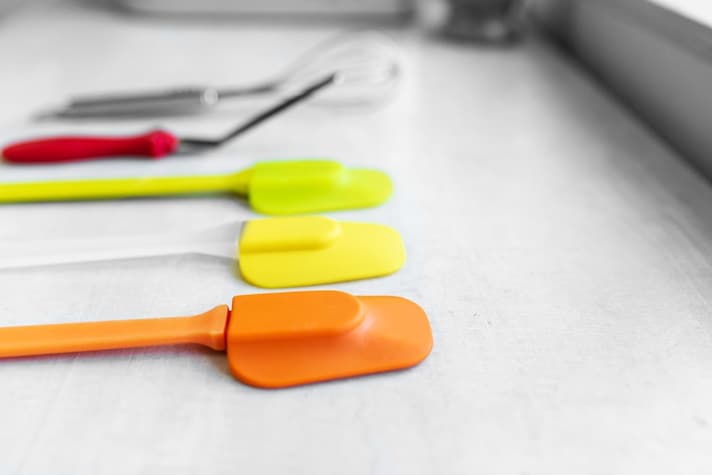
Precisely for this reason, even though food-grade silicone is generally considered safe, it is still subject to a series of national and international regulations governing its production, ensuring it is inert, non-toxic, and meets strict migration limits. The main certifications include:
- FDA (Food and Drug Administration): establishes the requirements for suitability for food contact and therefore is proof that silicone does not contain harmful chemicals and is safe for contact with food.
- EU Regulation (EC 1935/2004): ensures that the material does not transfer constituents to food in quantities that could endanger human health.
- Regulation (EU) 10/2011 – Plastics in contact with food: although specific to plastics, it is often used as a reference for migration criteria and limits in plastic materials; it also includes parameters used for similar assessments.
- MOCA Declaration of Conformity (issued by the manufacturer in accordance with current legislation): essential for certifying that the product (molds, spatulas, gaskets) is suitable for food use.
- LFGB (German Food and Consumer Goods Code): Testing and certification recognized throughout the EU and often more stringent than the FDA alone.
Tips and Rules for Making the Best Use of Food-Grade Silicone
Based on the tests conducted and national and international regulations, we can safely say that silicone molds and utensils can be used in the kitchen. However, it's important to be careful and follow a few simple precautions to avoid any risks: the first and most important thing is to always choose quality products, purchased from reputable retailers and, above all, labeled with the regulations they comply with, a certification that ensures the safety of the product you're purchasing. The second good habit is to read the instructions on the packaging: these specify the maximum temperatures and washing methods to which the product can be subjected, to avoid any possible deterioration of the product; also check that the fork and knife symbol is always present, certifying its suitability for contact with food. Always remember, before using new utensils and molds, to wash them thoroughly before the first use, as this can cause production residues and volatile compounds to migrate from the silicone to the food, a risk that washing drastically reduces.
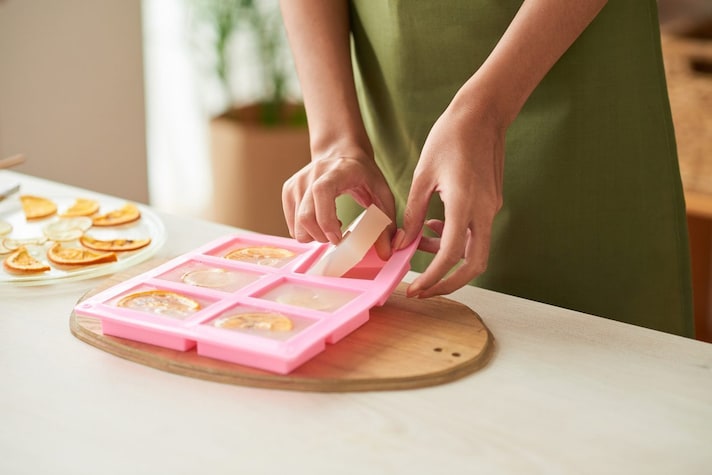
At this point, all you have to do is start using your silicone molds and utensils. Here too, following a few rules can help you optimize the use of these objects and make them even safer:
- do a test cooking, perhaps with a dough that you don't intend to use, because it is a process that can reduce the passage of some harmful substances from the mold to our food (studies have shown, as explained, that the more cooking you do, the fewer substances are transferred from the silicone to the food);
- Always check the integrity of the mold or silicone object and, if it is damaged, avoid using it as the risk of contamination would be higher;
- grease the pan with oil or butter, an essential operation only before the first use to ensure maximum non-stick properties but which you will not need to repeat subsequently;
- Silicone molds should never come into contact with fire because they could get damaged and become unusable, while you can safely use them in the microwave and oven;
- Silicone molds can be safely stored in either the freezer or the refrigerator, with just a few small precautions. In the freezer, brush the inside with water, while in the refrigerator, use oil.
- do not use knives or sharp objects, the use of these objects can scratch and ruin your mold;
- Yes to dishwashers and hand washing, but without abrasive sponges: as in the previous point, the use of sponges can damage the surface of the molds.
;Resize,width=767;)
