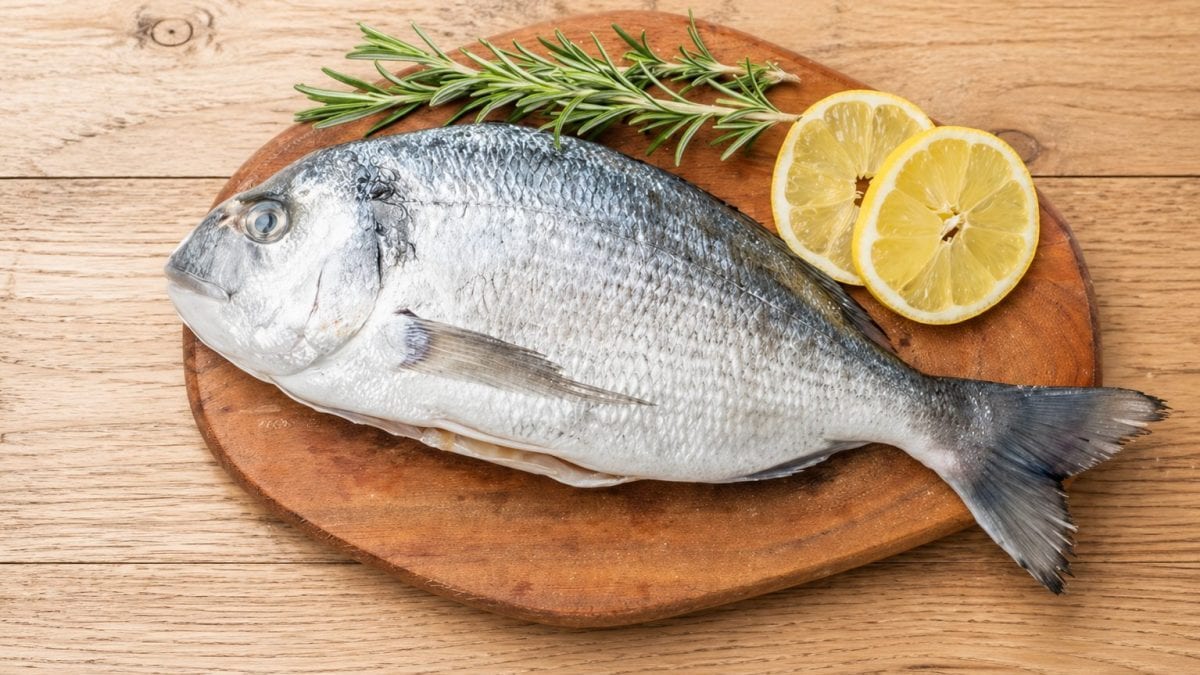
It belongs to the same family as gilt-head bream, snapper, and red porgy, becoming the protagonist of simple and tasty recipes: we are talking about the white seabream, a fish that belongs to the Sparidae family, with which it shares general appreciation in the kitchen, thanks to its firm, flavorful flesh, perfect for baking, baking in foil or salt, pan-fried, and grilling. It has an oval body, slightly pressed on the sides, rather tall, and a silvery livery marked by more or less evident dark vertical stripes and a black spot on the caudal fin, making it a beautiful fish species to watch and immortalize during dives. In reality, white seabreams are defined in the plural, as there are several species that populate the waters of the eastern Atlantic and those of our seas. Let's discover this fish, its properties, and how to cook it best.
Sea Bream's Species
The white seabream is a very common fish in our oceans: it lives mainly along the coasts, never exceeding 100 meters in depth, and prefers rocky bottoms, where it can hide, but it is also found in seagrass meadows and sandy areas. The specimens that inhabit our sea can be distinguished into 5 species, which differ in habitat, morphology, and size. Let's see which ones.
- White sea bream: its scientific name is Diplodus sargus and it is the most frequently served, also considered the most prized. It is commonly between 15 and 30 cm long, but can reach up to 45 cm and weigh 2 kg: with its oval/rounded shape, it is recognizable by the thin vertical black and gray lines that run from the back along the sides, especially in young specimens, while they tend to disappear in adults.
- Banded white seabream: Known as Diplodus vulgaris, it is found primarily in rocky areas, staying in shallow waters of about 20 meters, and is easy to spot in harbor areas. It is also called the black-headed white seabream due to a physical feature that distinguishes it from other white seabreams: two clearly visible vertical black bands, one behind the head and one at the base of the caudal fin.
- Sharpsnout seabream: its habitat ranges from the Mediterranean to the Black Sea, passing through the coasts of the Atlantic Ocean, reaching as far as South Africa. It can be confused with the white seabream, as it also has the same stripes, but what makes them different is the snout: in this case the jaw is pronounced, giving the fish a pointed profile, hence the scientific name Diplodus puntazzo.
- Annular white seabream: Diplodus annularis, also known as sparlotta, is the smallest species of white seabream in the Mediterranean Sea, measuring between 10 and 20 cm in adult length. It has a uniform silver-grey color with yellow highlights on the dorsal and ventral areas and a black spot at the beginning of the tail.
- Pharaoh's white seabream: less popular than the previous ones in our latitudes (easier to find along the African coasts), the Diplodus cervinus is, however, the largest of the Mediterranean white seabreams (up to 55 cm) and does not go unnoticed aesthetically as it is crossed vertically by 4-5 very wide black or dark brown bands.

Sea Bream's Benefits and Contraindications
From a nutritional point of view, sea bream meat is classified as lean or semi-fat, as the amount of lipids it provides can vary between 1.2% and 4.4% per 100 grams of product: we are talking mainly about unsaturated fats, with a good presence of omega-3s which make it an ally of the heart. It is a fish that boasts proteins of high biological value and its caloric intake is limited (from 97 to 103 kcal per 100 g). Among the micronutrients, minerals stand out, in particular potassium (350 mg), useful for the general functioning of the body, and B vitamins, such as B3, which in addition to protecting the skin also aids digestion, making this food suitable for all ages. Phosphorus, iron, calcium, zinc, vitamin A and vitamin C are also present: the recommended portion is 150 grams, which is also included in low-calorie diets.
Among the possible contraindications, as with other fish, it's important to be cautious if you have a seafood allergy. Furthermore, if not properly stored, it can be subject to histamine contamination: for this reason, it's best to consume it fresh and well-preserved.

How to Use Sea Bream in The Kitchen
At this point, all that's left to do is cook the white sea bream to enhance both its virtues: being a typical Mediterranean fish, it is excellent for use in all those recipes that enhance the aromas and flavors of white meat similar to that of the sea bream, but fattier and more intense in flavor, less elegant. Therefore, space is given to oven cooking, such as those in foil and salt which allow the flesh to remain soft and not dry out, as well as using very few seasonings, keeping the preparation light. The white sea bream also cooks very well in a pan, enriched with cherry tomatoes, olives and capers, but also in "acqua pazza", just like with sea bass. To obtain a simple and good dish, it is essential to obtain a fresh fish, recognizable by the classic signs: the skin appears shiny and not slimy, the eyes convex and bright, while to the touch the flesh must be elastic, not soft. White seabream is suitable for grilling, always whole, but it is also easy to cut into two fillets by sectioning them following the central spine, which is easy to identify and remove, just like the secondary bones. Don't forget that this fish species also has its seasonality: white seabream is best purchased from June to October, avoiding spring, which corresponds to its reproduction period.

