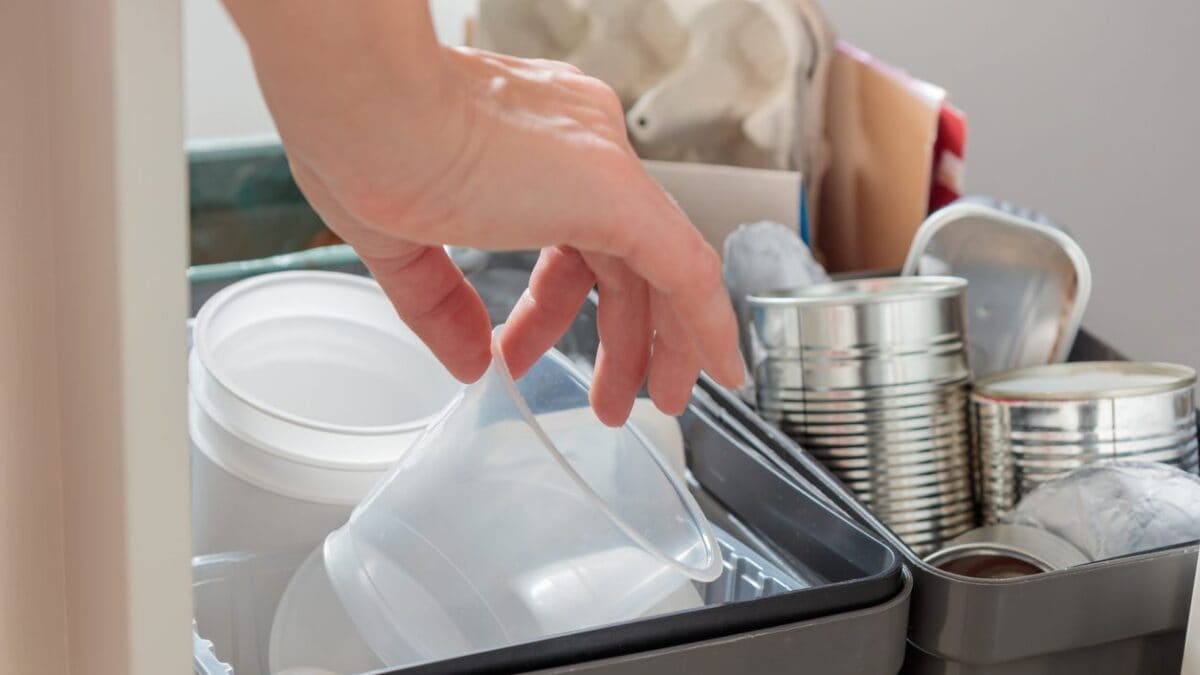
Before throwing a yogurt container or a detergent bottle into the recycling bin, the same question almost always arises: is it better to rinse plastic under running water, or is it just wasteful? Although recycling has been part of our daily routine for years, false myths and small mistakes continue to circulate around plastic, ultimately compromising the quality of recycling.
Properly separating this material is essential to reducing environmental impact, the consumption of non-renewable resources like oil, and the dispersion of microplastics. However, achieving high collection rates is of little use if the materials received are not properly managed. Let's shed light on the issue of preventive washing, also reviewing the most common oversights to avoid when handling the bin.
Why It's Generally Not Necessary to Wash Plastic
The first fundamental rule to keep in mind is that plastic waste collection doesn't apply to any plastic item, but only packaging —that is, all the products that contain, transport, and protect goods of various kinds at every stage of the distribution process. Therefore, no toys, kitchen utensils, furniture, or household appliances: for the disposal of all non-packaging plastic items, always check your municipality's regulations. Having clarified this first fundamental point, let's now turn to the question of washing: should packaging be washed before disposal or not? The basic rules of waste sorting state that it's not necessary to wash plastic packaging before disposing of it, but simply to eliminate as much product residue as possible: subsequent recycling operations will completely wash the packaging.

However, regulations may vary from one area to another, and in some cases, certain municipalities may require pre-washing of certain plastic packaging. Therefore, always remember to check your municipality's regulations to avoid incurring fines. Proper plastic disposal also requires two other practices that improve recycling. Whenever possible, crush packaging lengthwise, as this not only reduces its volume, but also makes it easier to sort and recycle. Dispose of packaging individually, avoiding nesting it inside another: this also makes the sorting process that follows collection more efficient.
Removing Food Debris Vs. Rinsing Packaging
The rules state that there's no need to rinse plastic packaging; simply removing food residue is sufficient. But what's the difference between one operation and the other? Removing food residue simply means removing the larger scraps or liquids remaining in packaging before disposing of it in the appropriate recycling bin. This is a fundamental practice for recycling, because solid food residues contaminate other packaging during collection and storage, making it difficult or impossible to recycle. Furthermore, they attract insects and create unpleasant odors in garbage bins.

Removing residue with a piece of cutlery or a piece of paper doesn't mean the container is perfectly shiny, nor does it indicate the need to thoroughly wash the packaging to be discarded. Washing packaging, perhaps even using soap, or plastic containers to make them perfectly clean is simply a waste of water at home. Modern recycling plants, in fact, subject materials to an industrial washing phase at very high temperatures, which removes grease and labels. Washing them at home simply means doing the job twice. Only in very rare cases does it make sense to rinse the containers, for example if your municipal regulations explicitly require it, or if you have to keep the waste at home for several days and want to avoid unpleasant odors.
How Packaging is Treated and Cleaned During the Recycling Process
The first step in the recycling chain occurs daily: properly disposing of packaging according to local regulations means allowing the materials to be collected, sorted, and, when technically and economically feasible, sent on to subsequent recovery and recycling processes. But what happens next when industrial plants, technologies, and processes come into play?
According to the U.S. Environmental Protection Agency (EPA), plastic packaging recycling involves several stages, beginning with the collection of household and commercial waste and continuing through sorting, cleaning, and mechanical processing. Once plastic packaging reaches a Materials Recovery Facility (MRF), it is sorted according to material type and, in some cases, color, before being sent to specialized recycling plants. There, the plastic undergoes a series of processes that transform discarded packaging into post-consumer recycled resin (PCR), a secondary raw material that can be used to manufacture new products.
Once the different types of plastic have been separated, the collected bales are opened and the materials are loaded onto conveyor belts, which transport them through the various stages of processing. Sorting equipment uses magnets to remove ferrous metals, eddy-current separators to extract non-ferrous metals, and optical sensors to identify different polymers, such as PET, HDPE, and polypropylene. Air jets and mechanical systems then direct the materials into separate streams, while manual checks help remove incorrectly sorted items and other contaminants. The first major stage at the recycling plant is mechanical shredding: the plastic passes through industrial grinders, which reduce bottles, containers, trays, caps, and other packaging into smaller, uniformly sized pieces known as flakes.
Shredding is followed by washing, which removes food residues, dirt, adhesives, oils, and other surface impurities. Depending on the type of plastic and the quality of recycled material required, this process can involve cold or hot water, sometimes combined with detergents and specialized cleaning agents. Mechanical friction between the flakes also helps remove stubborn contaminants. If detergents are used, the material may undergo an additional rinsing stage to eliminate any remaining cleaning substances.
An important stage that follows is separation by flotation, which makes it possible to distinguish plastics with different densities by exploiting their behavior in water. The shredded materials are placed in flotation tanks, where some polymers sink while others remain on the surface. For example, PET generally sinks, whereas HDPE and polypropylene usually float. This allows recycling facilities to separate different plastic streams and remove unwanted materials, although additional technologies may be necessary when polymers have similar densities.
The final stages involve drying and, often, dust removal, which eliminate residual moisture and fine impurities from the cleaned flakes. The material is then generally sent for extrusion, a process in which the plastic is melted, filtered, and transformed into small, uniform pellets. At this point, the discarded packaging has been converted into post-consumer recycled resin (PCR), which can be reintroduced into manufacturing to produce new containers, packaging, household items, and other plastic products. When recycled plastic is intended for food-contact applications, additional FDA requirements must also be met to ensure that the resulting material is suitable for its intended use.

Mistakes to Avoid When Correctly Separating Plastic
In addition to washing packaging, there are many practices you might consider correct, but which are actually mistakes that end up compromising proper plastic recycling. Among the most common are:
- Throwing away plastic items that aren't packaging. Toys, pens, toothbrushes, CD cases, tubes, or bowls are made of plastic but don't belong in the plastic bag. They shouldn't be thrown away with plastic packaging: depending on the type and municipal regulations, they should be disposed of in the unsorted waste bin or taken to designated collection centers.
- Crushing bottles from top to bottom. Crumpling water bottles by pushing from the cap to the bottom is a classic practice, but this complicates the work of waste sorting machines. The correct practice is to flatten bottles and containers lengthwise: this reduces their volume, making it easier to recognize the material on the conveyor belt when sorting and sending it for recycling.
- Separating the caps. There's always the question of whether the caps should be unscrewed and thrown away separately. In reality, separating them is counterproductive because, being so small, they risk creating problems in the sorting process.
- Nesting packaging. To save space, you often tend to fill a tray or a cut bottle with other plastic waste, creating a single block. This, however, confuses the readers at recycling centers, so it's strongly discouraged.
- Making mistakes with bioplastics. Plates, cups, or bags made of Mater-Bi or compostable bioplastic almost never go in the traditional plastic bin, but in the organic waste bin (if certified and your municipality accepts it).
- Discarding plastic cutlery. Disposable rigid plastic cutlery is not considered packaging under European regulations and should therefore be thrown in the unsorted waste (unlike disposable plates and cups, which should be thrown in the plastic bin).
In any case, we encourage you to always check your local municipal waste sorting regulations, as they can vary from municipality to municipality. The classification of some packaging materials may vary slightly depending on local recycling facilities, so to avoid fines and to make waste sorting truly effective, it's a good idea to check the regulations governing the disposal of plastic and other waste in your area.

