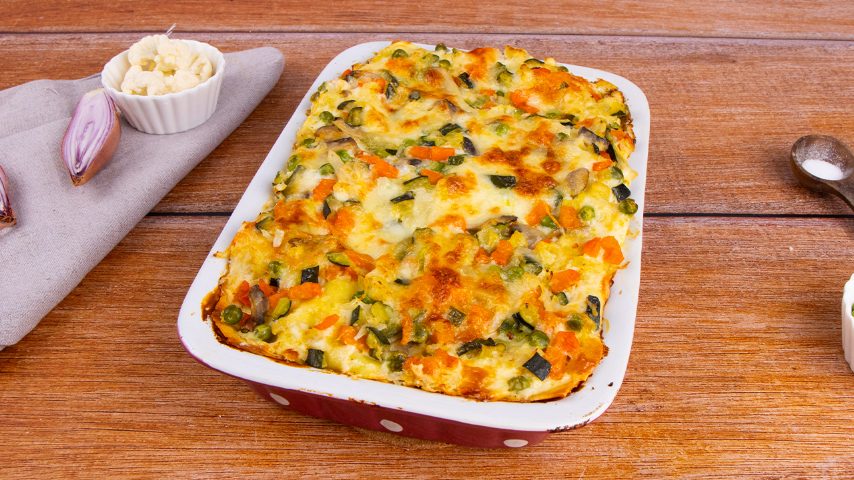
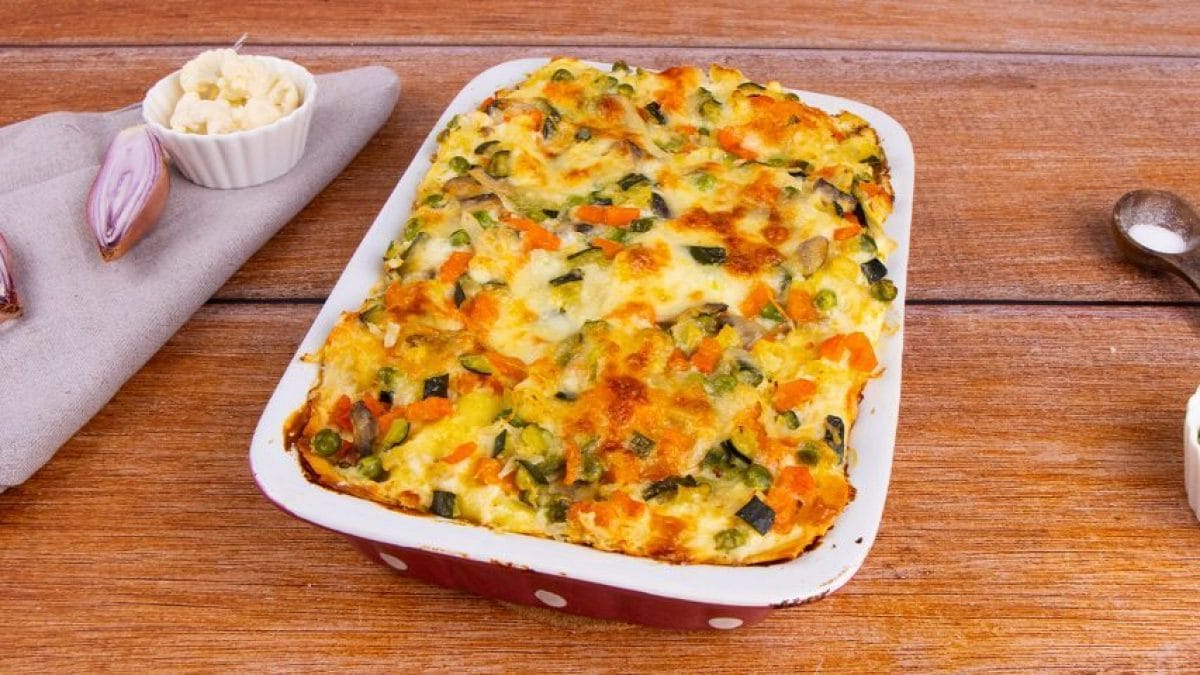
Dinner has a way of becoming predictable, but this can be changed with a bubbling tray of layered pasta, vegetables, and cheese. This vegetarian lasagna combines sautéed vegetables softened just right, creamy béchamel holding everything together, and generous layers of parmesan and mozzarella stretching into those irresistible strands.
This dish is made for weeknight dinners that need a little excitement or weekend gatherings where comfort food is non-negotiable.
What is Vegetarian Lasagna?
Lasagna, a classic from Italy, has been around since ancient times, evolving from simple layered pasta dishes into this rich oven-baked dish. Traditionally made with meat ragù, vegetarian versions like this one celebrate the abundance of garden produce instead.
This recipe leans heavily on a medley of vegetables, such as mushrooms, peas, zucchini, carrots, and cauliflower. Béchamel sauce, a French contribution adopted into Italian cooking, adds creaminess without overpowering the vegetables. Also, lasagna is one of the oldest recorded pasta dishes.
Pro Tips for the Best Vegetarian Lasagna
- Chop vegetables evenly, so they cook at the same rate and create a consistent texture.
- Don’t rush the sautéing stage, because this is where flavor builds, and moisture reduces.
- Lightly salt each layer instead of dumping all the salt at once for better balance.
- Use enough béchamel to keep the layers moist but not soupy.
- Grate your own Parmesan for better melt and sharper flavor.
Frequently Asked Questions
Can I Use Different Vegetables?
Absolutely, and it’s encouraged. This recipe works well with what’s available, spinach, bell peppers, or even eggplant can step in. Just keep moisture levels in check, and cook watery vegetables properly to avoid a soggy result.
Is Béchamel Necessary?
Béchamel plays a key role in binding the layers and adding creaminess. Without it, the lasagna can feel dry. If needed, you can substitute with a ricotta-based mixture, but the texture will change slightly.
How Do I Prevent a Watery Lasagna?
The key lies in properly cooking the vegetables. Excess moisture should evaporate during sautéing. Also, avoid overloading with sauce, as balance is everything here.
How Do I Get a Golden Top?
Finish with a generous sprinkle of Parmesan and place the dish on the top rack for the last few minutes of baking. This encourages a beautifully golden finish.
Is This Suitable for Freezing?
Yes, you can freeze it after baking. Wrap it well to prevent freezer burn, and thaw overnight in the fridge before reheating.
How to Store Leftovers
Transfer slices of lasagna into airtight containers and refrigerate for up to 3 days. You can reheat in the oven for the best texture, or use a microwave if you are short of time.
Ingredients
How to Make Vegetarian Lasagna
;Resize,width=712;)
Heat a generous drizzle of olive oil in a pan. Add chopped onion, mushrooms, peas, zucchini, carrots, and cauliflower. Cook for several minutes, season with salt, and continue cooking until tender.
Heat a generous drizzle of olive oil in a pan. Add chopped onion, mushrooms, peas, zucchini, carrots, and cauliflower. Cook for several minutes, season with salt, and continue cooking until tender.
;Resize,width=712;)
Spoon a thin layer of béchamel sauce into a baking dish and spread it evenly. This prevents sticking and starts the layering process smoothly.
Spoon a thin layer of béchamel sauce into a baking dish and spread it evenly. This prevents sticking and starts the layering process smoothly.
;Resize,width=712;)
Place a sheet of lasagna over the sauce and add a couple of spoonfuls of béchamel.
Place a sheet of lasagna over the sauce and add a couple of spoonfuls of béchamel.
;Resize,width=712;)
Add the cooked vegetables, then sprinkle Parmesan and mozzarella.
Add the cooked vegetables, then sprinkle Parmesan and mozzarella.
;Resize,width=712;)
Repeat this layering process 5-6 times.
Repeat this layering process 5-6 times.
;Resize,width=712;)
Transfer the dish to a preheated oven at 180°C (360°F) and bake for 30 minutes.
Transfer the dish to a preheated oven at 180°C (360°F) and bake for 30 minutes.
;Resize,width=712;)
Cut into portions and serve while warm.
Cut into portions and serve while warm.
;Resize,width=767;)
