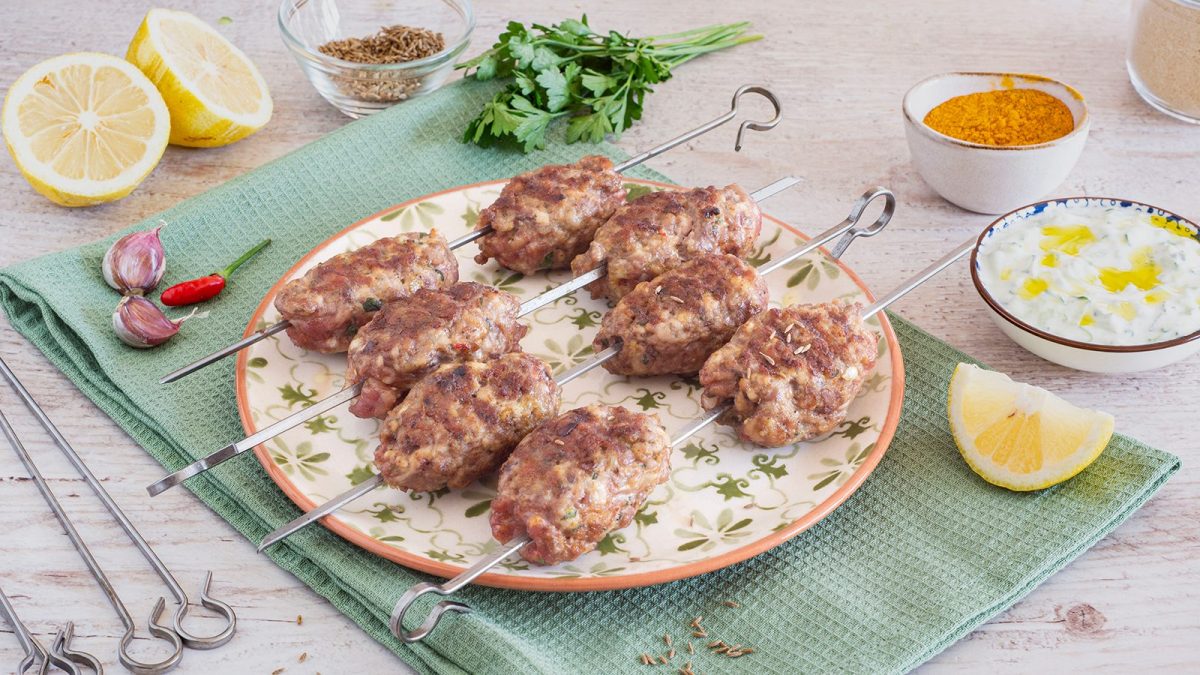
Lamb Kofta is a typical Middle Eastern recipe, meatballs made with minced lamb, cumin seeds, garlic, mint, parsley, thyme, chili pepper, lemon zest and a special mix of spices called Ras el hanout, which gives them an irresistible flavor and aroma.
Unlike our meatballs, kofta are free from eggs, cheese and stale bread: moreover, they are shaped into a slightly elongated form, skewered on a steel skewer and, finally, cooked on a hot cast iron grill, until they are well browned on the outside, but soft and succulent in the centre.
Once ready, they will be perfect to enjoy as a main dish during a themed dinner, accompanied by a small bowl of yogurt sauce, hummus or baba ganoush.
What Are the Origins of Kofta?
Kofta has deep roots in Middle Eastern, Central Asian, and South Asian culinary traditions, with its origins tracing back more than a thousand years. The word kofta comes from the Persian word “kufteh,” meaning “to pound or grind,” referring to the way meat was traditionally minced before being shaped into balls or patties. As Persian and later Ottoman culinary traditions spread across the region, the dish traveled widely, evolving in different cultures. Today, variations of kofta appear throughout Turkey, the Middle East, North Africa, the Balkans, and India, often made with ground lamb or beef mixed with spices, herbs, and onions. Each region developed its own version, but the basic idea — seasoned ground meat shaped and cooked on a grill, in a sauce, or fried — remains at the heart of the dish.
What Spices Are in Kofta Seasoning?
Lamb kofta seasoning typically includes a warm, aromatic blend of Middle Eastern and Mediterranean spices that enhance the richness of the meat. While recipes vary by region, the most common spices are cumin, coriander, paprika, garlic, and black pepper, which create the base flavor. Many blends also include ground cinnamon, allspice, or nutmeg, adding subtle sweetness and depth.
Fresh herbs are equally important in kofta, especially parsley and sometimes mint, along with finely chopped onion for moisture and flavor. Some recipes may also add cayenne pepper or chili flakes for heat and sumac or lemon zest for brightness.
How is Kofta Traditionally Cooked?
The most classic method of cooking kofta is grilling, especially on skewers over open flames or charcoal, which gives the meat a smoky flavor and crisp exterior. In many regional variations, kofta can also be pan-fried, baked, or simmered in a spiced tomato or yogurt-based sauce, depending on the local cuisine.
Can I Use Another Type of Meat for Kofta?
While lamb is traditional in many Middle Eastern recipes because of its rich flavor, kofta is very adaptable. Ground beef is one of the most common alternatives and produces a slightly milder but still flavorful result. Ground chicken or turkey can also work well if you want a lighter version, though these leaner meats benefit from a bit of extra seasoning or a small amount of added fat to keep the mixture moist.
What Goes Well With Lamb Kofta?
In many Middle Eastern meals, it’s paired with flatbreads such as pita or lavash, which are perfect for wrapping the meat or scooping up sauces. Creamy sauces like tzatziki, garlic yogurt sauce, or tahini sauce are also classic accompaniments, adding coolness and tang.
For sides, kofta often appears alongside rice, bulgur, or couscous, as well as simple vegetable dishes. A fresh salad—such as tomato and cucumber salad, fattoush, or tabbouleh—brings acidity and crunch that contrast nicely with the grilled meat. Pickled vegetables, grilled eggplant, or roasted peppers are also common additions, creating a balanced plate with a mix of flavors and textures.
Ingredients
How to Make Lamb Kofta
;Resize,width=712;)
To prepare the kofta, collect the minced lamb in a bowl and season it with chopped mint, parsley and chili, then add the cumin seeds.
To prepare the kofta, collect the minced lamb in a bowl and season it with chopped mint, parsley and chili, then add the cumin seeds.

Season with thyme leaves, grated lemon zest, and minced garlic. Season with a pinch of salt and freshly ground pepper, then mix all the ingredients well.
Season with thyme leaves, grated lemon zest, and minced garlic. Season with a pinch of salt and freshly ground pepper, then mix all the ingredients well.

Season with ras el hanout and continue mixing until you obtain a smooth mixture.
Season with ras el hanout and continue mixing until you obtain a smooth mixture.
;Resize,width=712;)
Take approximately 80-gram portions of the mixture (you should get about 8 with our measurements). Shape them into slightly elongated meatballs and skewer them, two at a time and slightly spaced apart, with a steel barbecue skewer.
Take approximately 80-gram portions of the mixture (you should get about 8 with our measurements). Shape them into slightly elongated meatballs and skewer them, two at a time and slightly spaced apart, with a steel barbecue skewer.

Once all the skewers are assembled, heat a grill over high heat and, when it's hot, add the meatballs. Let them cook for about 15 minutes, turning them occasionally, so they're nicely browned on all sides. Once ready, arrange the kofta on a serving plate.
Once all the skewers are assembled, heat a grill over high heat and, when it's hot, add the meatballs. Let them cook for about 15 minutes, turning them occasionally, so they're nicely browned on all sides. Once ready, arrange the kofta on a serving plate.

The kofta are ready: bring them to the table and enjoy them, accompanied by fresh and creamy yogurt sauce.
The kofta are ready: bring them to the table and enjoy them, accompanied by fresh and creamy yogurt sauce.
Storage Instructions
Once cooked, kofta should be eaten immediately. Uncooked kofta can be stored in the refrigerator, tightly closed in an airtight container or wrapped in plastic wrap, for up to 1 day.
;Resize,width=767;)
