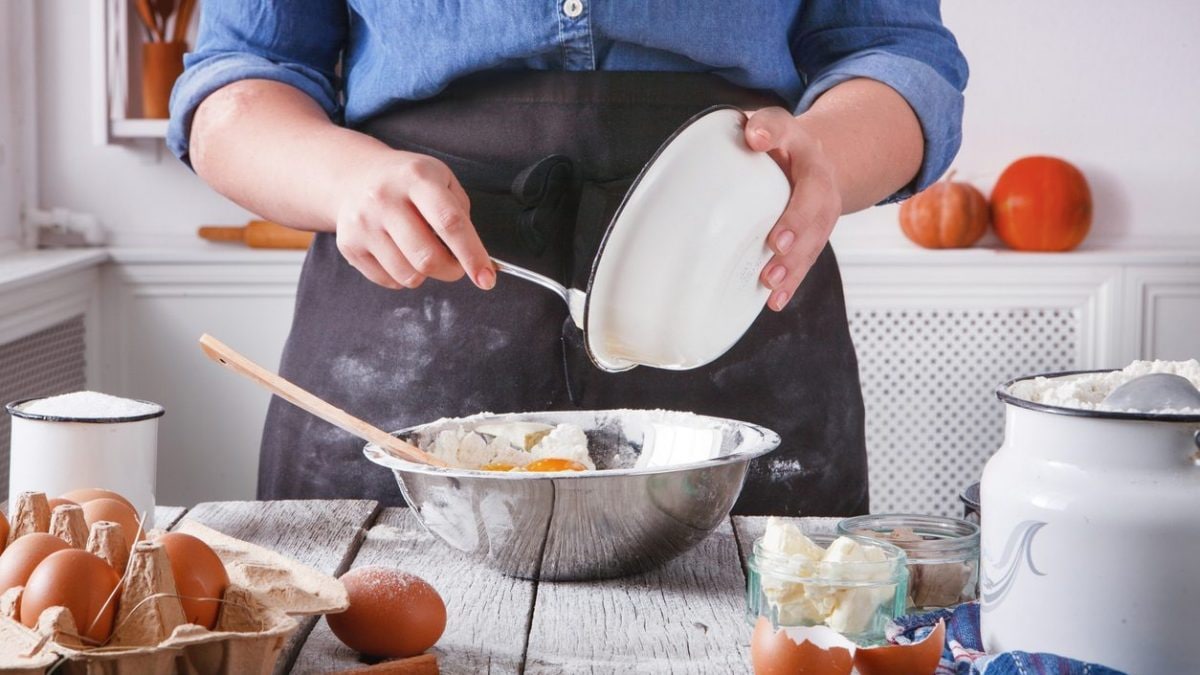
Egg pasteurization is a process related to food safety, as it eliminates any harmful bacteria, such as salmonella, that may be present in raw food. It is mandatory in industrial, restaurant, ice cream, and pastry shops, but is less commonly used at home. What does pasteurization mean and how is it done? The process is particularly suitable for preparations where eggs remain raw or undercooked, from carbonara to tiramisu cream, where failure to fully cook them could pose a health risk.
Textbook Temperatures and Times for Egg Pasteurization
To understand how to pasteurize eggs, we went back to school, using texts that explore issues related to the science and culture of food. Pasteurization, introduced by Pasteur in the 19th century, does not only concern eggs, but various types of foods, such as milk , fruit juices, wine, and beer, using both home and industrial techniques. It is a process that brings the food in question to a temperature below 212°F/100°C for a variable amount of time. What is achieved? The inactivation of enzymes and the elimination of pathogenic microorganisms, while spores and thermophilic microorganisms remain. What does this mean? That a specific bacterial colony has been destroyed, but that another can reform, which is why pasteurization is usually combined with other preservation methods, such as refrigeration or vacuum packing.
What are the temperatures and times when talking about eggs? As regards whole eggs or just the yolk, the general rule is 140°F/60°C for 3 minutes, while the egg white is 123-125°F/51-52°C for 3 minutes: it is at this heat level that the proteins begin to denature, with the risk, going beyond, of ruining the egg from an organoleptic point of view (for example by cooking it). The logic of milk, of having different combinations depending on the proportion of times and degrees, does not apply to eggs, as they have a lower resistance. The egg white begins to coagulate at 143°F/62°C and solidifies at 149°F/65°C, while the yolk ranges from 149°F/65°C to 158°F/70°C, that is, when it becomes firm. Using a kitchen thermometer or a probe, the operation will not be complicated.
Bain-Marie Pasteurization
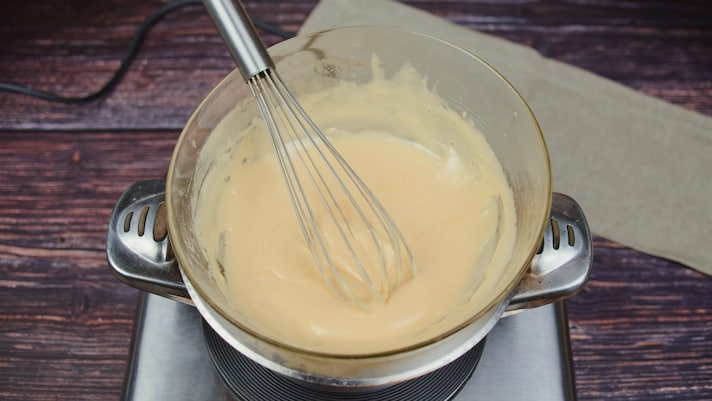
Want to make a carbonara with pasteurized eggs? The best method is definitely a bain-marie, placing the eggs in a bowl over a saucepan of hot water and stirring until they reach 140°F/60°C. Maintain the temperature for three minutes and then use in the recipe. You'll get a smooth, fluid mixture, reducing the risk of salmonella.
Is Pasteurization With Sugar at 250°F/121°C Safe?
Syrup at 121°C (250°F) is a key ingredient in making Italian meringue and pâte à bombe. It's a sugar and water syrup brought to a precise temperature, which is then poured slowly over beaten egg whites. Many people think this is enough to pasteurize the preparation, but in reality, this isn't the case: a temperature without a matching time doesn't yield any useful results. Pasteurization, even if it can't be done scientifically at home, always requires a combination of time and temperature.
Dario Bressanini, a chemist known on social media for his interest in cooking, explains it well, having written several books about it, often debunking fake news that circulate online. "The idea that Italian meringue cooked at 250°F/121°C is pasteurized is wrong: there's no absolute temperature for pasteurization, but rather different times and temperatures. For the same ingredients—whole eggs, egg whites, yolks—I can use higher or lower temperatures, depending on the preparation, combined with shorter or longer times depending on the temperature. Simply specifying the temperature for pasteurization makes no sense."
Furthermore, "If you drizzle the syrup into the egg white while whipping it, it will partially cook it, thus reaching quite high temperatures. However, if you don't establish how long the egg white must remain at a certain temperature, any prescription becomes meaningless. Furthermore, since the stand mixer never completely scrapes off the egg white, which remains firm and deposited on the inside surface of the bowl, it is likely that the temperatures there will still be lower than the minimum necessary to kill any bacteria."
The situation is different for Swiss meringue, a cross between the Italian and the French: "In Swiss meringue, sugar is added and whipped with the egg whites, placing it in a bain-marie, heating it, and with a thermometer you can even reach 158°F/70°C. You can use Swiss meringue that can be heated to 158°F/70°C for a few minutes," explains the professor, referring to his book. "Let's say that with the Swiss meringue method you can be a little safer (but not entirely)." By placing it in a bain-marie, exactly as one would make Swiss meringue, and bringing it to safety temperatures, "then at that point you can be reasonably confident that you won't have any major problems." In short, it's not so much the temperature that pasteurizes, but the combination of temperature and time.
;Resize,width=767;)
