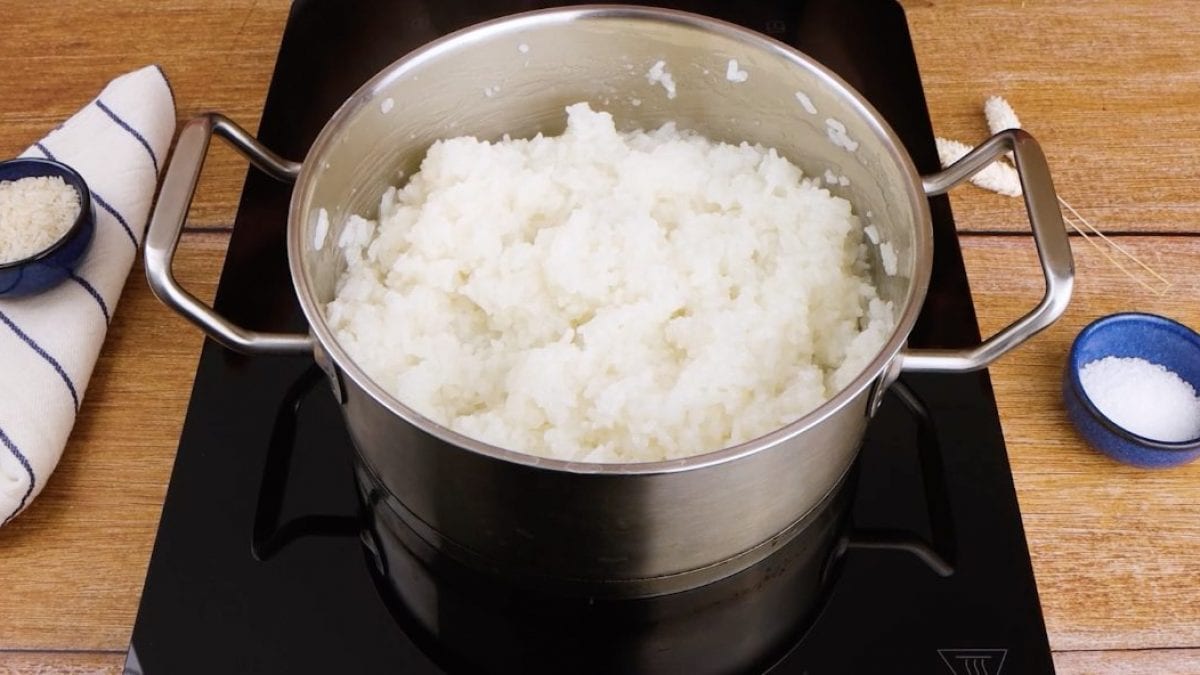
Rice is a staple in kitchens around the world, prized for being affordable, versatile, and easy to pair with almost anything. But despite its reputation as a simple side dish, cooking rice perfectly can be trickier than it seems. Many home cooks unknowingly make small mistakes that affect texture, flavor, and consistency.
According to Alison Cayne, founder of Haven’s Kitchen Cooking School and author of The Haven’s Kitchen Cooking School, a few common habits can make the difference between fluffy, well-cooked rice and a pot that turns out sticky or uneven. Here are some of the most common mistakes — and how to avoid them.
1. Using the Wrong Water-to-Rice Ratio

One of the most frequent missteps happens before the pot even hits the stove. Many people rely strictly on the ratio printed on the rice package, but measurements can vary slightly between brands and rice varieties. Cayne recommends a simple guideline that works reliably for most home cooks: about 1½ cups of liquid for every cup of white rice, and about 2 cups of liquid for every cup of brown rice. Brown rice requires more water because its bran layer is intact, making the grains tougher and slower to soften during cooking. Starting with the right ratio sets the foundation for evenly cooked rice.
2. Skipping the Rinse

Rinsing rice may seem like an unnecessary extra step, but it can dramatically improve the final texture. Raw rice grains are coated with excess surface starch, which can make cooked rice gummy or clumped together. Running the rice under cold water in a fine-mesh sieve for a minute or two removes much of that starch. The result is rice that cooks up lighter, fluffier, and more separate, rather than sticky.
3. Cooking Over Too Much Heat

Once rice and water come to a boil, many cooks simply lower the heat and continue cooking. But Cayne points out that not all burners behave the same way. Some burners produce noticeably stronger heat even at low settings.
For best results, she suggests using the lowest setting on the gentlest burner on your stove. The goal is a quiet, steady simmer. If the heat is too high, the outer portion of the grains can soften while the interior remains firm or undercooked. A tightly fitting lid is also essential to keep steam trapped inside the pot.
4. Skipping the Resting Time
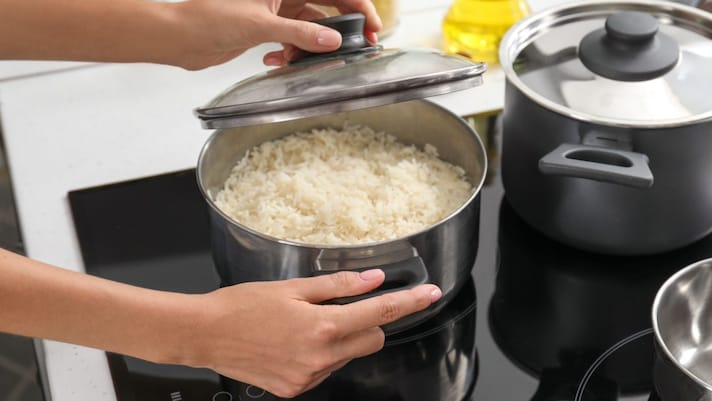
Once the cooking time is up, it’s tempting to remove the lid and serve the rice immediately. But giving rice a brief resting period can improve its texture significantly. After cooking, remove the pot from the heat and let it sit covered for about 5 to 10 minutes. During this time, the trapped steam finishes cooking the grains gently and redistributes moisture throughout the pot. It’s a small step that helps the rice become evenly tender.
5. Serving Rice Without Fluffing It
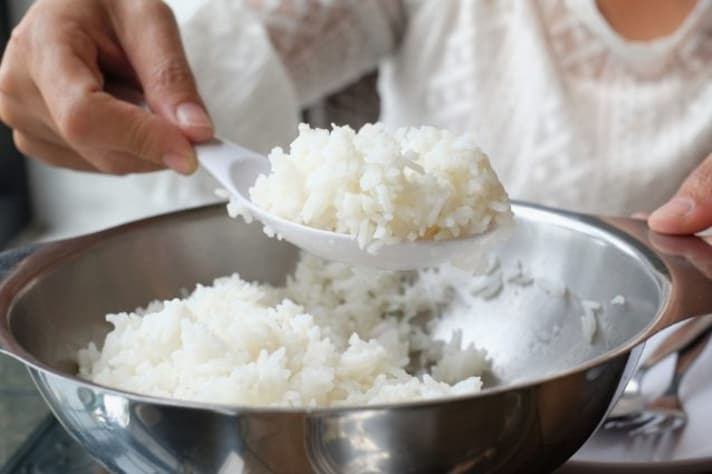
The final mistake happens just before serving. If you scoop rice directly from the pot, it can appear dense or compact. Instead, use a fork to gently fluff the rice, lifting and separating the grains throughout the pot. This simple motion releases trapped steam and creates the light, fluffy texture most people are looking for.
;Resize,width=767;)
