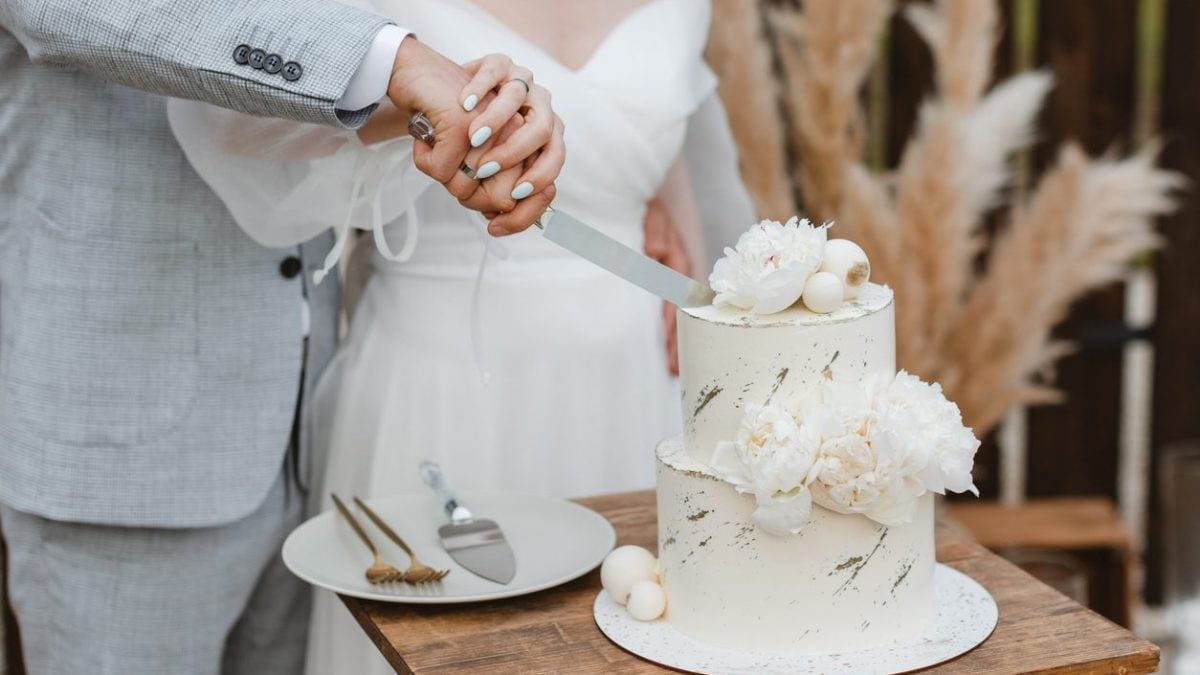
With the arrival of spring, and even more so summer, the season of ceremonies, especially weddings, officially begins. This event is much more than a simple celebration; it's the sealing of a love and the beginning of a new life together. But since we're talking about a ritual, there are specific customs that are usually respected, faithfully or not. Some of these are food-related, like throwing rice or the wedding cake: this article will focus on the latter. And if you think it's simply a dessert, well, that's not the case: its history dates back centuries, and even today, nothing is left to chance.
Wedding Cake's Origins
While it may seem like wedding cakes are a recent tradition, they actually date back to the ancient Greeks and Romans. For the former, part of the celebration involved preparing a dough made from flour, honey, and sesame seeds: the latter were a symbol of fertility. For the Romans, however, the essential ingredient was honey, which was mixed with fruit and flour to create delicious sweets that were then crumbled over the bride's head as a wish for abundance and prosperity. It seems that the custom of throwing wheat at the newlyweds, later replaced by rice, derives from this tradition.

But to see one of the first cakes that most closely resembles those of today, we have to wait a few centuries and travel to England, where it seems one of the predecessors of our current wedding cake originated. It was the Middle Ages, and the custom of the time called for stacking sweets on top of each other, upon which the newlyweds would kiss. If this delightful little tower remained intact, it would mean that the marriage would be long and happy. According to some traditions, such a "cake" also served another purpose: to demonstrate the closeness of the guests to the newlyweds, by raising the composition according to their number.
The Bride's Pie
Now let's move on to a custom that would probably disgust nine out of ten guests: bride's pie. What's so special about it? First of all, it's savory, but that's not the most absurd thing: in fact, as reported in Robert May's 17th-century cookbook, The Accomplished Cook, it could contain ingredients like lamb testicles, rooster combs, and sweetbreads, and it wasn't so crazy that live birds or snakes would also reside in the center, just to entertain the guests. Furthermore, as if these ingredients weren't enough, a ring was also inserted, and the lucky woman who found it, according to belief, would be the next to marry.
The Groom's Cake
It may seem strange today, but in times gone by, there was also a groom's cake. Dating back to Victorian England, it was smaller than the bride's cake and filled with dried fruit and candied fruit. It was customary to cut it into cubes and give it to guests at the end of the ceremony as a sort of wedding favor. And while the bride's cake required finding the hidden ring inside, for the groom's cake, tradition dictated that unmarried women would take a piece home and place it under their pillow to help them find a husband as quickly as possible.
The Introduction of Royal Icing
The wedding cake that most closely resembles the one we see today first appeared around 1800, when cakes began to be covered with a white layer of sugar, symbolizing the bride's purity. Furthermore, refined sugar was previously a very expensive ingredient, and incorporating it into the cake signified a family's considerable wealth.
Royal icing is still known today as such because of its use on wedding cakes: in particular, the one used for Queen Victoria's wedding deserves mention, being almost three meters wide and weighing almost 140 kilos. At the top, it bore the figures of Britain, the Queen, and Prince Albert (hence the custom of placing two figures of the bride and groom on top of the cake).

Cutting the Cake and Other Customs
Let's now move on to one of the most romantic and emotional moments of the entire ceremony: cutting the cake. Typically, the bride‘s hand should hold the knife, while the husband's hand gently grasps it. The first slice is obviously reserved for the newlyweds, although an ancient tradition dictates that the bride offer the cake in a specific order: husband, mother-in-law, mother, father-in-law, and father. A more recent custom, however, is to save the top tier of the cake, freeze it, and eat it on the first wedding anniversary, to relive the same magic.
But the shape and tiers of the cake also have a particular meaning: the classic round shape represents a symbol of eternal union and a never-ending promise. The tiers, on the other hand, resemble a sort of ladder, symbolizing the journey the spouses will have to travel from that moment on, through joys and hardships. Furthermore, the tiers should be odd, to emphasize the indivisibility of the two spouses.
The Wedding Cake Today
After this journey through the history of the sweet symbol of marriage, it's clear that some things have been maintained, while others, fortunately, haven't. Today, the wedding cake has abandoned the traditional white icing to make way for a so-called naked version, meaning naked, with no external covering, or even a more American style, covered in sugar paste. Usually composed of several tiers, it's decorated with fresh flowers and aromatic herbs, and is most often round, although it can also be found in a rectangular or square shape.

;Resize,width=767;)
