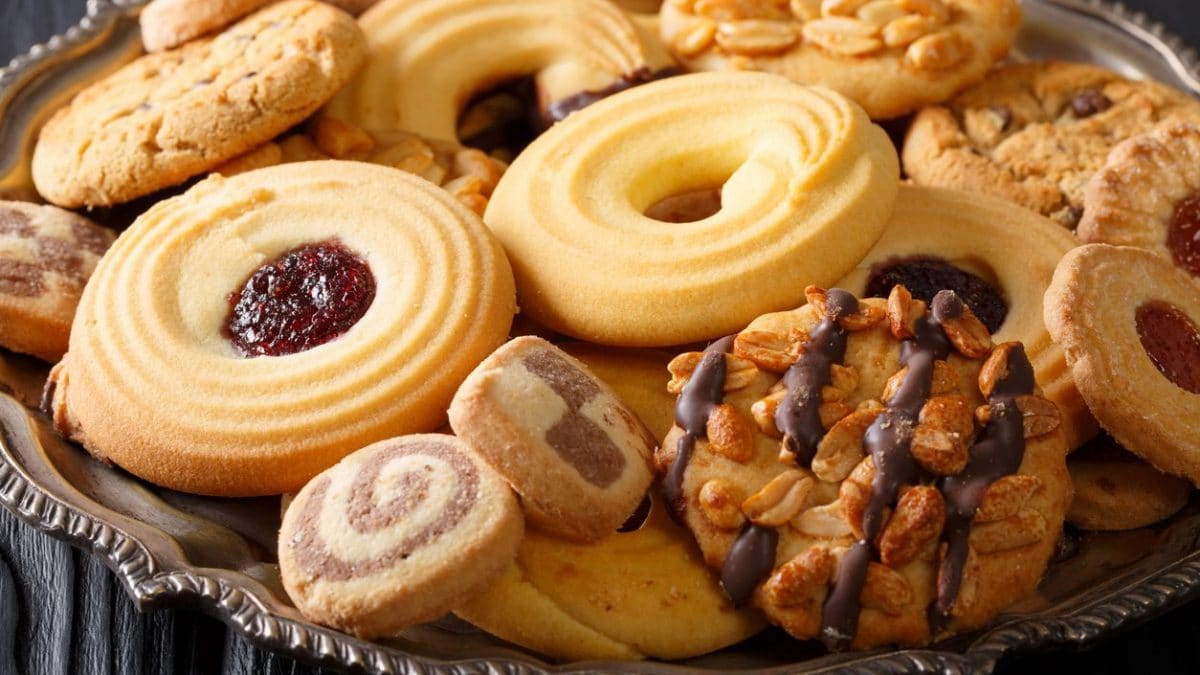
They've quietly given way to far more Instagrammable desserts, but we can't deny that the first to conquer our hearts were biscuits. The protagonists of the inevitable milk soup, a sweet late-night treat, or a quick snack during heavy study or work sessions, they are one of the most consumed, yet perhaps also most underrated, comfort foods. There are a thousand varieties, and every country has its own characteristic ones (think of Italian cantucci, American cookies, or French macarons): but have you ever wondered where biscuits originated? And above all, why are they called that? We'll tell you their entire history in this article.
Twice-Baked Bread
Panis bis coctus: this is apparently the origin of the term, deriving from the Latin and meaning "twice-baked bread" (hence bis-cotto). If we like to believe legends, it is said that Jason, along with the Argonauts on their journey to the Golden Fleece, tasked the cook with preparing the food they would bring. The cook fell asleep and overcooked the bread, making it harder than it should have been and much smaller. Jason decided to take it with him anyway, and it was a winning move, because the bread cooked this way kept much longer.
We're not sure whether this story is true or not, but the basic idea is: it seems that the ancient Romans had the so-called panis nauticus , "sailors' bread," which was baked twice. This was because the double baking served to eliminate all the moisture and extend the shelf life of this food, making it extremely suitable for long sea voyages.
The Biscuit as Food of The Nobles
This preparation method continued over the years, even during the Middle Ages, when Arab chefs began enriching these first biscuits with honey, dried fruit, and other spices, distributing them at religious festivals or as small daily luxuries. A first turning point came when, in place of honey as a sweetener, sugar began to be used , which, however, was initially an expensive food and available only to the wealthier classes: for this reason, biscuits began to become a food consumed only by the nobles. Among the varieties that developed in the following centuries, we find the ladyfingers, born in the 14th century at the court of Savoy, and the cantucci, a Tuscan specialty accompanied by vinsanto: their elongated and thin shape lent itself perfectly to being dunked in glasses of wine or liqueur.

From Sporadic Consumption to Industrial Production
The situation changed when the advent of colonialism and increased sugar production led to this ingredient becoming cheaper and therefore more readily available. From then on, biscuits began to be consumed by an increasing number of people from different social classes, serving as an accompaniment to beverages from other countries, such as coffee, hot chocolate, and especially tea. In England, the famous afternoon tea consolidated the close connection between a steaming cup of tea and biscuits, thus transforming their sporadic consumption into a very specific ritual.

And it was precisely their widespread consumption (and the arrival of the Industrial Revolution) that led to the birth of the first biscuit factory in England, Huntley & Palmers in Reading. Founded in 1822 as a small shop, in 1846 it began producing thousands of tons of biscuits, packaged in elegant tins and exported all over the world, thus becoming the largest producer in the world. From this moment on, biscuits enjoyed widespread fame, thanks not only to industrial production but also to the ease of finding the ingredients needed to prepare them, such as flour, sugar, butter, and eggs. This also made it easier to make these little delights at home, further expanding their consumption and giving rise, today, to an infinite number of variations.
Bonus Trivia: in The Middle Ages They Were Used to Atone For Sins
And we remain in the United Kingdom and on the topic of ritual, recounting a very strange and bizarre use of biscuits. In medieval England, so-called "funeral biscuits" were invented: these were small biscuits distributed during funerals and eaten near the coffin in the belief that they could absorb the sins of the deceased. This is the earliest use of biscuits, which went from being a simple food to an integral part of a symbolic ritual.
;Resize,width=767;)
