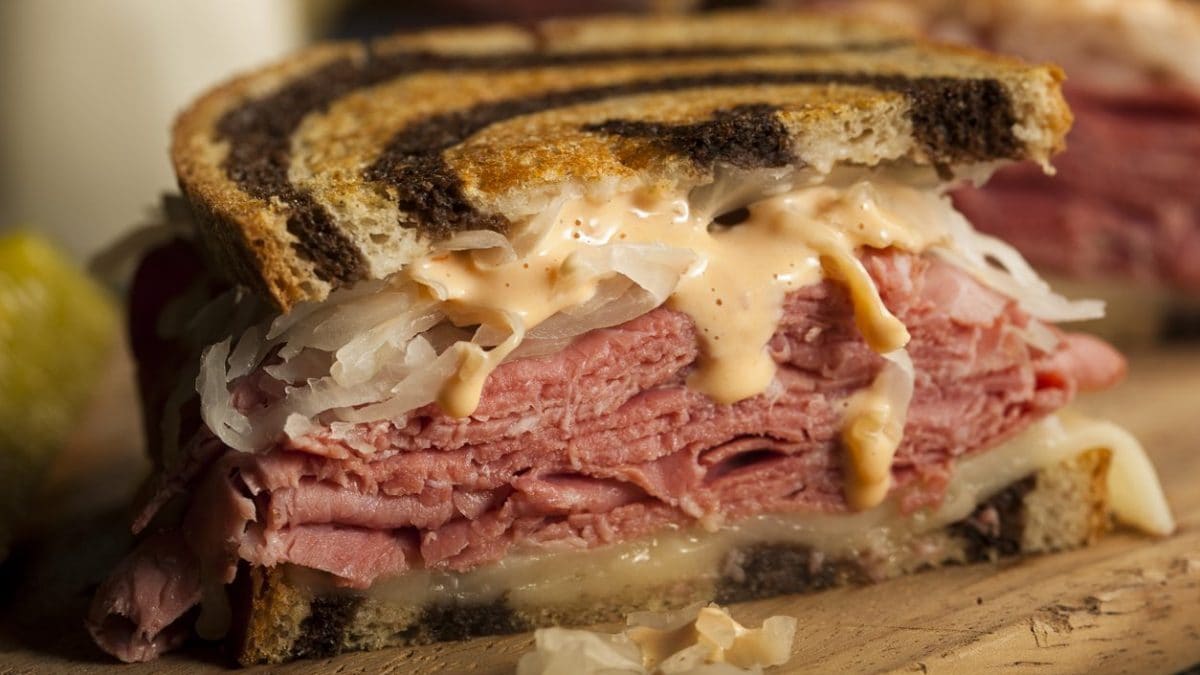
There are sandwiches that seem to be born from a precise and perfect geometry. And then there are those that seem to exist with the sole purpose of defying every rule of elegance and aesthetic sense: the Reuben definitely belongs to the second category. Tall, hot, generous, with ingredients that slide from every side with the first bite: this sandwich is one of those symbols of American gastronomy that has built its fame not on aesthetic perfection, but on its character. Meat, melted cheese, sauerkraut, gravy, and rye bread give life to one of the most iconic sandwiches in the United States. And as often happens with great classics, its origins are not entirely certain.
Reuben's Origins: New York or Nebraska?
When you think of this sandwich, it's almost inevitable to associate it with New York City and believe, obviously, that it was born there. In reality, there are at least two stories about the origins of the Reuben, and even today, it's unclear which of the two is true. The first version is set in New York in 1914: the protagonist is Arnold Reuben, a restaurateur of German-Jewish origins and owner of Reuben's Restaurant. According to the reconstruction, a regular customer – silent film actress Annette Seelos – asked for a freshly made sandwich. The initial combination, however, was different from the one we know today: ham, turkey, Swiss cheese, and coleslaw served on rye bread.
The other theory, however, moves everything to the American Midwest, in Omaha, Nebraska, in the second half of the 1920s. During a poker game held at the Blackstone Hotel, a player named Reuben Kulakofsky supposedly requested a late-night snack of corned beef —a type of pickled beef—and sauerkraut. The hotel owner then topped the sandwich with Swiss cheese and sauce, then grilled it. Legend has it that the combination became part of the hotel's menu, won over the public, and even won the National Sandwich Idea Contest in 1956. Omaha even proclaimed March 14th National Reuben Sandwich Day.
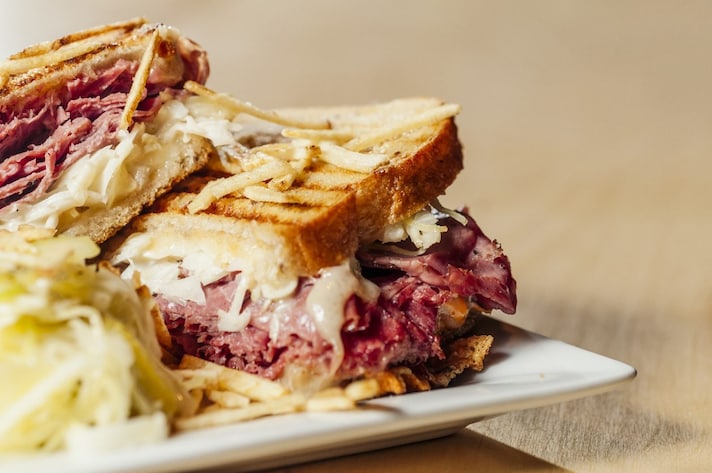
Whatever its true origins, the Reuben found its natural habitat in New York's Jewish-American delis during the 20th century. Over time, its success was consolidated thanks in part to a very simple phenomenon: menu standardization. From Manhattan to other boroughs, recipes began to replicate, and the Reuben became a fixture.
How to Make a Real Reuben
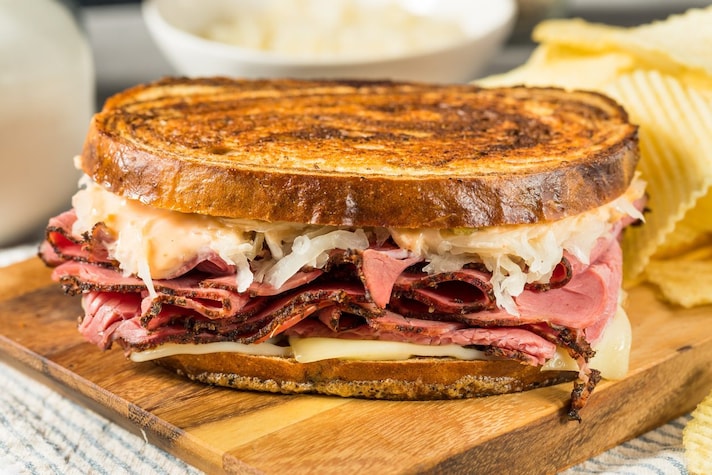
The strength of the Reuben lies in its simplicity, even if the final result appears deliberately generous and untidy. The base is almost always the same: rye bread, corned beef, sauerkraut, Swiss cheese, and a sauce that varies slightly from region to region. On the one hand, there are those who prefer Russian dressing —made with mayonnaise, ketchup, and other ingredients of choice, including horseradish, chili pepper, chives, mustard, and spices—on the other, those who choose Thousand Island dressing, made with eggs, mayonnaise, pickles, and various other ingredients. Both start with a creamy base, but the former tends to have a spicier note.
The assembly follows a precise logic: the bread is buttered, topped with sauce, and then layered with meat, sauerkraut, and cheese. Finally, comes the crucial step: the sandwich is cooked on a hot griddle, where the bread is toasted, the cheese melts, and everything comes together into a single , unmistakable structure.
;Resize,width=767;)
