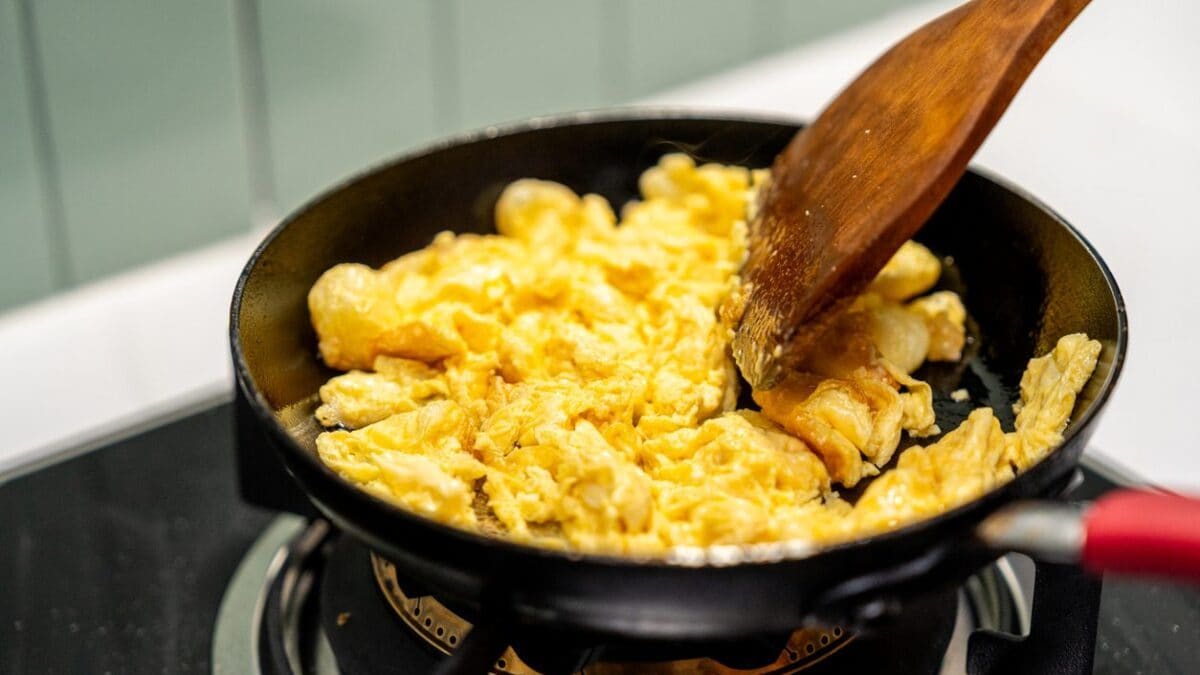
They are one of the must-have recipes of our savory breakfast: scrambled eggs find a place on diner menus as well as in home cooking, nutritious and tasty when paired with bacon, toasted bread slices, or pancakes. They are also a perfect dish for brunch, or for a quick lunch or dinner, and are among the most popular choices at wake-up calls in international hotels. If we pay attention, they do not all appear the same: some eggs have a more lumpy and consistent texture, like the English style ones, others are softer and more velvety, like the French style: what matters is that they do not remain excessively dry or rubbery. Usually, we try to soften them using a minimal amount of cream or milk, otherwise some have tried adding a drop of water. In reality, the three solutions are not interchangeable, because they lead to different results.
What Makes Your Scrambled Eggs a Success
Let's start with a premise: as demonstrated by numerous food publications, from Serious Eats to Epicurious, via the food section of the New York Times, but also by chefs, including Gordon Ramsay and Heston Blumenthal (both British and with scrambled egg recipes that don't go unnoticed), there is no single way to make scrambled eggs to perfection, but everyone agrees on some details: regardless of the additional ingredient you choose to add, an incorrect temperature and an excessively long cooking time are the factors that most compromise the final dish, preventing the eggs from being both creamy and fluffy. The fundamental rule is to keep them moist. From this point of view, there are two schools of thought. Some people use the hot-and-fast technique, while others use the low-and-slow technique. The former involves cooking quickly over high heat, resulting in puffy eggs that are slightly crispy around the edges and soft inside. The latter uses medium-low heat, resulting in larger, creamier flakes. In both variations, it's important to remove the pan from the heat before the eggs are fully cooked, as the heat continues to act even afterward, risking them curdling more than necessary and becoming dry.

Milk Vs. Cream Vs. Water
In the collective imagination, milk and cream give scrambled eggs a creamier texture because they add fat: this is only partially true, especially when it comes to milk. As Tasting Table writes, milk (choose whole milk) is richer in protein than fat, and it contains a significant amount of water, which would result in an overall mixture that is too protein-rich and watery, with the risk of a rubbery effect after cooking. Fresh cream, on the other hand, which contains about 35% fat, actually enriches scrambled eggs, giving a rounded flavor. Gordon Ramsay, in his famous version, adds a teaspoon of crème fraîche once the eggs are cooked, off the heat, to stabilize the cooking and add a silky texture, as well as a hint of acidity to the flavor. Still on the subject of dairy, Epicurious suggests a variation with a dollop of Greek yogurt, which serves the same purpose as the Hell's Kitchen chef's sour cream. And the water? It doesn't make the scrambled eggs creamier, but rather airier and lighter: this is supported, among others, by an article in Bon Appétit, which cites expert chef and food writer J. Kenji López-Alt (known for his incredibly crispy baked potatoes), who in his book The Food Lab explains that the steam created during cooking promotes the formation of larger bubbles inside the eggs, making them softer and more fluffy.
Does Sparkling Water Work Better Than Still Water?
In 2025, Meghan Markle helped draw attention to the use of sparkling water in scrambled eggs when, on her show With Love, Meghan, she cooked scrambled eggs with soda water to make them fluffier, considering it a “trick.” Ice-cold sparkling water is, in fact, a popular choice for frying batters, such as Japanese tempura, but it's unclear whether it produces a result that different from tap water when used with eggs. The food website Delish reiterates that “when it comes into contact with a hot pan, the water evaporates, helping the eggs to swell and become fluffy as they cook.” As food editor Taylor Ann Spencer reveals, “I've never tried it with sparkling water, but I imagine the carbon dioxide might add more volume.” The Australians at Taste.com did a test, comparing the action of sparkling water with that of milk: the final verdict, in their opinion, sees milk as the winner, in particular because it gives a fuller flavor and a more vivid color, but in terms of texture, both are tender, adjusting with 1 teaspoon of milk or sparkling water for every 2 eggs. Obviously, all that remains is to experiment at home.

The Bain-Marie Alternative Method
One of the culinary personalities often associated with the preparation of scrambled eggs is the aforementioned Heston Blumenthal, a chef who opts for a method where the key ingredient of scrambled eggs – as he himself defines it – is patience. The reason? Cooking takes place in a bain-marie, therefore very slowly in order to give the mixture an extremely creamy consistency, especially popular in the French version of this dish. How is it done? In the simplest version to make at home, the eggs are broken into a heat-resistant bowl, cubed butter is added, a little salt is added and the mixture is cooked over a pan of boiling water, stirring with a spatula to gently thicken the mixture using indirect heating. How does a three-starred chef make it? In addition to butter, Blumenthal initially adds milk and double cream – a type of thick cream, characterized by at least 48% fat – and after cooking, he seasones with freshly ground pepper and salt. Complete once plated by pouring some brown butter (beurre noisette) and a few drops of sherry vinegard, a vinegar obtained from Spanish fortified wine: they give depth, aroma and, ça va sans dire, a truly gourmet touch.
Some More Advice
Water, milk, and cream are all ingredients that contribute to successful recipes, but they're not enough on their own. As we've seen previously, mistakes often involve high temperatures and overcooking, while there are some tricks that help improve the consistency. Here are a few that are easy to put into practice.
- The eggs must be beaten evenly to avoid lumps while cooking, as yolks and whites coagulate at different temperatures. A step used by several chefs (including our own Michele) is to strain the mixture through a fine-mesh sieve to make it smoother.
- The pan should be greased with butter or extra virgin olive oil, so the scrambled eggs don't stick. Butter is often used generously, precisely because it contributes to the creaminess. Gordon Ramsay, for example, even adds a few flakes of it to his scrambled eggs just before serving.
- To mix eggs in a pan, the perfect ally is not a whisk, but a flexible silicone spatula, which allows you to collect more surface area from the bottom of the pan without creating a grainy texture.
- When should you add salt? The ideal time is before cooking, directly into the beaten mixture (preferably 10-15 minutes beforehand): the salt affects the proteins, keeping the eggs moist and fluffy. Adding it while they're cooking will instead cause them to release liquid, making them dry.
- In his recipe for NYT Cooking, Kenji López-Alt introduces cornstarch or potato starch into the ingredients: a scientific solution designed to block the excessive contraction of egg proteins, preventing them from expelling liquids and thus remaining soft and hydrated for longer.
- If you feel like the eggs are drying out during cooking (including in a double boiler), or you're worried about drying them out, remove them from the heat and then replace them. All heat management can be achieved by using the on – off technique, as in Ramsay's version, which involves removing the pan and replacing it for 3 minutes during cooking, stirring constantly.

