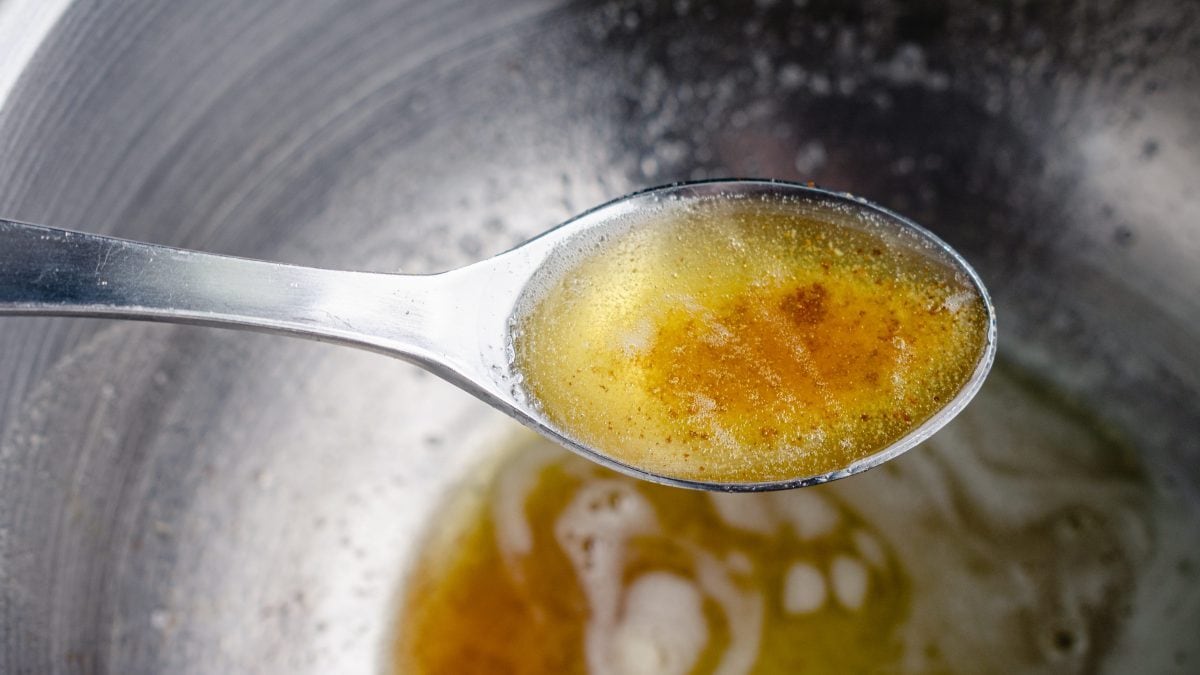
If extra virgin olive oil is considered the king of condiments in Southern Europe, the French equivalent can only be butter. France is known for producing specialties closely tied to its territory— Normandy butter , above all —and for showcasing them in many traditional recipes, making butter a defining ingredient, as the famous chef and food writer Julia Child had already discovered, helping Americans discover the "secrets" of French cuisine. A version particularly beloved by chefs is beurre noisette, also known as brown butter or hazelnut butter, a condiment with amber-brown hues and a toasted aroma that gives dishes a unique flavor. Let's discover it.
What is Brown Butter?
Known in French cuisine as beurre noisette, brown butter is a preparation made by slowly melting butter over a flame until it takes on certain characteristics. Which ones? Its color becomes golden-brown and its aroma intense, with nuances reminiscent of toasted nuts, particularly hazelnuts. The name derives precisely from these aromatic notes: in French, in fact, noisette means "hazelnut." It is therefore not simply melted butter, but a condiment with a warmer and more enveloping flavor.

How to Prepare Beurre Noisette
Beurre noisette is a butter-making technique that involves melting the butter so that the water naturally present in it evaporates during heating, triggering the so-called Maillard reaction between the amino acids (which make up proteins) and the sugars it contains. This is the same chemical process that forms the typical golden crust on steak or bread during baking, and in this case, it causes the butter to brown. The danger, as you might imagine, is that the preparation could burn: even the slightest hint of over-toasting is enough to ruin the entire process and have to start over, resulting in a waste of butter.
To avoid this unpleasant outcome, it's a good idea to follow some guidelines that make the process simple and safe.
First, use good-quality butter, cut into cubes and left to soften outside the refrigerator, so that it melts more quickly and evenly; choose a non-stick pan with a light-colored bottom, which allows you to easily follow the color change from yellow to brown; opt for a medium flame, which heats the butter sufficiently without losing control. The process takes just a few minutes, during which it's important not to "abandon" the butter, but to keep an eye on its transformation step by step, stirring with a spatula or wooden spoon. When you see the water has stopped evaporating because the foam it produced is decreasing, you smell a pleasant hazelnut aroma, and the liquid has reached a dark amber hue, it's time to quickly remove it from the heat and transfer it to a bowl to stop the cooking process. You can also strain it through cheesecloth or a fine-mesh sieve to catch any residue. The beurre noisette is ready.

How to Use It in Both Savory and Sweet Recipes
Hazelnut butter is widely used in French culinary tradition and can be found in numerous recipes, both sweet and savory. In pastry making, for example, just like melted butter, it can be used in the dough for cakes, biscuits or sweet treats, such as the typical financiers, madeleines, and even cookies, giving them a richer and more complex flavor and aroma. It pairs perfectly with ingredients such as chocolate, coffee or dried fruit, perfect for enhancing the toasted and warm notes, and with more acidic foods, such as berries and lemon, creating a delicious contrast. In savory dishes, beurre noisette adds a refined touch to fish recipes, to be tried in a great classic such as sole meunière, and as a sauce for beef fillets or pork and chicken, or to flavor vegetables, especially potatoes, and omelettes. Beurre noisette is also a creative idea for stirring a risotto and an alternative condiment for gourmet pasta dishes.
;Resize,width=767;)
