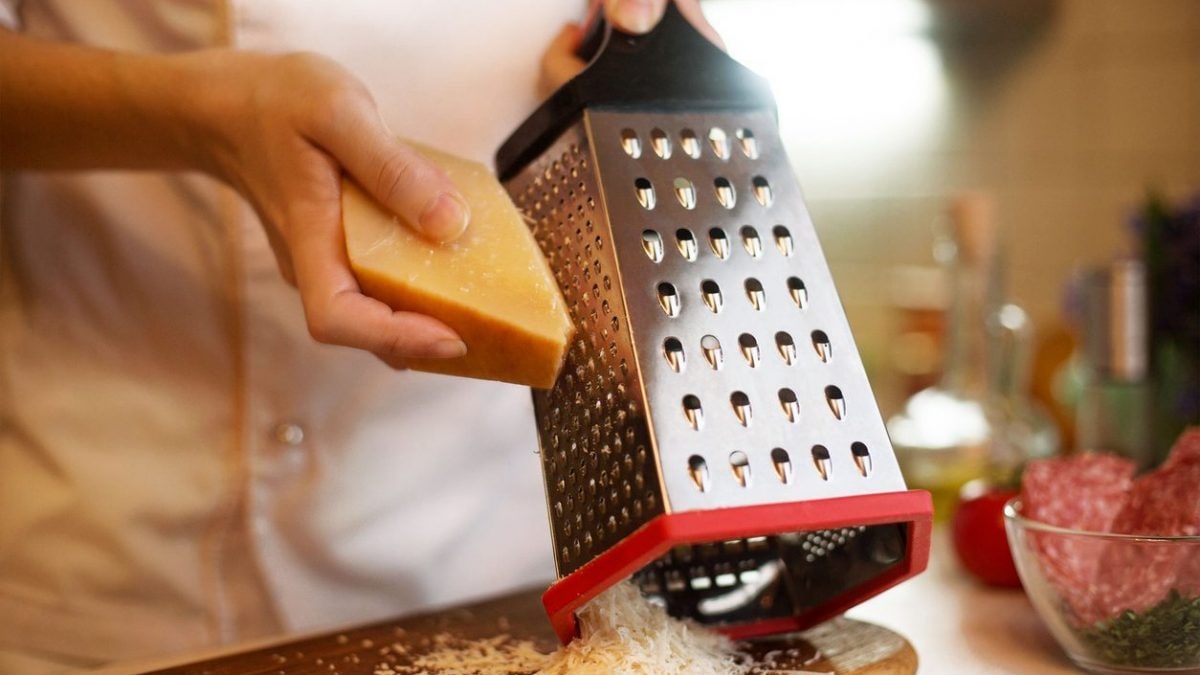
There are few kitchen tasks more universally dreaded than grating a hard block of real Parmigiano-Reggiano. You pull out the box grater, press down with all your might, and aggressively scrub the cheese back and forth. Within two minutes, your arm is exhausted, your wrist aches, and you have inevitably scraped a chunk of your own knuckles against the metal teeth.
The alternative, however, is equally disappointing. Buying the pre-shredded tubs or green shakers from the grocery aisle means settling for muted flavor and a heavy dose of cellulose powder—an anti-clumping additive derived from wood pulp that actively prevents the cheese from melting smoothly into your food.
But you don’t have to choose between scraped fingers and inferior dairy. By stepping away from the box grater and letting modern high-speed blades do the heavy lifting, you can convert a rock-hard wedge of parmesan into a mountain of fluffy cheese in under 60 seconds flat.
The Blender or Food Processor Blitz
The absolute fastest way to process a block of parmesan is a trick fiercely championed by Allrecipes. It completely bypasses the traditional grating motion by rethinking how we break down hard dairy structures. Instead of dragging the cheese across stationary metal teeth, you let rotating blades treat the cheese like a dry grain.
How to Execute the One-Minute Blitz:
- Use a sharp chef's knife to slice the dark, hard rind off your piece of parmesan.
- Chop the remaining cheese into rough, uniform squares (about one-half to one inch in size). Hard cheeses can stall a motor if they are too large, so keeping the cubes small protects your appliance.
- Drop the cubes directly into a high-powered blender or a sturdy food processor fitted with the standard metal S-blade. Secure the lid and hit the pulse button in sharp, three-second increments.
At first, it will sound incredibly loud as the blades shatter the hard cubes. However, within 30 to 45 seconds, the machine will quiet down as the cheese transforms into a uniform, nubby, pebble-like consistency—giving you a fresh texture identical to premium store-bought grated cheese without any added chemicals.
The Two-Step "Snowy" Method
While the basic S-blade blitz is phenomenal for general pasta toppings or pizza garnishes, certain classic Italian dishes—like cacio e pepe, carbonara, or delicate ravioli fillings—require a completely different texture. For these recipes, the cheese needs to be an ultra-fine, powdery snow so it dissolves into cooking water instantly without clumping or turning stringy.
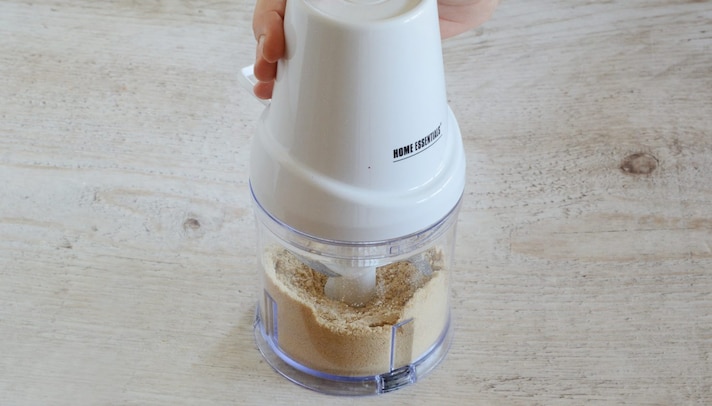
To achieve this texture in under a minute, the culinary experts at QB Cucina recommend a brilliant, two-part hybrid attachment technique. First, fit your food processor with the fine-grating disc attachment and push your skinless chunks of cheese through the chute. This takes mere seconds and yields clean, medium-fine shreds.
Second, remove the grating disc, drop the shredded cheese back into the main bowl, and insert the standard metal S-blade. Give the shreds five to six quick, energetic pulses. This secondary blitz breaks the slivers down into a micro-fine powder.
Hard cheese contains natural fats that will easily melt if exposed to prolonged heat. Never just turn the food processor on and walk away; the friction of the spinning blade will heat the cheese and turn your powdery snow into a greasy, solid paste. Stick strictly to quick, controlled pulses.
The Golden Rules for Rapid Parmesan Processing
To maximize your efficiency and preserve the integrity of your cheese, always keep these three fundamental storage and prep rules in mind:
- Save the Rinds: Never throw away the hard outer rind you sliced off before grating. Throw it into a zip-top bag and store it in your freezer. The next time you make a batch of minestrone, marinara, or chicken stock, drop the frozen rind directly into the simmering liquid to infuse the broth with a rich, savory umami depth.
- Respect the Two-Week Window: While it is tempting to process a massive two-pound block of cheese all at once, food science testing from Cook's Illustrated warns against it. Whole blocks of cheese preserve their flavor compounds beautifully, but once the cheese is grated and exposed to air, its aromatics begin to dissipate. For the absolute best flavor, only blitz what you plan to use within a two-week window.
- Freeze the Rest: If you do happen to over-grate, do not leave it in the fridge to dry out. Freshly blitzed parmesan freezes beautifully. Store your extra grates in an airtight container in the freezer; because the moisture content is so low, it won't freeze into a solid block, allowing you to scoop it straight out of the freezer and onto your hot pasta as needed.
;Resize,width=767;)
