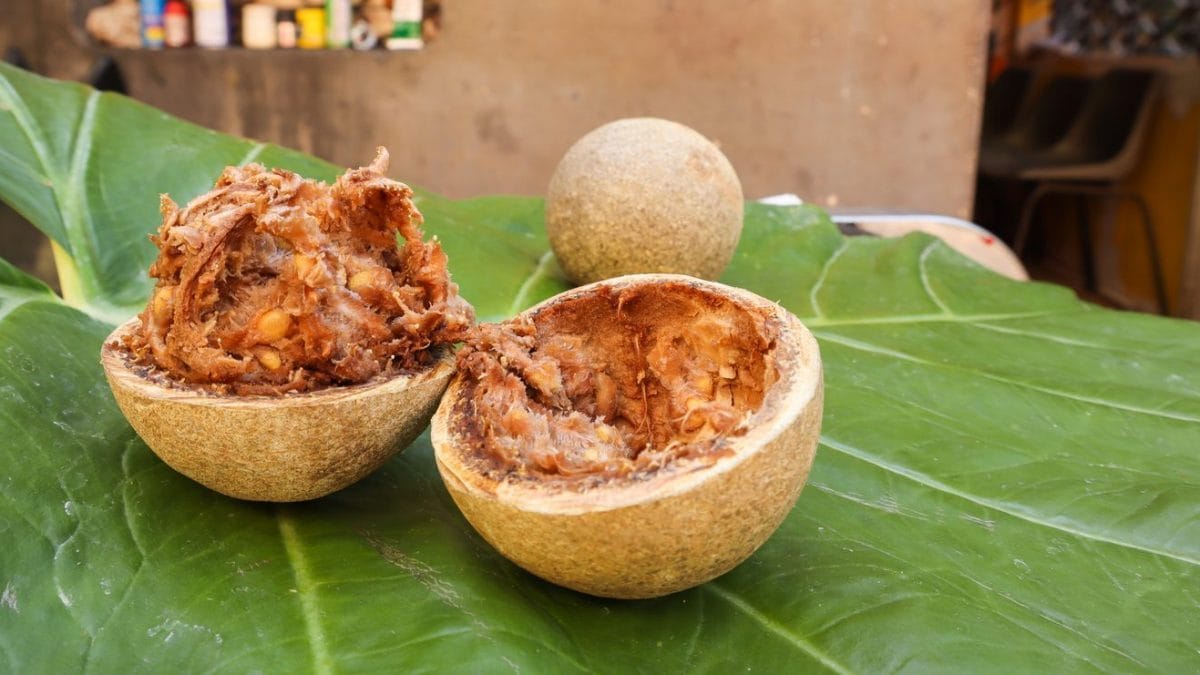
How many times in life do we tell ourselves "don't judge a book by its cover" or "the habit doesn't make the man," and so on. And every now and then we need to remind ourselves of this in the kitchen, too, because despite the huge variety of beautiful, colorful, and fragrant foods, there are some that are anything but inviting. Among these, we can include a fruit from the East that doesn't exactly win you over at first sight: the wood apple, which, spoiler alert, isn't just ugly on the outside but also on the inside. One of the reasons you might want to try it, however, is its unique flavor, which is a mix of different aromatic notes and the perfect balance between sweet and tart.
What is a Wood Apple Like?
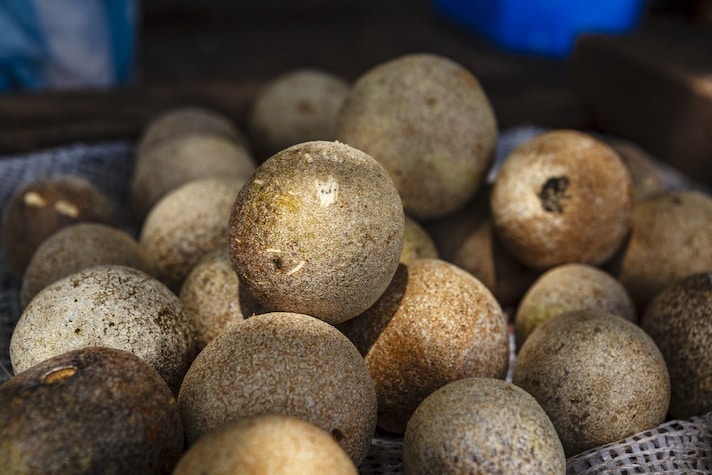
Known internationally as the wood apple, the wood apple grows on a plant called Limonia acidissima, which is mainly found in India, Sri Lanka, and Southeast Asia. In our country, it is still little used – probably many people don't even know it exists – but it is a very particular fruit, both in taste and appearance. It is precisely this latter aspect that first strikes you: more than a classic fruit, it resembles a small, compact sphere, with a thick, very hard peel that truly resembles wood. And it's not just a sensation: its peel is incredibly tough, so much so that opening it requires a certain amount of force, in some cases using a very heavy knife or small, firm blows.
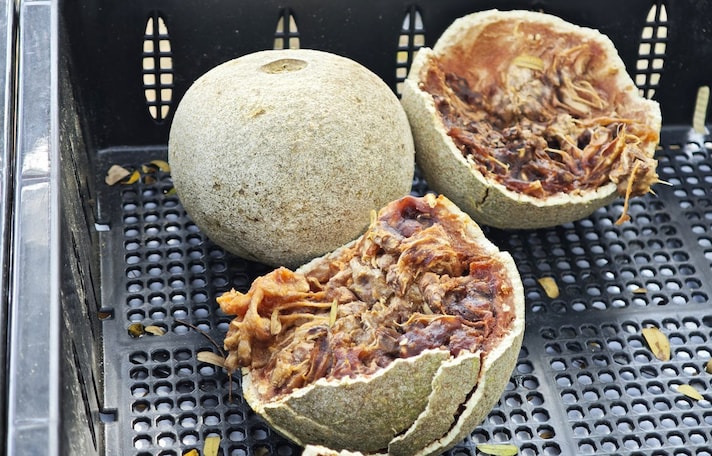
This way of opening it resembles that of the more famous coconut, but inside the wood apple does not have a white, shiny pulp: on the contrary, that of the wood apple is dark, rubbery and dense, to which small white seeds are attached. In this case, therefore, it is not only the "cover" that is uninviting, but also the contents are not at all captivating: generally, it is a deep brown, when it has reached the right ripeness, but it can vary towards lighter shades, ranging from ivory to orange. And to understand if it has reached the right ripeness, you have to drop it from a height of about 30 centimeters and observe its behavior: if it bounces, it is still unripe, but if it makes a dull thud, it is ready.
What Does It Taste Like?
Like its appearance, the flavor of the wood apple is quite complex, and you can tell by its smell: strong and pungent, which some associate with that of blue cheese or fermented fruit. The flavor, however, is unfamiliar and ranges across a very complex aromatic spectrum, at times reminiscent of tamarind and raisins. It can be considered neither overly sweet nor completely tart, but rather a balance in between with a slightly acidic note.
Wood Apple's Benefits and Its Connection With the Ayurvedic Tradition
Like all fruits, the wood apple has an interesting nutritional profile: the pulp and other parts of the fruit contain numerous compounds such as flavonoids, polyphenols, and tannins, which are often associated with various biological activities. Some scientific studies, in fact, highlight potential antioxidant, antimicrobial, anti-inflammatory, and gastroprotective effects, as well as possible effects on lipid and blood sugar regulation. Furthermore, the wood apple is associated with the Ayurvedic tradition, a system that intertwines medicine and philosophy in which food is considered not only nourishment but also a tool for prevention and harmonization of the body. According to this practice, its pulp can perform an important antioxidant function, help promote digestive health, and is an excellent ally in combating dental and gum problems, although there is no clear scientific evidence to support this.
;Resize,width=767;)
