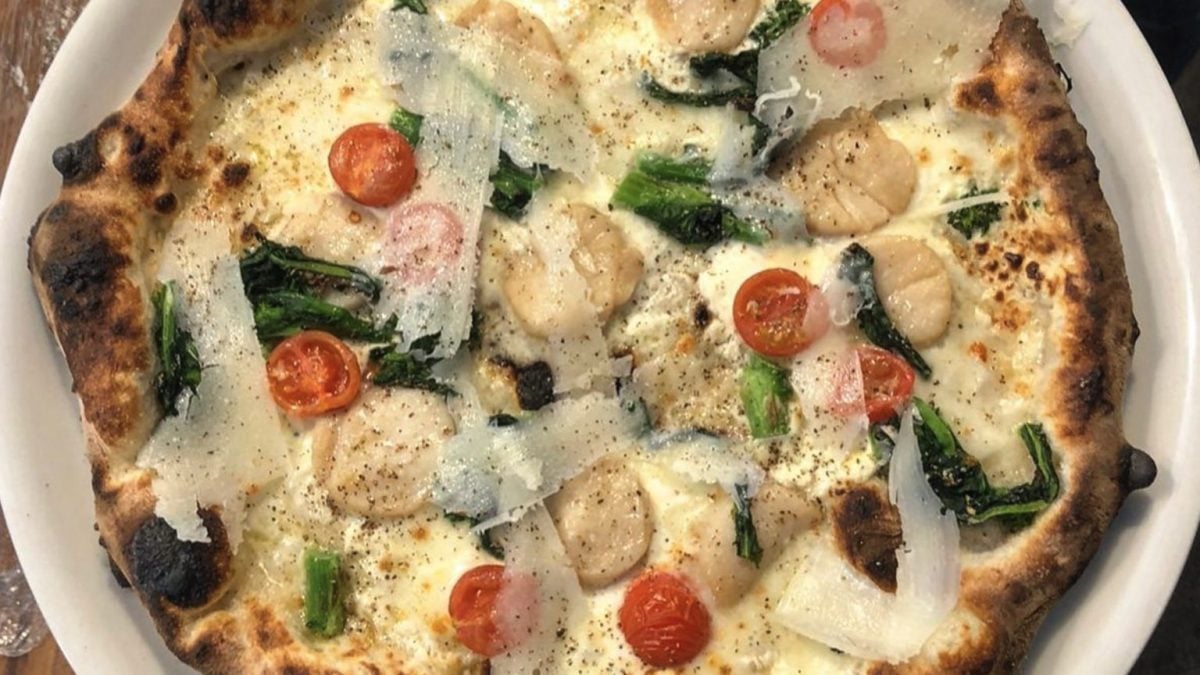
It's certainly the food Italians are most fond of, the one the Italians defend tooth and nail from any potential foreign excess. But it's also one of the most beloved foods in the world, and so they have no choice but to resign themselves, and perhaps even accept, the countless variations that exist. Now a new style arrives directly from Japan: based on the Neapolitan style, it's becoming popular here, in the United States.
Where Does This New Pizza Come From?
It all began about 30 years ago, when Susumu Kakinuma, during several trips to Naples, decided to learn all the techniques for making a real Neapolitan pizza. Unfortunately, however, every craftsman jealously guards his own secrets, and Kakinuma had no choice but to taste as many pizzas as possible before trying to replicate them. So, once he returned to Tokyo, he embarked on a long study of flours, fermentations, and cooking methods to understand how to make that disc of dough just as they would do in the Neapolitan city. The fruit of this long work is the opening of two pizzerias: the first, Savoy, in 1995, and the second, Seirinkan, inaugurated in 2007, specializing exclusively in marinara and margherita pizzas. Over the course of his career, master Kakinuma has not only delighted the Japanese metropolis with his creations, but has also trained a new generation of pizza makers, each of whom has added a personal touch to their pizza.
Among his students is Tsubasa Tamaki, and it's thanks to him that this type of pizza is now driving Americans crazy. Last February, he organized a pop-up event in New York so that the American public could try his pizzas. The response was extraordinary: both evenings were sold out, and Tamaki himself apologized to those who couldn't get reservations. In the same video, however, the Japanese pizza chef reassured New Yorkers: Pizza Studio Tamaki, his pizzeria, will soon open in New York.
What Are The Characteristics?
So, let's get to the most important thing: how is this pizza made? At first glance, it might seem like a classic Neapolitan pizza, slightly more burnt. This is partly true: Tokyo-style pizza has an airy, more pronounced crust, of varying sizes, and a thinner center. Compared to the Neapolitan pizza, however, we immediately notice something that might turn our noses up: the crust has obvious and intentionally marked burn marks, which are absent in the Neapolitan version, where they are actually considered a defect. Furthermore, the center is less soft and less moist, while the cooking takes place at extremely high temperatures, which are precisely responsible for these burn marks. Finally, two details contribute to defining the identity of this style: the addition of cedar chips during cooking—which seems to impart a slight smoky note —and the use of Okinawa salt, which serves to intensify the flavor. It is precisely these differences that prevent it from being classified as a true Neapolitan pizza: in fact, it does not meet the standards defined and codified by the "Associazione Verace Pizza Napoletana" (AVPN), which protects the identity and tradition of the pizza of the same name.

;Resize,width=767;)
