In a world that only talks about successes, who talks about failures? Paris has decided to do so: at the "Musée des Arts et Métiers" in the French capital, the exhibition "Flops?!" shifts the paradigm of certain products, transforming them from commercial failures into necessary stages in the creative process. "Failure can prove crucial for the development of ideas, because it is an intrinsic phase of the innovation process in almost 90% of products," explained MuAM director Michèle Antoine. While some of the ideas may seem grotesque today, the exhibition—open until May 17, 2026—offers a different perspective, demonstrating that failure is a way to prepare for innovation.
Among the "memorabilia" on display in this exhibition are bizarre spray condoms; the famous Bi-Bop, a cell phone from the early 1990s that only worked when stationary and required two separate subscriptions to make and receive calls; and the practically radioactive Tho-Radia cream, banned in 1937 when it was realized it wasn't exactly safe for the skin. The food sector also contributed to filling this exhibition, with some sensational ideas: among them Heinz's green ketchup – and not only green – Colgate's frozen lasagna, and Crystal Pepsi. Do you remember these products? Let's retrace their (brief) history, from ingenious ideas to real flops.
David Novak's Crystal Pepsi
Between the late 1980s and early 2000s, a very popular trend in the United States was what went by the name of "Clear Craze." Transparency, in short, was synonymous with a healthy, quality product. Ivory soap was a huge hit, the Game Boy even showed its internal circuitry, and in this context, Pepsi Vice President David Novak decided to create a transparent soft drink. The task was daunting: inventing a transparent cola that would retain its traditional flavor. Thanks in part to Surinder Kumar, the scientist behind the Doritos flavor, the idea became a project, and the first product launches took place in 1992. Although initial sales were promising, with around $470 million grossed in the first year, consumers were dissatisfied with the flavor. In fact, most probably bought it more out of curiosity than anything else. Coca-Cola responded with its "TaB Clear," confusing the market with two very similar products. Within a short time, the idea of transparent drinks was abandoned, confirming itself as a mere passing fad.
"It was probably the best idea I ever had, but also the worst executed," said David Novak, a former Pepsi executive. That's because: "Because we rushed everything, we had problems with the quality of the product: it had a longer aftertaste than it should have." Today, Novak still keeps a bottle of Crystal Pepsi in his office, a reminder of the importance of taking risks and being creative.
The Legend of Colgate Lasagna
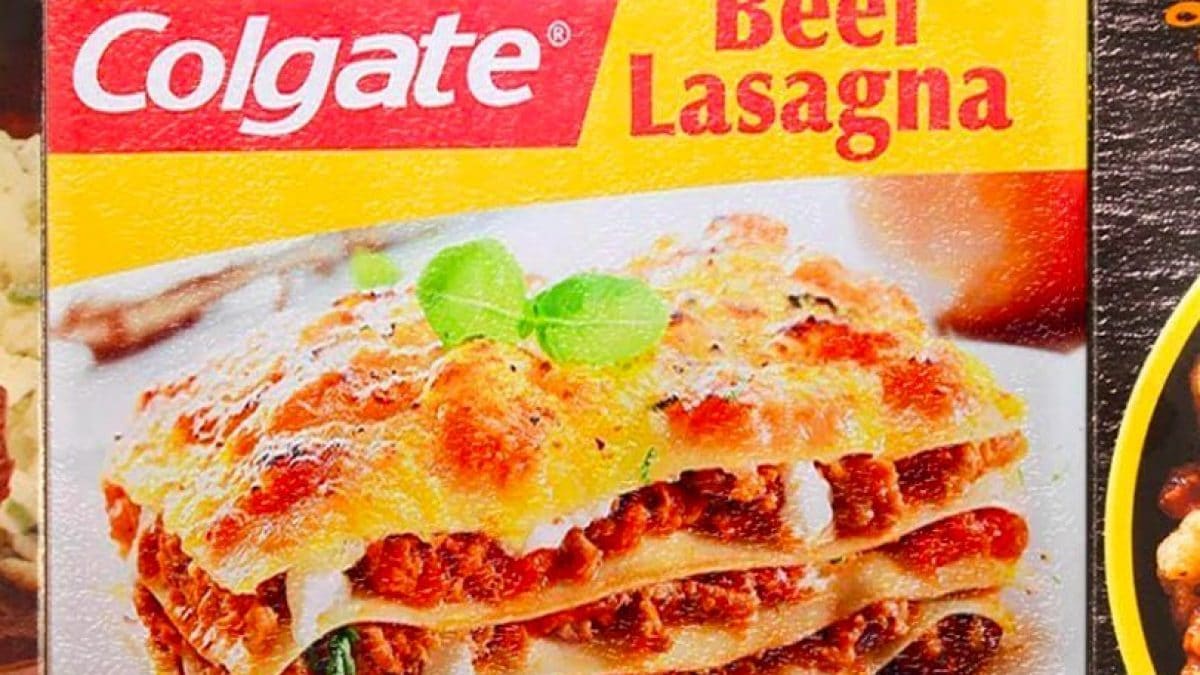
As you continue walking through the Parisian exhibition, you'll also come across a box of Colgate frozen lasagna: yes, the oral hygiene brand we all know. Colgate attempted brand extension in the 1960s, a marketing tactic aimed at extending a company's brand beyond its core products or services. In this case, however, it ended very poorly.
For years, marketing manuals have cited this lasagna as a flop of recent decades, yet Colgate itself has denied that this product was ever sold on a large scale. In the 1960s, in fact, the innovative "Colgate Kitchens" line died before it was even born. The box you see at the exhibition, therefore, could be a creative reconstruction like the one at the Museum of Failure. A sort of "historical fake" so impactful that it became more powerful than the product itself.
Green, Purple and More Colored Ketchup
With the arrival of 2000, Heinz attempted to revolutionize tables around the world by adding a touch of color. Coinciding with the release of the film "Shrek," the American food company launched Ez Squirt Ketchup bottles, filled with a green sauce. Called "Blastin Green," it was a huge success. Children in particular loved this product, as it also featured a thin nozzle that allowed them to "draw" on burgers or fries. Heinz rode the wave of enthusiasm by launching other editions, including "Stellar Blue," "Funky Purple," and "Awesome Orange," selling over 25 million bottles. There was even a "Mystery Color" version, packaged so that the color of the sauce could only be revealed once the bottle was squeezed.
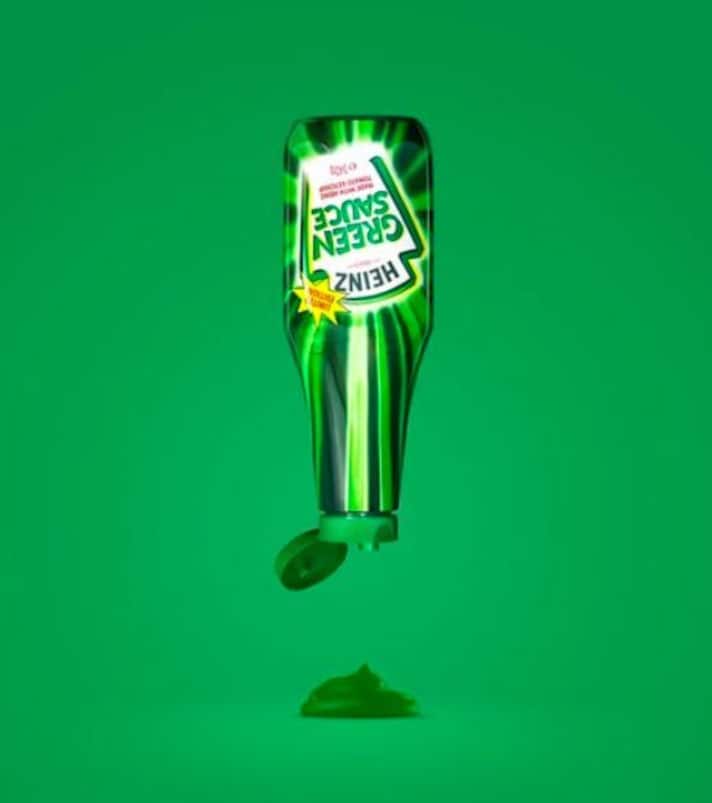
The phenomenon only lasted a few years. The second half of the 2000s was characterized by a strong focus on food ingredients, and the heavy presence of coloring ended up drastically decreasing sales. Furthermore, the mix of various different sauces often produced unappealing colors, such as gray or brown, which was appetite-depriving. The initial enthusiasm, therefore, faded, and EZ Squirt bottles were removed from the market.
The Phenomenon of Limited Editions
Compared to twenty years ago, most companies today prefer to focus on limited editions and temporary collaborations, strategies that reduce the risk of failed campaigns and keep production costs down. Visiting the "Flops?!" exhibition, however, also reveals the stories of those last inventors and brands who had the courage to truly dare, launching unconventional ideas onto the market. They probably never imagined that, years later, their most bizarre experiments would end up at the center of an exhibition in Paris.
;Resize,width=767;)
