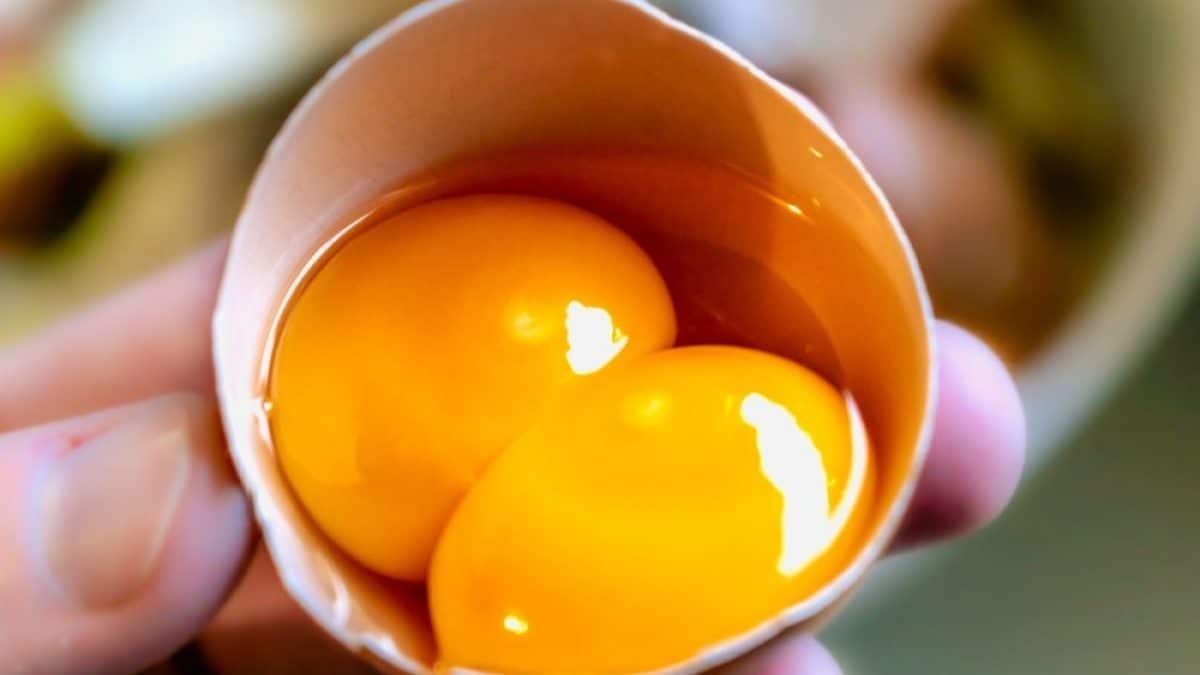
Perhaps you've cracked an egg to make an omelette, a cake, or a quiche, only to discover two yolks instead of one. A stroke of luck, or something to watch out for? Eggs with double yolks aren't harmful to your health: they're the result of an abnormal, yet completely natural, event that occurs during the hen's ovulation. There are many reasons for this, including heredity, with birds genetically predisposed to it. These eggs are harder to find in large retailers, but more common among those who work with chickens every day. That said, it's always a surprise: let's see what you need to know about them.
Why Some Eggs Have Two Yolks and How They Are Formed
When two yolks form within the same egg, it means something unusual has happened during the hen's ovulation. This is a natural phenomenon that can occur especially among young hens, when the reproductive system is still reaching its full potential, but it is also common among those that tend to lay larger and heavier eggs than normal. All hens develop only one functioning ovary, the left one, containing follicles at different stages of maturation. When the time comes, the oocytes (which are also known as yolks) are released and begin their journey along a canal (called the oviduct) that leads to the formation of the entire egg. During this phase, while inside the yolk sac, the yolk is coated with albumin, the protein responsible for egg white. It may happen, therefore, that two yolks are released simultaneously from the ovary, both of which remain enclosed in the albumen, or that one yolk descends more slowly into the oviduct, being joined by the next, with the result that they find themselves as a pair inside the same egg.

Double-Yolks Are Rare But Not Too Rare
First of all, it's important to clarify that an egg with two yolks is a completely normal egg, so much so that it can happen that there are as many as three trapped in the same shell. This is a rather rare occurrence when buying eggs at the supermarket, but less surprising for those who own a chicken coop: the reason, in fact, can also be genetic, with hens that lay this multiple type of egg throughout their lives. It's usually easier to spot the "surprise" in large eggs, those marked XL, but this is not the rule. These are eggs from which chicks are unlikely to hatch, as they lack the space and other conditions necessary for their development.
Can They Be Eaten or Not?
The answer is yes: double-yolked eggs pose no health risks. They should be treated exactly like other eggs for food safety reasons, preferring cooking and pasteurization over eating them raw. Something changes nutritionally: the yolk— like eggs in general —is an excellent source of protein, and in this case, you'll have a greater amount available.
Beliefs and Superstitions About Double-Yolked Eggs
The world of food is a veritable goldmine of stories, legends, and folklore. There are countless popular beliefs surrounding eggs: for example, they concern the shells, which should never be thrown away half-finished, or the Devil might find a convenient place to nest inside. Double-yolked eggs also have their own symbolic meaning, linked to abundance: they are synonymous with luck and fertility.
;Resize,width=767;)
