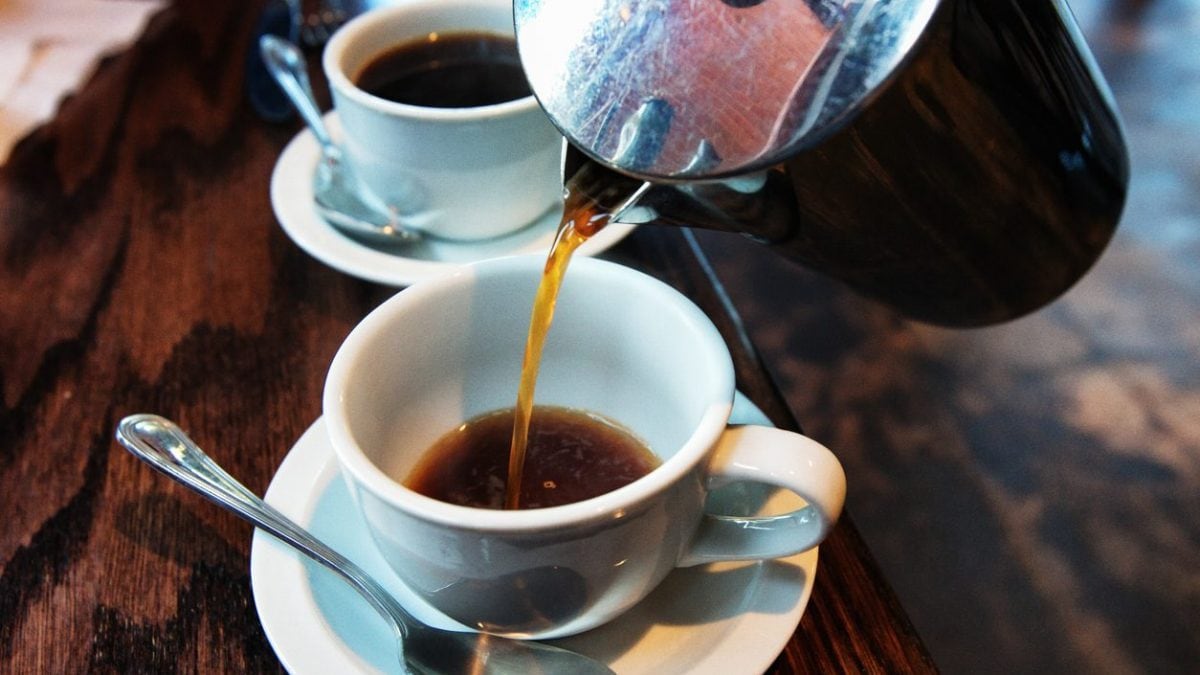
Energizing and invigorating, tasty and customizable to your liking, an opportunity for a relaxing break and a true daily treat: it's hard to resist coffee, a much-loved drink in every gastronomic culture for its many benefits (as long as you don't abuse it) and for the opportunity it provides to take a moment all for yourself.
Precisely for this reason, it's common to overcook and end up with leftovers, just as it's very common to reheat leftover coffee, partly to avoid wasting it and partly to save time. But is reheating yesterday's coffee a good practice, or could it be harmful? Despite the widespread habit, scientific evidence shows that this is incorrect, as it reduces the aroma of the drink and, above all, can become a health risk. But be careful: this doesn't mean throwing away leftover coffee, just using it differently.
Can You Drink Coffee From the Previous Day?
Drinking coffee the day after has a whole series of drawbacks, starting with the taste. Unless you've moved the coffee from the day before to an airtight container, it's usually common practice to leave it in a saucepan. This is precisely what's detrimental to the coffee, because once heated, the beverage will have lost some or all of its flavor. Most of the flavor in coffee comes from its fresh preparation, and after a short time, even less than an hour, the flavor begins to deteriorate due to oxidation, the process triggered by exposure to air and causing it to lose its original flavor. Not only that, but the flavor often deteriorates, making the beverage more bitter and sometimes even more acidic.

We must also dispel a rather widespread myth: that reheating leftover coffee reduces the caffeine content in the drink. Nothing could be more wrong: unless several days have passed, caffeine is well-stable and doesn't deteriorate easily, especially if you've stored the coffee in a glass bottle or an airtight container and then placed it in the refrigerator. This doesn't apply, however, to coffee stored outside the refrigerator, which spoils much more quickly.
Added to all this is the health issue: reheating leftover coffee triggers a series of processes within the coffee that can lead to some unpleasant consequences.
Why You Should Never Reheat Coffee
As we've explained, reheating coffee causes a loss of all the aromas that make the drink so beloved, but the problem isn't just flavor. The practice of reheating leftover coffee has attracted interest from the scientific community, which has demonstrated the contraindications of this habit through a series of studies.
The problem arises from one of the components of coffee, chlorogenic acid, a compound that when subjected to heat decomposes into caffeic acid and quinic acid, two substances that if taken in high concentrations can cause unpleasant gastric problems.
As if that weren't enough, both the moka pot and the saucepan used to heat coffee can release tiny traces, generally within safety limits, into the beverage. This isn't a problem if the steel is high-quality (for example, 18/10 stainless steel) and has no food contact issues; it becomes a problem with lower-quality steel, and although the amounts released are well below legal limits, the day-to-day accumulation of these micrometals can be dangerous in the long run.

This doesn't mean that leftover coffee should be wasted and thrown away: the important thing is not to reheat it, but once cold, you can use it in many new ways. The best solution, in this case, is to use the coffee in other recipes where it can be used directly cold, for example, the classic tiramisu, the tasty coffee cream, a good coffee liqueur, or a cold coffee-based drink, such as granita. Always remember, if you want to reuse leftover coffee, to store it in the refrigerator in an airtight container, so as not to alter the flavor.
;Resize,width=767;)
