Who's afraid of sausage fat? Certainly not the purists of this fresh cured meat, who appreciate its functionality during cooking, adding flavor and tenderness to the meat. Yet it's undisputed that this traditional product, made primarily from pork, is characterized by a high fat content and therefore unsuitable for what is called a healthy diet.
In the kitchen, sausage is presented in a myriad of ways: grilled, griddled, stewed, and in ragù, becoming the protagonist of many regional dishes, from polenta and sausage, more common in the North, to the evergreen Neapolitan sausage and broccoli rabe. Despite the different recipes, which require different cooking times depending, for example, on the type of raw material, it is possible to give some general advice on how to avoid making the biggest mistake in treating this cured meat: drying it out. A properly cooked sausage, in fact, must remain juicy. Furthermore, there is also a myth to dispel: that of the Manichaeism between "never pierce it" and "always pierce it", because the truth lies somewhere in the middle, as it depends on the preparation.
How to Degrease Sausage (If You Really Have To)
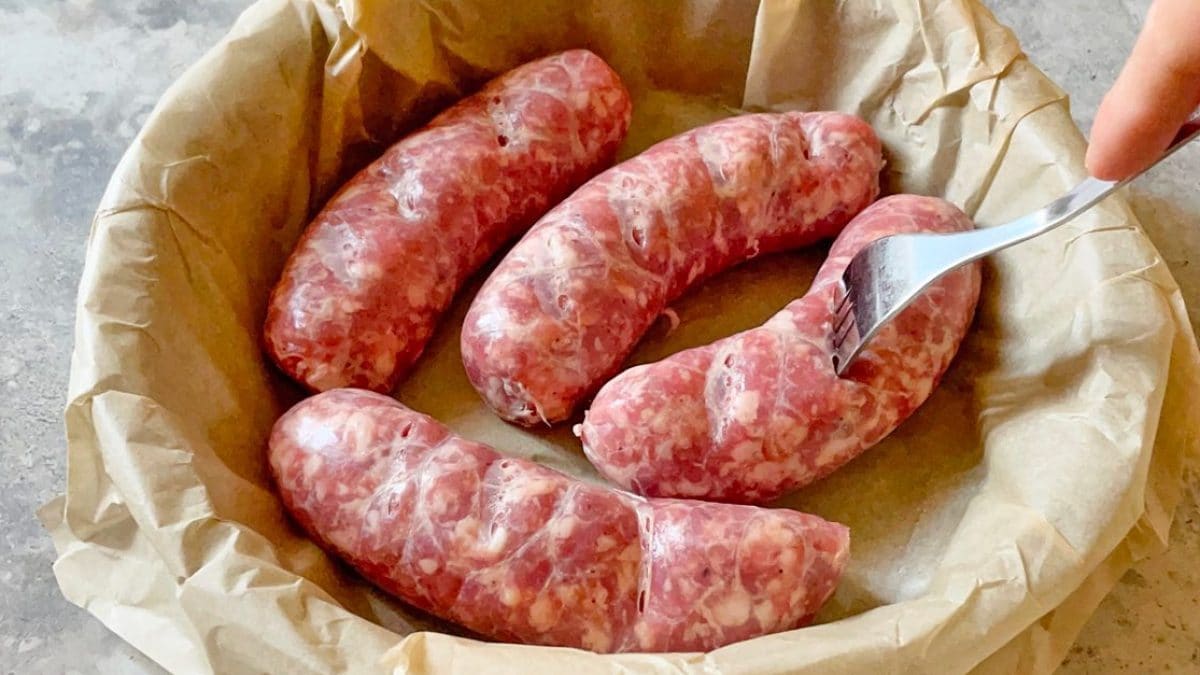
Removing the fat from sausage isn't the best way to ensure tender, flavorful cooking: the fat retained inside the casing keeps the meat moist and flavorful, as well as preventing it from falling apart. To reduce the fatty portion, you can still prick the sausage with the prongs of a fork or toothpick, cutting it in half or in small pieces, so that the internal fat escapes into the pan and can be gradually removed with a spoon; the risk, in this case, is that the result will be a bit dry.
Another practice is to simmer the whole sausage in unsalted water for a few minutes (about 8 minutes), piercing the skin: you will notice white foam rising and a greasy film on the surface, signs of the fat being removed. This technique is also used with pork ribs, and then used in the intended recipe, whether pan-fried or baked.

How to Prevent Sausage From Drying Out Depending on The Cooking Method
Sausage prepared to perfection? Crispy on the outside and soft on the inside. Let's see how to make it according to the main cooking methods, which risk producing the opposite result: meat that's too dry and unappetizing. It's difficult to give cooking times here, as they vary depending on the size, quantity, and variety of the recipe.
1. Oven Roasted

For this type of cooking, the ideal sausage is the whole one: cutting it in half or in small pieces would risk drying out. The best method is to place the sausages (or the sausage wrapped around it in a spiral) in a baking dish, pierced with holes, that can catch the juices that escape, which help maintain the right level of moisture. You can also add white wine, basting the meat like you would with the juices that form on the bottom of a roasting pan, to make it tender and flavorful.
2. Pan Fried

Pan-fried sausage requires a lively initial cooking time, to brown the surface, and then a gentler cooking time, to preserve the tenderness of the inside. If you're preparing it without any other accompaniment, you can cook it whole, pierced, in the fat it will release with the heat, without adding any oil, along with a clove of garlic and bay leaves, always basting with white wine or beer. When preparing a lean sausage, however, it's a good idea to add a drizzle of oil and add a vegetable, such as cabbage, or a mix of vegetables to the pan: by cooking them together, the vegetable juices won't dry out the meat.
3. Griddled

Skinned and opened: grilled sausage requires this type of processing to be truly appreciated. The casing is removed and a longitudinal incision is made, opening the sausage like a book. The secret to keeping it from drying out is to cook it with the grill already hot, over a high heat, for a few minutes, 3-4 per side. Thinking of stuffing a sandwich with it? Then use salamella, the type of fresh sausage most commonly found at sandwich stands. It is usually opened, leaving the skin on, and cooked by pressing it with a spatula, so it is both crunchy and juicy.
4. Grilled or Barbecued

Experts recommend that a great barbecue consists of multiple cuts of meat, from chicken to pork, where sausage always makes an appearance. In this case, it's best to avoid piercing or cutting it in half, as the juices inside the casing ensure moist and flavorful cooking. Furthermore, the large amount of fat would risk dripping onto the barbecue embers, potentially causing flare-ups and smoke.
5. With Ragù

It's prepared like a classic ragù with minced meat, so it's essential to keep it hydrated. The sausage is removed from its casing, separated from the casing, and then browned in a sauce with onion, celery, and carrots, along with a drizzle of oil. The wine is then reduced. At this point, it's essential to add some hot vegetable broth or tomato puree (like in gramigna with sausage) and finish cooking, so as to obtain a succulent sauce. It's certainly possible to omit the chopped vegetables at the beginning, allowing the meat to sizzle in its own fat, and then proceeding in the same way.
Should You Pierce The Sausage or Not?
As we've seen, there's no golden rule. Piercing the sausage allows its fat to escape. Removing it will likely dry out when cooked in the oven or in a pan, while there's no risk of drying out if cooked in a stew, broth, or tomato sauce. The advice is always to perform this operation delicately, without damaging the casing, which in any case must not break.
;Resize,width=767;)
