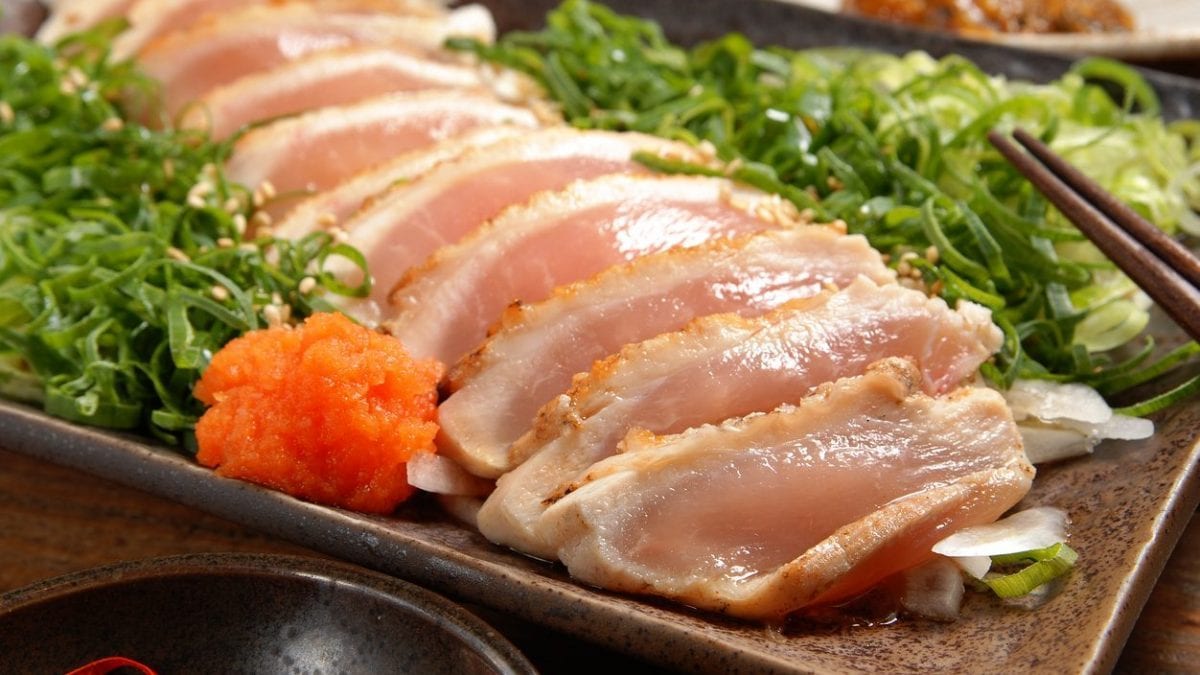
How many times have we been warned never to eat raw chicken, under any circumstances? First our parents, then cooking shows, and even various ministries of health. Ingesting uncooked chicken (even in small quantities) could lead to various gastrointestinal disorders or food poisoning. Those recommendations we mentioned earlier, however, never seem to have existed in Japan. Here, in fact, "raw chicken" or torisashi (chicken sashimi) is a true specialty. Let's see what it is.
What Happens if You Eat Raw Chicken
Anyone who is passionate about or knows Japanese cuisine well knows that there are essentially some "risky" dishes to eat. Starting with fugu, better known as pufferfish – whose flesh contains a powerful poison called tetrodotoxin, just a few milliliters of which are enough to kill a human – or raw chicken itself. At this point, the question arises spontaneously: but why do it? Focusing on torisashi, we think it's only right to explain why it's considered a delicacy in the Land of the Rising Sun. This dish's fame stems from the culinary culture of some southern Japanese prefectures, including Kagoshima and Miyazaki, in the Kyushu region. It's a dish that has been consumed at least since the Edo period (1603-1867) and is prized for its texture and unique flavor.
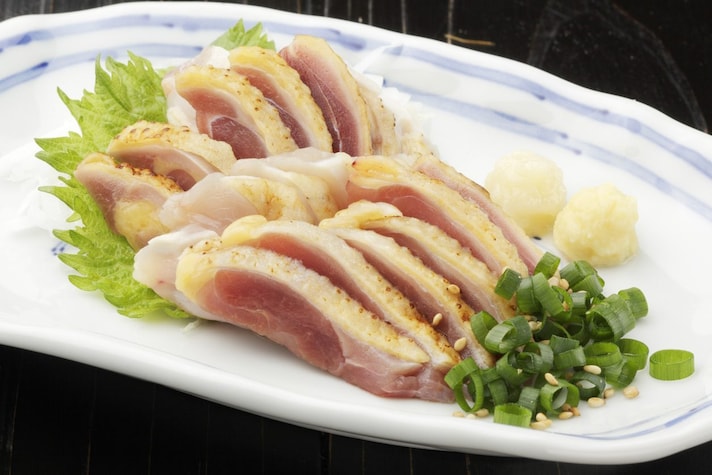
Many restaurants serving it source their chicken from local farms that adhere to rigorous hygiene and breeding standards. Chicken sashimi consists of raw chicken slices (one or two centimeters thick), which, according to local culture, require rapid boiling (for just a few seconds) to eliminate bacteria. Several studies highlight that raw chicken is infected with Campylobacter and Salmonella. These are harmful bacteria that, nesting in the digestive tract, cause food poisoning, resulting in diarrhea, nausea, abdominal cramps, and a general feeling of malaise.
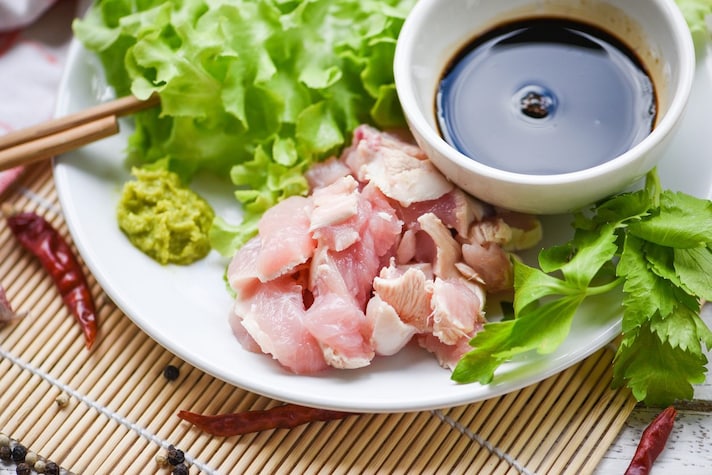
Since it's so popular in Japan, just as a mandatory license has been created for cooking pufferfish, regulations have also been imposed for torisashi. The Tokyo Ministry of Health had to intervene in the matter (in 2016) after numerous cases of gastroenteritis were recorded from eating chicken sashimi. Mandatory measures now include separating knives and cutting boards used for this dish, ensuring the meat is stored safely before serving, and undergoing biannual testing. Essentially, it's a local culinary experience that, without the risks of using certified meat, is worth trying (according to many locals).
Torisashi is served with traditional Japanese condiments such as grated ginger, garlic, chives, and various soy-based sauces or yuzukosho, a spicy yuzu-based sauce. The texture is somewhere between soft and chewy. The Japanese Ministry of Health recommends that those with a compromised immune system should avoid raw foods, including chicken sashimi.
;Resize,width=767;)
