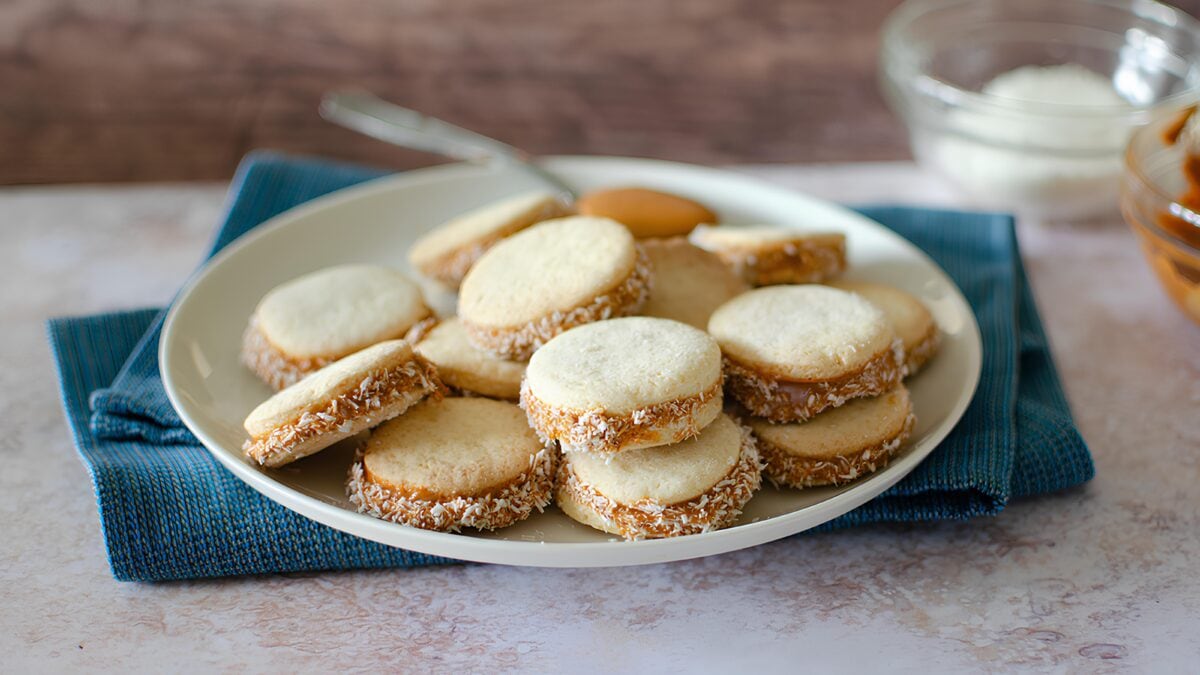
Alfajores (pronounced in English as al-fa-HOR-es) are a sweet treat typical of South America, particularly Argentina and Uruguay, but also popular in Spain. Their origin, however, appears to be Arabic: alfajor (al-hasú), in Arabic, means "filling." They are two discs of shortcrust pastry filled with dulce de leche, the Argentine spreadable cream, much loved in many Latin American countries.
Delicious and melt-in-the-mouth, they're perfect as a snack with a hot infusion or at the end of a meal with a good cup of coffee. They're made with a dough made from cornstarch, all-purpose flour, butter, sugar, egg yolks, and vanilla. Once rolled out with a rolling pin and cut into discs using a pastry cutter, they're baked in the oven.
For a flawless result, the biscuits should be cooked and dry, but not too golden; at this point, spread a thin layer of dulce de leche, close with a second biscuit, and finally dip the edges in shredded coconut.
Alfajores' Origins and History
Alfajores have a long history that reflects centuries of cultural exchange between the Mediterranean and Latin America. The name comes from the Arabic word “al-hasú” or “alajú,” meaning “filled” or “stuffed,” and the first versions were introduced to the Iberian Peninsula during the period of Moorish influence. In Spain, alfajores became traditional sweets made with ingredients such as almonds, honey, spices, and flour. Spanish colonizers later brought the concept to South America, where the recipe evolved according to local ingredients and traditions. Countries such as Argentina, Uruguay, and Peru developed their own iconic versions, most famously the sandwich-style alfajor made with two delicate cookies filled with dulce de leche and often coated in chocolate or powdered sugar. Today, alfajores are among the most beloved desserts in Latin America and have gained popularity worldwide, including in the United States, where they are increasingly found in bakeries, specialty stores, and Latin American markets.
Alfajores' Different Types
The main types of alfajores vary depending on the country and local traditions. The most famous is the Argentine alfajor, typically made with two soft cornstarch cookies (alfajores de maicena) filled with dulce de leche and often covered with chocolate or powdered sugar. Uruguayan alfajores are similar but often have thicker cookies and generous chocolate coatings, while Peruvian alfajores are usually lighter, made with delicate shortbread-style cookies and filled with manjar blanco. Other variations include Chilean alfajores, often prepared with caramel fillings and meringue, and traditional Spanish alfajores, which are quite different, made with almonds, honey, and spices rather than sandwich cookies.
What Else Can I Use to Fill Alfajores?
Delicate and with pleasantly tropical notes, they can also be filled with membrillo jam, or quince jam, but also pear, fig, or any other flavor of your choice.
Alfajores Ingredients Variations
You can replace the cornstarch with potato starch, the baking powder with baking soda, and the vanilla with grated lemon zest for a citrusy fragrance.
Can I Make Alfajores Ahead of Time?
Yes, and they often taste even better after resting because the cookies soften slightly and the flavors have time to blend. You can prepare the cookies and store them in an airtight container at room temperature for about 5–7 days, then fill them with dulce de leche when ready. Fully assembled alfajores can also be stored for several days, usually up to 1 week in the refrigerator, although they are best brought back to room temperature before serving to restore their tender texture.
Ingredients
How to Make Alfajores
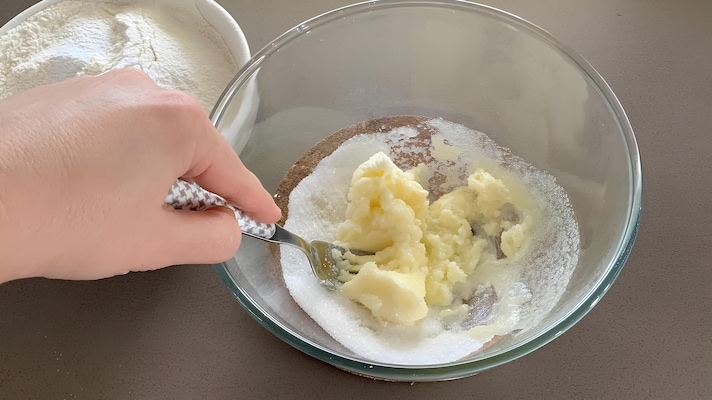
Place the softened butter at room temperature in a bowl and mix it with a fork until smooth. Add the sugar and mix it together with the butter.
Place the softened butter at room temperature in a bowl and mix it with a fork until smooth. Add the sugar and mix it together with the butter.
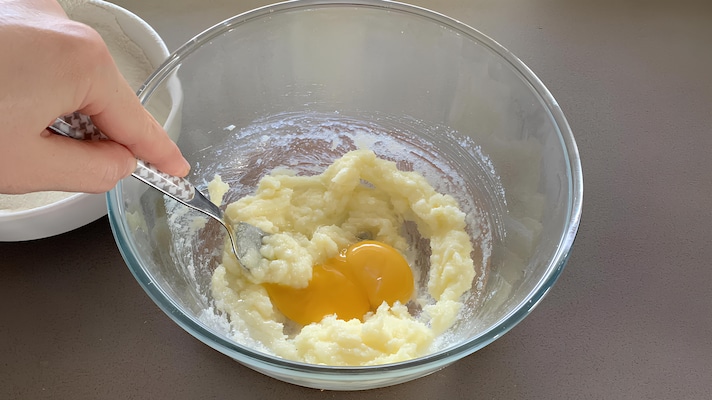
Add the egg yolks and vanilla to the butter and sugar mixture and continue mixing.
Add the egg yolks and vanilla to the butter and sugar mixture and continue mixing.
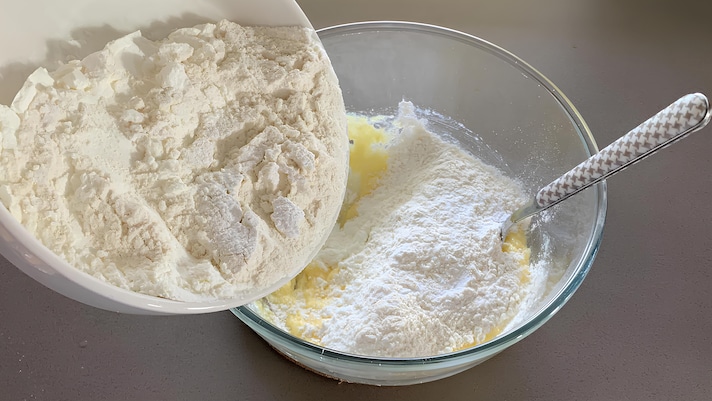
Also add a mix of flour, cornstarch and yeast.
Also add a mix of flour, cornstarch and yeast.
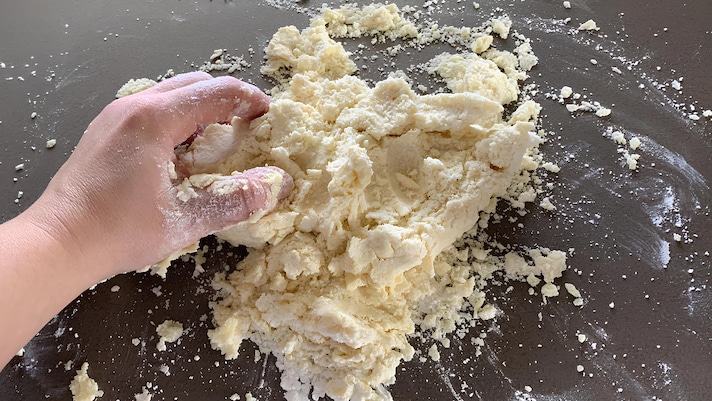
Work the mixture quickly with your hands. If it turns out too dry, you can add a few spoonfuls of milk until you get a soft, crumbly pastry.
Work the mixture quickly with your hands. If it turns out too dry, you can add a few spoonfuls of milk until you get a soft, crumbly pastry.
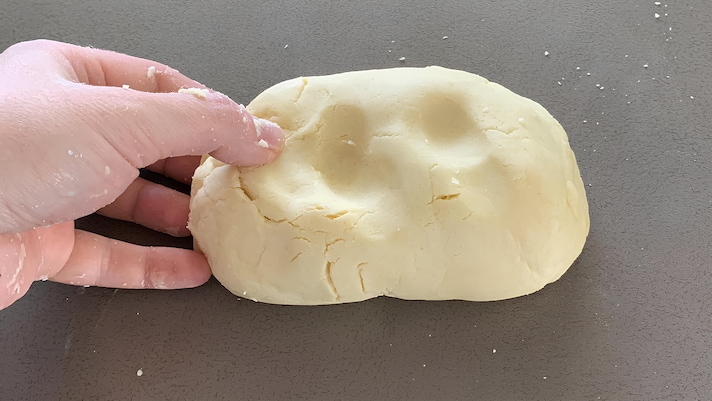
Form a loaf with the dough, cover with a tea towel and let rest for 30 minutes.
Form a loaf with the dough, cover with a tea towel and let rest for 30 minutes.
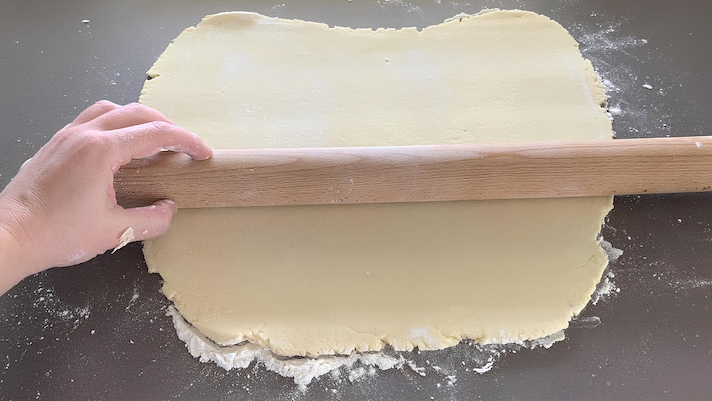
Roll out the dough with a rolling pin until it is 4mm thick.
Roll out the dough with a rolling pin until it is 4mm thick.
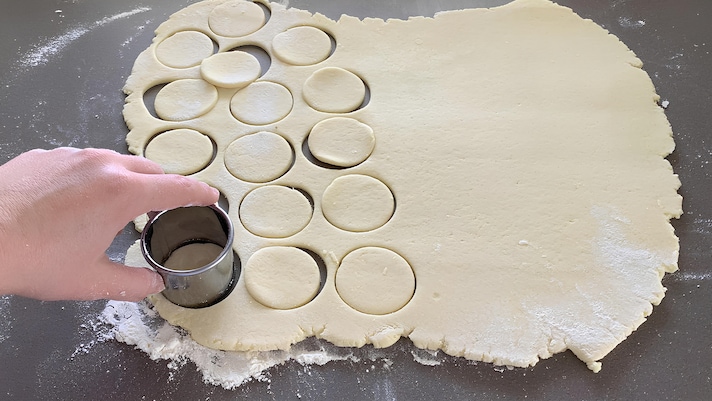
Shape the discs using a 6cm diameter pastry cutter.
Shape the discs using a 6cm diameter pastry cutter.
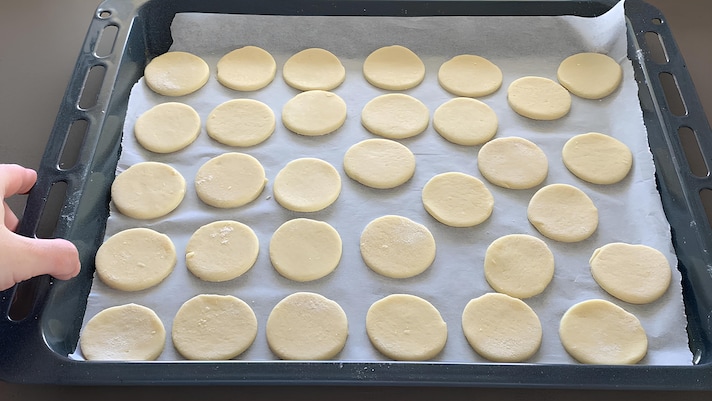
Place them on a baking tray lined with baking paper.
Place them on a baking tray lined with baking paper.
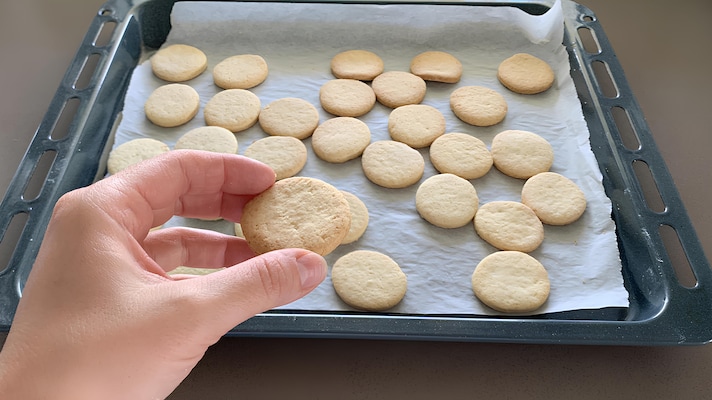
Bake in a preheated oven at 355°F/180°C for about 15 minutes: the cookies should be cooked and dry but not too golden. Once ready, let them cool.
Bake in a preheated oven at 355°F/180°C for about 15 minutes: the cookies should be cooked and dry but not too golden. Once ready, let them cool.

Fill the discs with a layer of dulce de leche.
Fill the discs with a layer of dulce de leche.

Close with a second disk.
Close with a second disk.
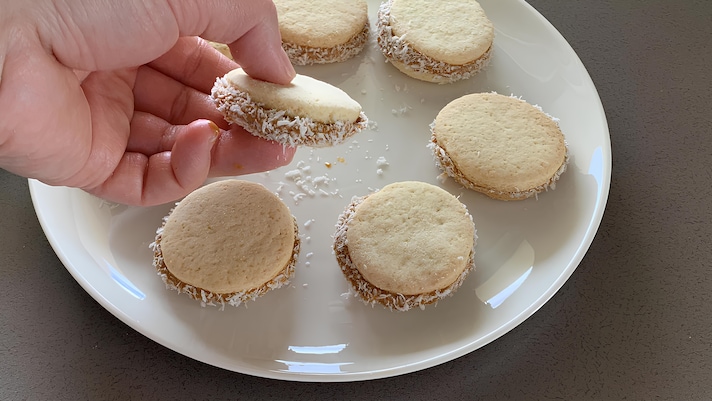
Dip them in grated coconut.
Dip them in grated coconut.
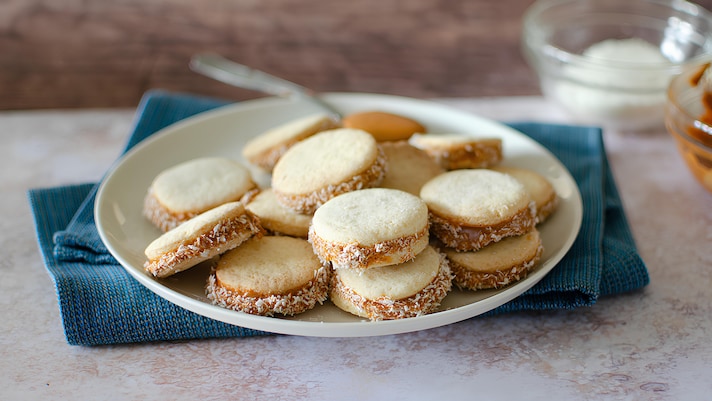
The alfajores are ready to be enjoyed!
The alfajores are ready to be enjoyed!


