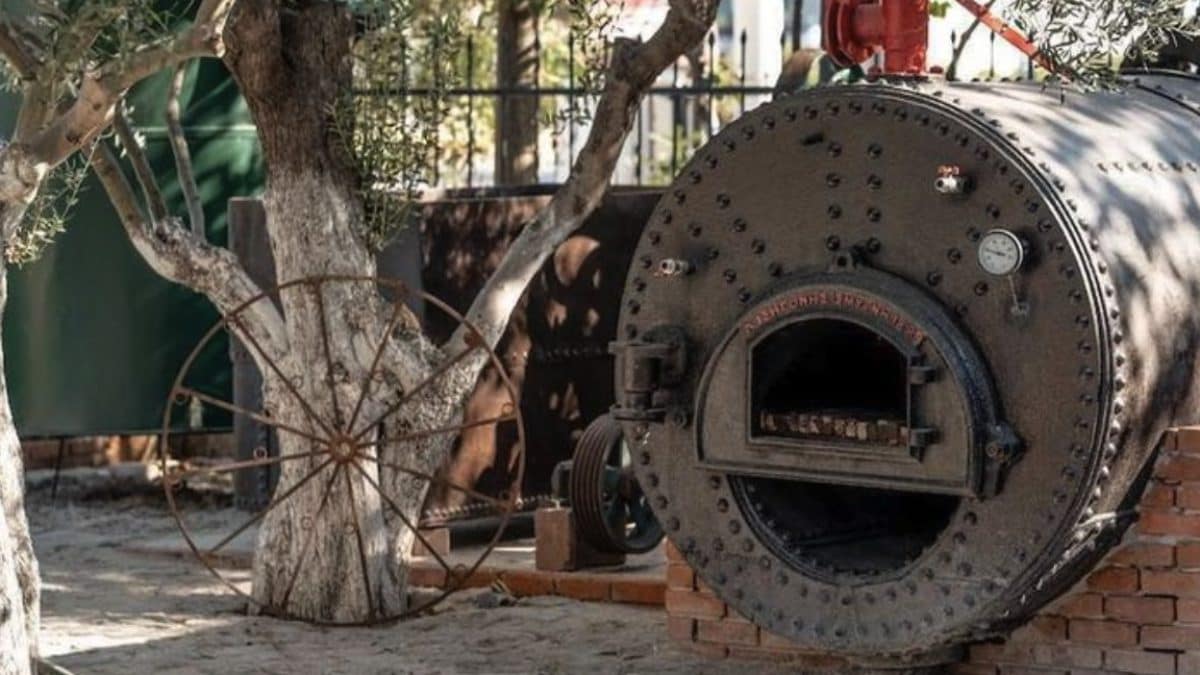
In Orhanlı, a small Turkish village in the province of İzmir, there's a truly special library: it's not silent, it doesn't smell of paper, and it doesn't even have books, but it celebrates culture in the same way as traditional libraries. What does it house? Types of oil from all over the world. It's called the Yücel Sönmez Olive Oil Library, and it's the first library in the world entirely dedicated to oil, a space where 90 types of oil from five different continents are preserved and catalogued just like books. It's not a ranking, the varieties aren't displayed to establish which oil is the best: it's a true sensory archive, designed to preserve and tell the story of one of the most important products of Mediterranean culture and diverse traditions around the world.
A Collection That Tells The Story of The World of Oil
The choice of location for the Yücel Sönmez Olive Oil Library project already explains much of the motivation behind the idea of dedicating a library to the world of olive oil. We are in the hills of Orhanlı, a small village in the province of İzmir overlooking the Aegean Sea, in the heart of an area that has always been dedicated to olive growing for centuries. The library was born within the Sevilma Garden project, defined as Turkey's first Slow Food Farm and born as an agricultural enterprise rooted in Anatolian tradition but oriented towards a contemporary agroecological model.
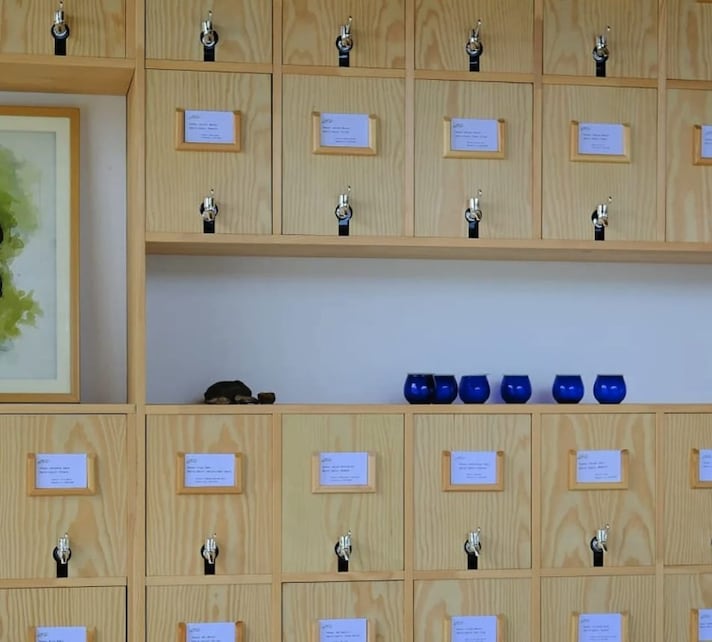
The Yücel Sönmez Olive Oil Library aims to be both an exhibition space and a workspace, designed for anyone who wants to study, compare, and select oils systematically. It functions just like a real library: the 90 oils from Anatolia, Europe, Asia, Africa, and the Americas, displayed according to the geography of the cultivars, are cataloged and treated like a literary work. Each sample is accompanied by a compendium that combines the geology of the soil, the climatic conditions, and the human touch that interpreted both. Thanks to a system of small taps connected to light-protected containers, visitors can taste the oils directly from the shelves.
This unique library, dedicated to an example of agricultural excellence, is open not only to industry professionals but also to all the curious and enthusiasts: the visit (by reservation) also includes visits to the olive groves and educational courses, with a particular focus on the culinary aspect thanks to a tasting program focusing on food pairings and catering.
At the Yücel Sönmez Olive Oil Library, there are no rankings or ratings, but rather a narrative in which diversity is recognized and appreciated. While traditional guides tend to assign grades, hierarchizing products through centesimal scores, in Orhanlı the approach is different: here, you don't come to discover which is the "best" oil in the world, but to understand how the same olive variety changes skin and character between Anatolia, Italy, Africa, or the Americas. At a time when many local varieties are at risk of extinction due to intensive agriculture and its selections—especially in Turkey, where the government is increasingly less protective of olive groves—the oil library is a living bank of olive biodiversity, as well as an incentive for the development of local and international olive oil tourism.
Yücel Sönmez's Legacy
It's no coincidence that the oil library project was dedicated to Yücel Sönmez, a renowned travel journalist who passed away in 2025, who made the narration of places and cultures his mission. Indeed, here, oil is treated as a story, not a simple condiment but a vehicle for knowledge. The library is not a commercial showroom for stocking up, but a narrative device where every taste becomes a stop on a global journey.
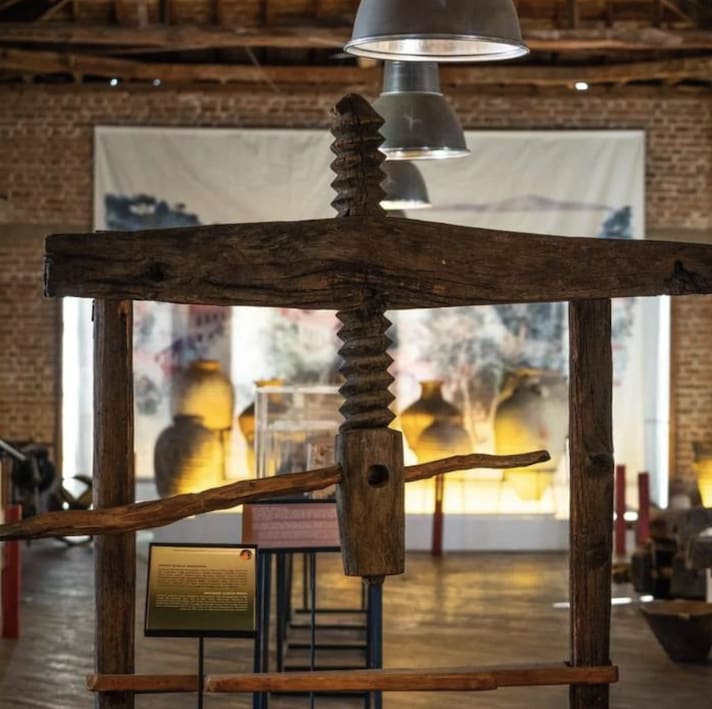
In light of this approach, the choice of the village of Orhanlı is anything but random: here, olive cultivation and oil production are a centuries-old practice, an integral part of the local culture and an expression of the entire Mediterranean region's connection to this precious product. Precisely for this reason, the project strongly desired that each oil tasting be conceived as a "sensory reading," in which the nose and palate become interpretative tools for understanding the product. It is, in effect, just like a traditional library, a permanent research center on biodiversity, a necessary bulwark in an age when intensive production risks making the taste of oil a flat and standardized experience.
Furthermore, the library's exploration of the world of olive oil is a means of evolving the very concept of olive oil tourism. The visit is more profound than a simple food tour: it is a critical exercise in understanding the planet's diversity and an opportunity to explore a land where the olive tree has been a central figure in social life for centuries. At a time when the Aegean is emerging as a new frontier of cutting-edge quality, Orhanlı presents itself as a replicable model: a physical place where olive oil culture becomes a visitable, educational, and public experience.
;Resize,width=767;)
