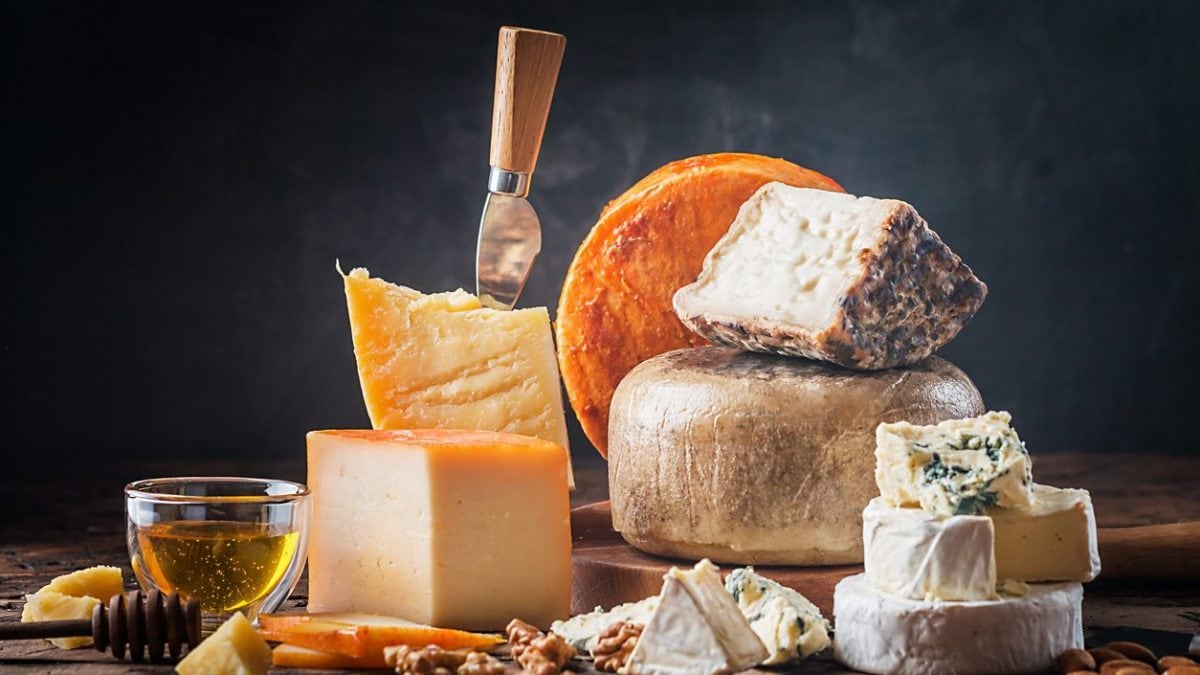
Cheeses occupy a prominent place in the vast universe of cuisine and food and wine. They are a particularly multifaceted food, highly varied thanks to the many types in which they are produced and the complexity of flavors that distinguish each variety. In this rich world, fermented cheeses represent a particularly fascinating category. But what exactly are fermented cheeses and why is it important to understand them? Fermentation is a key process in the production of many foods and, in the case of cheeses, helps develop their characteristic aroma and flavor. Understanding fermented cheeses can enrich our culinary experience and guide us in choosing the products best suited to our gastronomic needs. Here is a complete guide to fermented cheeses, their characteristics, and the many ways they are used in cooking.
What Are Fermented Cheeses?
The term "fermented cheeses" broadly refers to cheeses in which the activity of microorganisms significantly contributes to the development of acidity, aroma, texture, and maturation. However, it is not a rigid and separate cheese category: fermentation, in varying forms and intensities, is present in most cheeses.
During production, lactic acid bacteria, molds, and, in some cases, yeasts participate in the transformation of milk and curd. Lactic acid bacteria metabolize lactose, the sugar naturally present in milk, converting it primarily into lactic acid. This process lowers the pH, favors the product's preservation, and contributes to the cheese's aromatic profile.
It's important to note that fermentation and coagulation are not the same thing: in some fresh acid-coagulated products, lowering the pH can directly contribute to curd formation. In many traditional cheeses, however, curd is formed primarily through the action of rennet, while fermentation plays a role in acidification, purging, preservation, and the development of flavors and textures.
During maturation, the activity of microorganisms and enzymes continues to transform the cheese paste: proteins and fats are progressively modified, giving rise to aromatic compounds that affect taste, aroma, and structure. In bloomy-rind or blue cheeses, for example, molds contribute to the creaminess, characteristic aromas, and, in the case of blue cheeses, to the formation of the typical blue-green veins. In other cheeses, such as those with holes, some bacteria can produce gas, creating the characteristic "holes."
In this sense, talking about fermented cheeses means looking at cheese from the perspective of the microbiological processes that transform it, rather than describing a single, well-defined family. It is precisely this invisible activity, different from product to product, that makes the dairy world's variety of flavors, aromas, and textures so vast.

Fermentation, therefore, is not just a method of preservation, but a creative process that profoundly alters the nutritional and sensorial characteristics of milk, making each cheese a unique product. It is no coincidence that the fermentation technique is one of the oldest in the world: it was already used in Ancient Egypt to make bread and, throughout history, has given rise to countless foods, from beer to sauerkraut, from Japanese miso to the famous Cetara anchovy sauce.
Fermentation Vs. Maturation: The Differences
Fermentation and aging are two concepts often associated, but they are not the same. Fermentation is a microbiological transformation: it involves the activity of lactic acid bacteria, molds, or yeasts, which affect the milk or curd, altering its acidity, aroma, and structure. Aging, on the other hand, is a maturation phase: it refers to the period in which the cheese rests in suitable conditions and continues to evolve over time.
The main difference, therefore, does not concern two separate types of cheese, but two different moments or aspects of the process: a cheese can be fermented and consumed fresh, as is the case with many soft and acidic products; or it can be fermented and then aged, as is the case with many semi-hard or hard cheeses. Similarly, during the aging process, transformations linked to microbial and enzymatic activity can continue, making the flavor more intense and the texture more defined.
Aging also involves very noticeable physical changes: the cheese loses some of its moisture, the texture becomes more compact or crumbly, and the aromas become more concentrated. Fermentation, on the other hand, acts primarily on the biological and chemical levels, contributing to acidification, shelf life, and the development of characteristic aromas.
In short, fermentation explains how microorganisms transform cheese; aging explains how long and under what conditions the cheese is left to mature. Therefore, "fermented cheeses" and "aged cheeses" shouldn't be contrasted: many products, in fact, fall within both categories.
The Main Types of Fermented Cheeses
Cheeses in which fermentation plays a significant role can be grouped into several "practical families," which can be classified primarily by the type of processing, maturation, and microorganisms used. Each of these types has its own unique characteristics in terms of aroma, texture, flavor, and use: here are the main fermented cheeses.
As we've seen, speaking of "fermented cheeses" is a broad term, more popular than technical. Fermentation, in fact, does not define a single, separate category, but is a process that occurs, in various forms, in many cheeses. To better understand this, we can, however, distinguish several large families in which the activity of lactic acid bacteria, molds, or other microorganisms significantly contributes to the development of aroma, texture, and maturation.
1. Fresh, Acidified or Fermented Cheeses

Fresh, acidified or fermented cheeses are products that do not undergo a long maturation process and maintain a soft, creamy, or spreadable consistency, with a delicate and often slightly acidic flavor. In many cases, the acidification of the curd is due to the activity of lactic acid bacteria, which convert part of the lactose into lactic acid and contribute to the product's fresh, milky flavor.
Common examples include stracchino, crescenza, fresh goat cheese, and some fresh caciottine. Mozzarella deserves a clarification: it's a fresh, stretched-curd cheese in which acidification of the curd is essential to achieve the right elasticity before stretching, even though it's not typically described as a "fermented cheese" in the strict sense.
Ricotta, on the other hand, should be considered separately: although it is often associated with fresh cheeses in cooking, it is not a cheese in the technical sense, but rather a dairy product obtained from whey by heating and coagulating the whey proteins. Therefore, it is not strictly considered a fermented cheese.
2. Bloomy Rind Cheeses

Bloomy-rind cheeses are soft cheeses characterized by a white, velvety surface, due to the growth of selected molds, particularly Penicillium camemberti. During maturation, these molds act primarily from the outside in, progressively modifying the structure of the cheese and making it softer and creamier.
The best-known examples are Brie and Camembert, renowned for their soft texture, buttery flavor, and mushroomy, lactic notes; more mature products may also exhibit more intense, sometimes slightly ammoniacal, aromas. These cheeses are ideal served with crusty bread, fresh or dried fruit, but they can also be baked or used in some hot dishes. They pair well with sparkling wines, well-structured white wines, or light, low-tannin reds.
3. Blue Cheeses

Blue cheeses are easily recognizable by the typical blue-green veins that run through the cheese: these veins are due to the development of selected molds, especially Penicillium roqueforti and, in some cases, Penicillium glaucum, introduced during processing and favored by the oxygenation of the cheese.
Molds contribute to the transformation of the internal structure and the development of intense aromas, which can range from sweet and buttery notes to spicier and more pungent sensations, depending on the type of cheese and its degree of maturation. Among the most famous examples are Gorgonzola, Roquefort, Stilton, and Bleu d'Auvergne.
In the kitchen, blue cheeses are very versatile: they are used to prepare sauces for pasta, gnocchi, and risotto, but also as a topping for pizza, focaccia, and baked dishes. They pair well with honey, walnuts, pears, figs, and dessert or fortified wines.
4. Semi-Hard Cheeses

Many semi-hard cheeses also owe part of their character to the activity of lactic acid bacteria and, in some cases, other microorganisms involved in ripening. This family includes products with a firm yet still elastic consistency, often subjected to a short or medium maturation period.
Among the best-known examples are Fontina, Asiago, Gouda, Edam, Maasdam, and various types of Toma. The flavor profiles vary greatly: some are sweet and milky, others develop more intense, buttery, toasted, or slightly nutty notes. In the case of cheeses like Maasdam, the characteristic holes are due to the production of gas by specific bacteria during maturation.
In the kitchen, they are very versatile cheeses: they can be eaten as a table cheese, used in sandwiches and toast, or baked in ovens. Many melt well, although the yield varies depending on the type and degree of aging. They pair well with aromatic white wines, sparkling wines, or young, low-tannin reds.
5. Hard and Long-Aged Cheeses

Microbial and enzymatic activity also plays a fundamental role in hard, long-aged cheeses. Products like Parmesan, Grana Padano, and Pecorino —to name just the most famous—are known primarily for their prolonged aging, but during this period, biochemical transformations continue, contributing to the development of complex aromas, moisture loss, and the grainy or compact texture of the cheese.
In these cheeses, maturation leads to a progressive concentration of flavor and a greater savoriness: proteolysis and lipolysis c – i.e. the degradation of proteins and lipids – contribute to the formation of aromatic compounds, while the long maturation modifies the consistency, making it more crumbly, grainy or flaky depending on the product.
This variety is also versatile in the kitchen: it can be grated on pasta dishes, flaked on salads and carpaccio, used in fillings and baked dishes, or enjoyed on its own. Pairings vary greatly depending on the seasoning and flavor: it can work well with sparkling wines, mature whites, oxidative wines, or well-structured but not overly tannic reds.
Fermented Cheeses' Characteristics
Fermentation plays a significant role in the flavor, aroma, and texture of many cheeses. Thanks to the action of lactic acid bacteria, molds, or yeasts, the milk and curds gradually transform, giving rise to a wide variety of products: from fresh, soft, and slightly acidic cheeses to more intense, savory, or spicy cheeses.
One of the main effects concerns flavor: lactic acid bacteria convert part of the lactose into lactic acid, creating the typical fresh and acidic notes. During maturation, proteins and fats then change and develop more complex aromas, which can recall butter, dried fruit, mushrooms, or spices. In mold-containing cheeses, such as brie, camembert, and gorgonzola, these aromas become even more recognizable.
The consistency also varies: depending on the type of cheese and the maturation time, the texture can become creamy, elastic, crumbly, grainy, or firm. This is what distinguishes, for example, a fresh, spreadable cheese from a creamy blue cheese or a long-aged cheese.
From a digestive standpoint, fermentation can reduce some of the lactose. For this reason, some cheeses, especially very aged ones, are more tolerable for those who have difficulty digesting it. However, this isn't true for everyone: lactose can still be present in varying amounts in fresh cheeses.
;Resize,width=767;)
