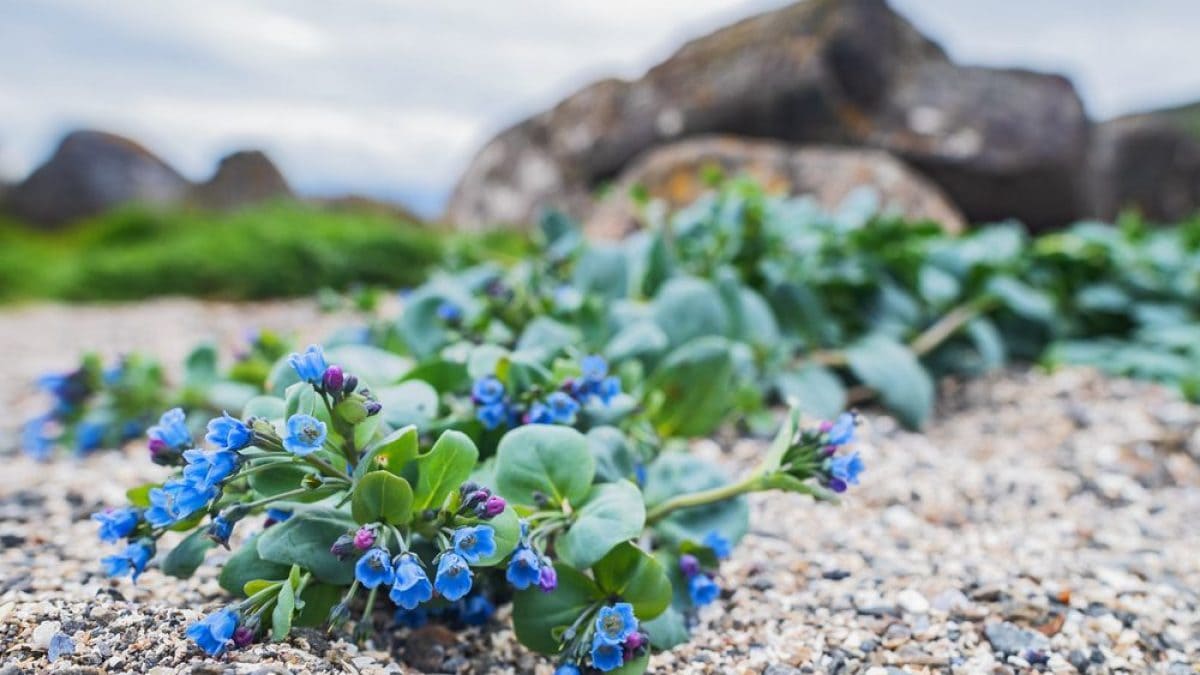
Nature has accustomed us to truly strange plants, fruits, and foods, and the one we're about to introduce to you rightfully tops the list of the most peculiar: oyster leaves, an extremely rare plant, native to the gravelly soils of Canada and North America, Greenland, Scotland, and Svalbard. What's special about them? They don't taste at all like vegetables; the flavor of the fleshy leaves is comparable to that of oysters, although many recognize an aftertaste of anchovies, mushrooms, and borage. It may seem impossible to read, yet those who have tasted them swear that their marine flavor is incredible and that eating them is a true taste experience. But how do you use such a unique product in the kitchen? Here's everything you need to know about oyster leaves.

What Are Oyster Leaves?
Oyster leaves are the leaves of a very rare plant native to the Atlantic coasts of Europe and North America. They're famous for their flavor, not that of a traditional plant, but that of an oyster. It's no coincidence that Mertensia Maritima, its scientific name, is also known as the "vegan oyster," a product that could truly revolutionize vegetarian and vegan cuisines: it's surprising to taste, reminiscent of the saltiness and flavor of mollusks, yet adds a wide array of nuances tied to the flavors of the sea.

The plant, edible in its entirety (both the leaves, hence its nickname, and the flowers), is also aesthetically pleasing: the foliage is fleshy and crisp, gray-blue in color, and the flowers, ranging in color from blue to purple, are particularly striking. Belonging to the Boraginaceae family, the same as borage, the oyster leaf plant is a perennial, reaching a maximum height of 30 cm but capable of spreading out. It particularly loves cold climates, rocky terrain, and coastal dunes; it is no coincidence that it is typical of the coasts of Canada and North America, and all those coastal areas bathed by the Nordic seas, for example, Scotland, the Svalbard Islands, and even Greenland.
Because oyster leaf growth areas are very limited, the plant is considered rare and very difficult to find commercially. It's not easy to find in physical stores, but you can purchase it online from portals specializing in specific ingredients. It's not cheap; a tub of 50 leaves can cost as much as 60 euros.
How to Use Them in The Kitchen
Nutrient-rich with an abundance of zinc, manganese, potassium, and iron, and completely free of cholesterol, oyster leaves look like ordinary, bluish-gray leaves and are completely odorless. On the palate, however, they're a veritable explosion: these small leaves contain all the saltiness of the sea, and it feels just like chewing an oyster, yet without the mollusk's texture, which, due to its unique texture, isn't to everyone's taste.
Oyster leaves are very versatile in the kitchen and, much like sea bean, can be eaten raw or cooked, though with some caution. Oyster leaves are often used as an addition to salads, perhaps along with the plant's tiny holes, which are also perfectly edible, or as a garnish for fish dishes, tartare, or crudités, or even added to toasted bread spread with a drizzle of butter, like bruschetta.

Oyster leaves can also be cooked, but be careful because overcooking them for too long or aggressively can cause them to lose their distinctive flavor, as well as the plant's nutritional properties. If you want to cook them, it's best to blanch them lightly and then use them in various ways, such as in omelettes, risottos, or as a filling for fresh pasta; you can also preserve the leaves in vinegar or oil.
;Resize,width=767;)
