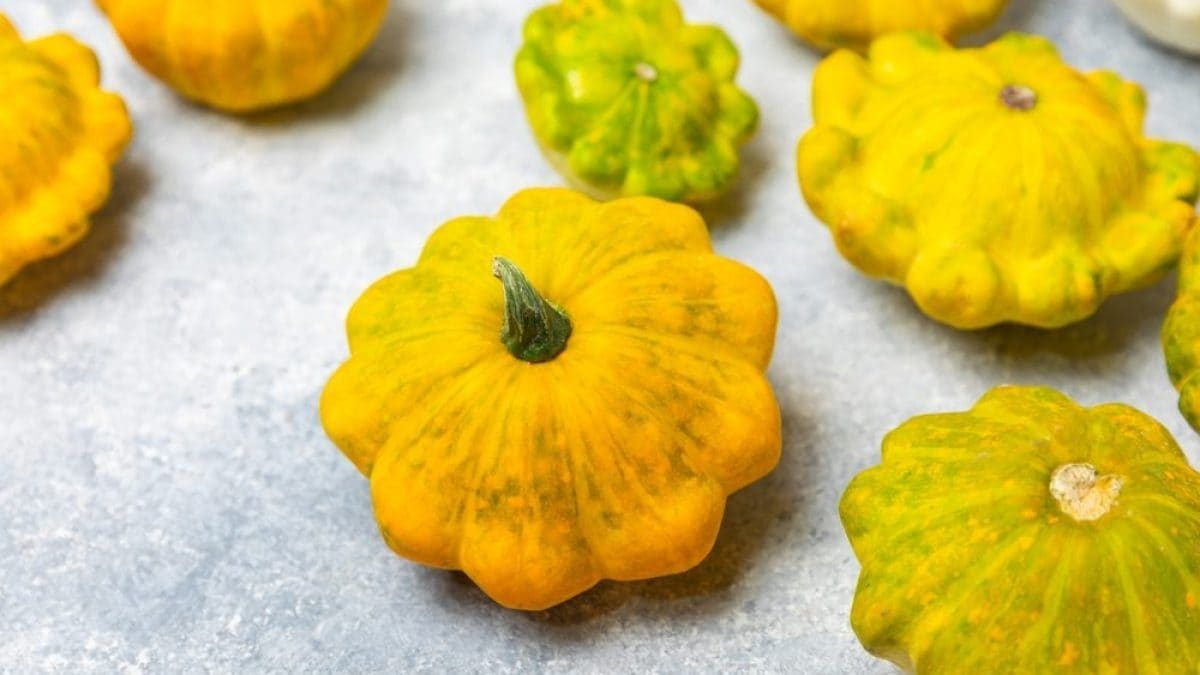
Its name may not mean anything to you, but we're sure you've seen it before and remember it, because its shape is hard to miss: the pattypan squash (also known as patisson) is a particular variety of summer squash, a hybrid born in France in the 19th century from a cross between a pumpkin and a yellow zucchini. For this very reason, it has a truly unique shape: small and round yet flattened, almost resembling a sort of flying saucer or a baking dish (it's no coincidence that the name "patisson" comes from a Provençal term meaning a dessert prepared with a corrugated mold) and with a completely corrugated skin that can be white, yellow, orange, or green.
Beyond its charming appearance, the pattypan squash has many other qualities, first and foremost its sweet, delicate flavor, as well as its great versatility in the kitchen and a rich, highly interesting and beneficial nutritional profile. In short, the pattypan squash is a beautiful and delicious squash, comparable to other more well-known varieties: here's a guide to learning about and appreciating it.
What is a Pattypan Squash?
The pattypan squash belongs to the Cucurbitaceae family, just like pumpkins and cucumbers. It's an annual plant (meaning it completes its life cycle in a single season) characterized by large, lobed leaves and yellow flowers with particularly recognizable fruits. Our squash or pumpkin has a small, round, disc-like shape with pointed, flattened ends. This particular shape, once dried, allows the squash/courgette to be used as an ornamental because of its beauty.

Beyond its aesthetic beauty, however, the pattypan squash has many other strengths. The fruit of this plant is native to Central and South America, and is a tasty culinary treasure that can enrich your dishes from May to October, the period in which it grows and ripens. Grown anywhere in the world with a warm, sunny climate, the pattypan squash is also highly prized for its rich nutritional profile, making it an ideal food for your health.
There are several other varieties of pattypan squash, but the most common are two: the white pattypan squash, with its pure white color and smooth shape, characterized by a sweetish flavor similar to that of zucchini but with a crunchier texture, and the yellow pattypan, with its vibrant yellow-orange color, which has a slightly more intense flavor and a slightly denser texture. All the "single-color" pattypan squashes derive from hybridization achieved in the 19th century in France, but there are also older varieties such as the white one variegated with green (the Patisson vert panache de blanche), already cultivated by Native Americans on the Atlantic coasts.
Pattypan's Properties and Benefits
Rich in water, vitamins, and minerals, squash is a draining and low-calorie food, composed of 95% water, making it an excellent ally for those who prefer a healthy, nutritious, and light diet. One of its main properties is its high concentration of vitamin A, and in particular its precursor component known as beta-carotene, a micronutrient belonging to the carotenoids essential for our body's well-being thanks to its positive effect on healthy vision, the proper functioning of the immune system, and skin health. Sensitive to light and sun, beta-carotene helps protect the skin from sun exposure, also stimulating the production of melanin, as demonstrated by several scientific studies. Precisely for this reason, it is very often found as an ingredient in many sunscreens.

Its nutritional profile also includes B vitamins, vitamin C, and a rich variety of minerals such as potassium, calcium, and magnesium, which provide a stimulating and protective effect on the nervous system and regulate blood pressure. Pattypan squash also boasts a good fiber content, making it an excellent ally for digestive health and the proper functioning of the gastrointestinal tract. Furthermore, thanks to its high water content, pattypan squash is a hydrating food with diuretic properties, useful for promoting the elimination of excess fluids.
How to Use Pattypan Squash in The Kitchen
Small in size but big in flavor, the pattypan has a very distinctive flavor that stems from the dual nature of its hybrid origins: it's sweet, reminiscent of a zucchini, but more assertive; it's delicate like a pumpkin, but more distinctive, compared by some to artichoke hearts. How do you use this special ingredient in the kitchen? Practically however you like: the pattypan is suitable for any type of cooking.

You can bake squash in the oven, hollowed out and stuffed, or sauté it in a pan. You can eat it raw if it's small and has a not-too-tough skin (and organic, of course). It's excellent au gratin with béchamel sauce and grated cheese, and you can use it in place of pumpkin in any sweet or savory recipe featuring the vegetable. Pattypan squash also lends itself very well to making cream soups, adding a unique flavor and texture. Even its tiny seeds can be reused: simply toast them in the oven or pan and season with spices and herbs. They'll then become a healthy snack or an excellent condiment.
;Resize,width=767;)
