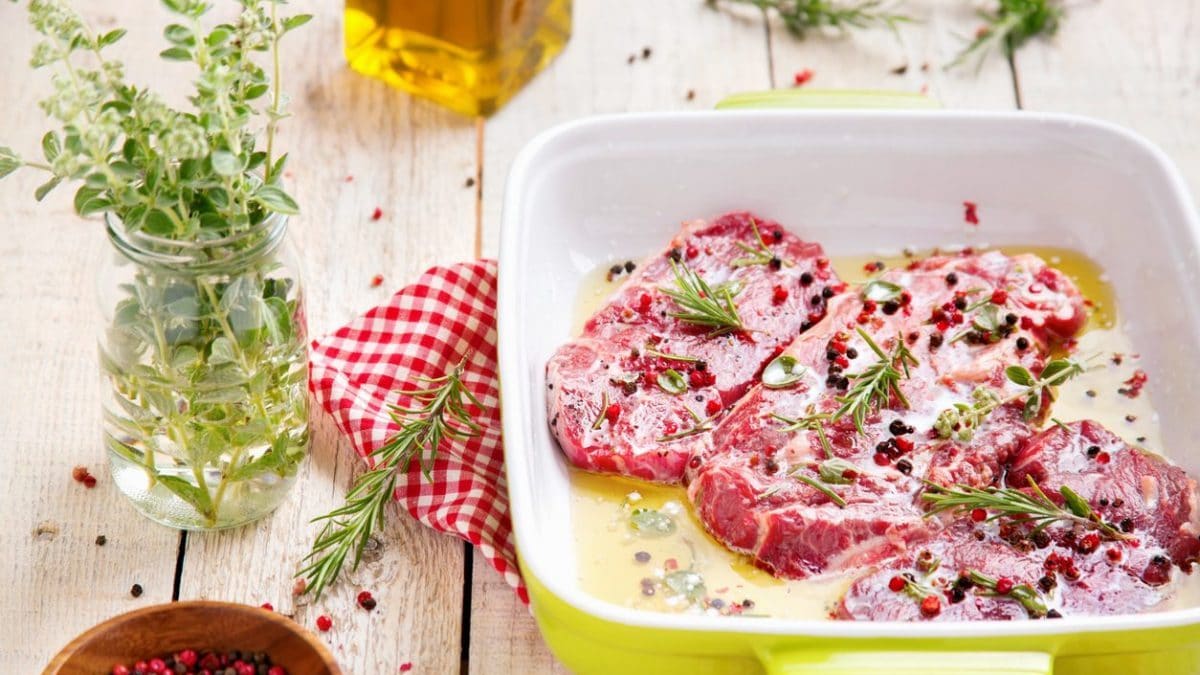
Preparation for grilling often includes marinating, a process that goes beyond simply flavoring food. Immersion in a liquid solution, typically composed of oil, acids, and flavorings, plays an important role: it softens the fibers, preserves juiciness, and infuses flavors that the embers will enhance. This process, crucial for meat, fish, and vegetables, uses chemical and physical reactions to optimize texture and flavor, making grilling a much more satisfying culinary experience.
The choice of marinade ingredients isn't random, but carefully crafted to complement the food's characteristics: fresh, citrusy notes for white meats and fish, intense spices for heartier cuts or vegetables, and sweet and sour touches to balance the fattiness. Here are some tips and the best pairings for using marinade effectively and creating the perfect grill.
Differences Between Liquid and Dry Marinade
The choice between a liquid and a dry marinade for grilling depends primarily on the desired outcome and the type of food. A liquid marinade is composed of a base of liquids such as oil, vinegar, citrus juice, wine, soy sauce, combined with herbs, spices, and other flavorings. It partially penetrates the food, hydrating it and helping to tenderize it, especially thanks to the presence of acidic ingredients that help break down muscle fibers. The oil helps convey flavors and protects the food from direct heat, preventing it from drying out too quickly.

A dry marinade, typically called a dry rub in American cuisine, is made with a blend of spices, herbs, salt, and sometimes sugar, applied directly to the surface of the food. In this case, the salt tends to draw moisture from the surface of the food, which then mixes with the spices to create a sort of surface "brine." The flavors penetrate less than with a liquid marinade. In some cases, it can help form a flavorful crust.
Why is a liquid marinade often preferred for grilling? First and foremost, it's for juiciness: grilling is a high-temperature cooking method that can easily dry out foods. A liquid marinade helps counteract this effect by retaining internal moisture. Furthermore, for less valuable or thicker cuts of meat, the action of the acidic ingredients in a liquid marinade is more effective at softening the fibers than a dry rub. The liquid allows the flavors to penetrate slightly into the food, not just remain on the surface.

However, dry marinades also have their place in grilling: they're excellent for already tender cuts of meat that you want to flavor with a spicy crust, or for delicate foods like certain vegetables that don't require tenderizing. Often, the two methods can even be combined to get the best of both worlds: a liquid marinade to hydrate and tenderize, followed by a dry rub for a flavorful crust.
In this case, we suggest a series of liquid marinade combinations to pair with different types of meat or cuts of meat, as well as fish, vegetables, mushrooms, and vegan foods such as tofu and seitan. As for the proportions, this is a matter of experience: the doses vary depending on the quantity and size of the foods being marinated. In these cases, tasting is essential: add the ingredients a little at a time and taste as you go to adjust the seasoning. Don't overdo the salt and pepper, because they'll also need to be added to the grilled foods: a pinch is enough for both, as they only serve to enhance the flavors of the other ingredients.
Classic Marinades With Aromatic Herbs
A marinade that could be considered a barbecue staple, simple yet incredibly effective: the base is a good extra virgin olive oil, to which you add finely minced fresh garlic (one or two cloves depending on the amount of meat), a generous amount of chopped fresh herbs like rosemary, thyme, and sage (the proportions depend on your taste, but a balanced mix is ideal), half a glass of wine (white or red depending on your preference), a pinch of coarse salt, which will dissolve slowly, and a grind of freshly ground black pepper. For an extra kick, a dollop of Dijon mustard can add a subtle tang and help lightly emulsify the marinade.
This marinade is ideal for beef steaks (rib-eye, T-bone, sirloin), pork chops, chicken thighs and drumsticks, but also for white fish fillets (sea bass, sea bream). It's a sort of all-purpose marinade, suitable for a variety of meats and fish, but be careful about the timing: for beef and pork, you should baste the meat with the marinade at least 30 minutes beforehand (preferably two hours beforehand, but keeping the meat in the refrigerator); for chicken, at least 2 hours in the refrigerator; for fish, 20-30 minutes is sufficient.

Mediterranean Citrus Marinade
A fresh marinade that enhances Mediterranean flavors and is suitable for chicken, especially breasts and fillets, white fish and oily fish, especially sardines and mackerel, but also for lamb skewers or roasted vegetables. To prepare it, always use extra virgin olive oil as a base and add citrus juice, fresh oregano, a few thinly sliced garlic cloves, and a pinch of chili pepper if you like a spicy kick, then mix well. As for the citrus juice, you can choose just one or mix it together: orange pairs well with fish and chicken, while lemon is more suitable for lamb. As for cooking time, consider 30 minutes for meat, 15-30 for fish, and 30 for vegetables.
Rich, "Umami"-Style Marinade
This marinade is different from the others because it uses seed oil as a base, giving it a less bold flavor. Add Worcestershire sauce, soy sauce, balsamic or apple cider vinegar, a little mustard, smoked paprika, and finely chopped or ground garlic and onion. What should you use this marinade for? For tougher cuts of beef, such as shoulder, flank, and flank steak, for pork ribs, or chicken wings. How long in advance should you marinate the meat? Refrigerate for at least 2 hours, ideally 4-8 hours, or even overnight for thicker cuts.

Marinades for Vegetables
This marinade is designed to enhance the natural sweetness of vegetables, adding a touch of freshness and aroma. The base is a good extra virgin olive oil, enriched with the juice and grated zest of half a lemon (or lime for a more exotic touch), finely minced garlic (one or two cloves), chopped fresh herbs such as thyme, oregano, and basil (or parsley and mint for a fresher flavor), a pinch of sea salt, and a grind of black pepper. For a slightly sweet touch that helps caramelize, you can add a teaspoon of maple or agave syrup. A pinch of chili flakes is optional for those who like a little heat. It's excellent for roasting zucchini, eggplant, peppers, red onions, cherry tomatoes, mushrooms, asparagus —in general, it goes well with almost any grilled vegetable. How long to prepare: At least 30 minutes at room temperature or up to 2 hours in the refrigerator; For denser vegetables like eggplant, an hour of marinating can be beneficial.
Middle Eastern Marinades
A creamy marinade made with Greek yogurt, enriched with tangy lemon juice, finely minced garlic, fresh mint, ground cumin and coriander, sweet paprika, and a pinch of turmeric (for color and a slightly bitter note), plus a drizzle of extra virgin olive oil to bind it all together. This marinade should be left in the refrigerator for at least four hours, ideally overnight, to allow the flavors to penetrate and the meat to tenderize. You can use it for lamb pieces, but also for beef and lamb skewers, chicken, or pulled cuts, similar to those used for kebabs.

Sweet and Sour Marinade
A perfect marinade for skewers combining meat and vegetables. The base is extra virgin olive oil, enriched by the acidity of red wine vinegar, the sweetness of honey (or maple syrup for a vegan version), the light spiciness of Dijon mustard, the aroma of minced garlic, and the herbaceousness of fresh oregano, plus salt and pepper. Use it on beef, chicken, or pork skewers, alternating with pieces of colorful peppers and onion, even just for vegetables. As for timing, if using it with meat and vegetables , marinate for an hour; if using it only for vegetables, marinate for at least 30 minutes (but an hour is always better).
Lemon and Parsley Marinades
A very simple marinade, ideal for enhancing the delicate flavor of white fish. Mix extra virgin olive oil, lemon juice and zest (or lime if you prefer), chopped fresh parsley, finely minced garlic (but not too much, so as not to overpower the flavor of the fish), salt, and peppercorns. It's excellent for fillets or steaks of white fish like sea bass, sea bream, and cod, even when served with roasted vegetables. Use it on fish 20 minutes before cooking.

Oriental Marinades
If you're marinating shrimp, scampi, prawns, lobster, or even salmon fillets, chicken or turkey skewers, and mushrooms, this ginger and soy sauce marinade is ideal for enhancing them. Mix together toasted sesame oil, soy sauce, grated fresh ginger, minced garlic, lime juice, a pinch of sugar, and, if desired, a little chopped spring onion (you can also add it raw after cooking, if you prefer). For fish, use it 15 minutes in advance, while for chicken and mushrooms, at least 30 minutes in advance, preferably an hour.
Tasty Marinades for Vegan Foods
This marinade is designed to add flavor and a more interesting texture to tofu and seitan, which are otherwise fairly neutral in flavor. The base is a combination of soy sauce, toasted sesame oil, rice vinegar, grated fresh ginger, finely minced garlic, a tablespoon of nutritional yeast flakes (for an extra "cheesy" and umami kick, optional but recommended), a pinch of brown sugar, and, for a spicy kick, a little sriracha or finely chopped chili pepper. You can also add a tablespoon of cornstarch dissolved in a little water for a slightly thicker, "lacquered" texture after cooking. It's ideal for tofu, pressed to remove excess water and cut into cubes, slices, or skewers, or seitan, cut into slices, cubes, or skewers. Refrigerate for at least 30 minutes at room temperature or up to several hours. For tofu, marinating for longer (even 2-3 hours) allows the flavors to better absorb. Seitan, having a spongier consistency, tends to absorb liquids quickly, so 30-60 minutes may be sufficient.

General Advice
To marinate, use non-reactive containers such as glass, ceramic, or food-grade plastic: avoid aluminum containers, which can react with acidic ingredients. It's always a good idea to marinate foods in the refrigerator, especially since the temperatures rarely reach winter when you host a barbecue. Make sure the food is completely submerged in the marinade, or turn it regularly to evenly distribute the flavors.
Before cooking, remove excess marinade by draining the food to prevent flare-ups and burning, or by lightly patting the food dry with paper towels. Do not reuse marinade: marinade that has been in contact with raw meat, poultry, or fish should not be reused as a sauce unless it is thoroughly cooked to kill any bacteria.
;Resize,width=767;)
