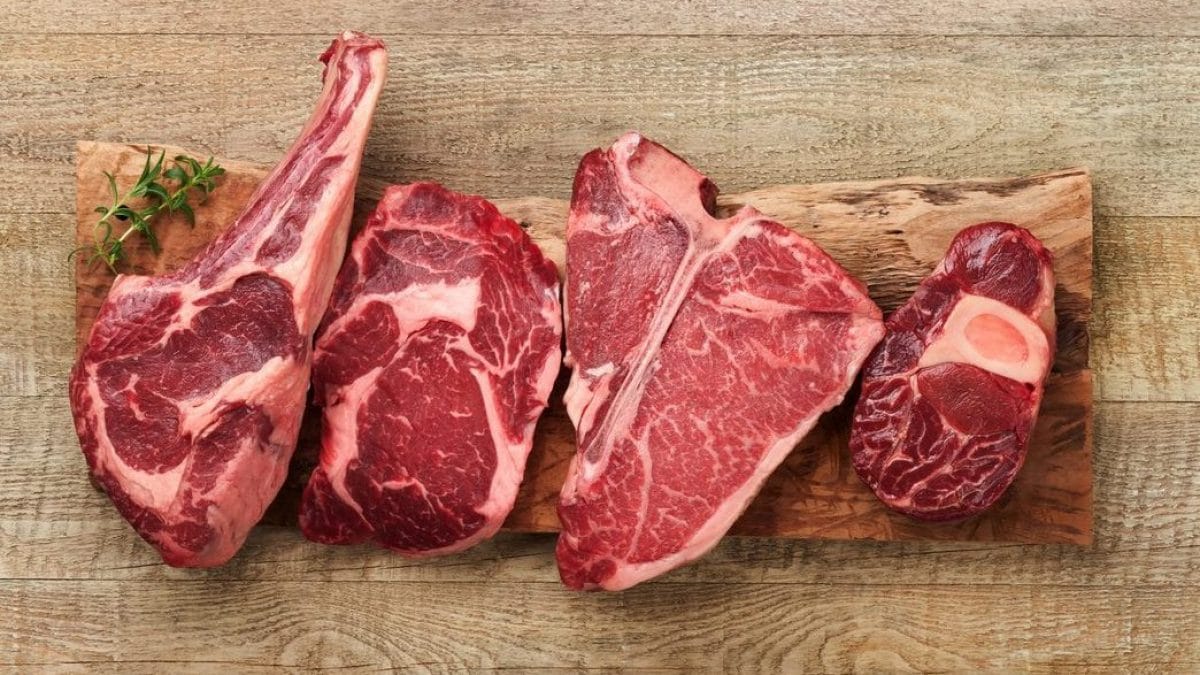
Juicy, tender, and flavorful: steaks are a delicious dish that requires a little attention to detail to be prepared to perfection. This allows the meat to be fully appreciated and avoids the risk of ruining such a precious raw material, which should always be consumed in moderation and at its best. Steak is a thick, broad, and meaty slice of meat that can come from a variety of animals, from beef to pork (pork chop), and even fish (such as tuna or swordfish). Let's stick to the English word, beef steak, which refers to bovine animals, and look at the main cuts and specialties: we've selected 8 to learn about.
1. T-Bone (Florentine Steak)

Let's start with what is considered the queen of steaks, the Florentine steak, also known as the T-Bone steak. A symbol of Tuscan tradition, it is obtained from the loin of a young bovine (veal or heifer), in the hindquarter. Originally, the Florentine steak was made exclusively from Chianina beef. A distinctive feature is the T-shaped bone that divides the fillet from the sirloin: the cut is also known as T-Bone or Porterhouse, with the latter comprising the final part of the fillet, containing a larger quantity. These are very valuable cuts, with a perfect balance between fat and lean parts: the steaks are of considerable size, at least 4-5 cm thick and easily exceeding a kilo in weight. The most classic cooking method is grilled or barbecued, strictly rare for connoisseurs. Cook for a few minutes on each side and then place it upright, bone-side down, and let it rest so the juices can distribute evenly. No marinade or sauce is needed: just a few Maldon (or coarse) salt crystals are enough to serve. Drizzle with extra virgin olive oil, if desired.
2. Tenderloin (or Fillet)

A prime cut, called tenderloin in English, the fillet comes from the inside of the animal's lumbar region: a muscle that is rarely used, which therefore contains very little connective tissue. The meat is lean, with a few veins of fat that helps maintain tenderness during cooking: for a steak, choose a cut from which you can cut 3-4 cm slices, each weighing at least 250 grams. It is cooked in a pan, over a high flame, to allow the Maillard reaction to take place for a few minutes, because it is important to prevent it from drying out. Be careful because it is delicate and dries out easily.
3. Sirloin

Adjacent to the tenderloin, at the top of the thigh, is the sirloin. This is still a lean cut, but less tender than the tenderloin. The sirloin is recognized by a stripe of fat that appears along the side of the slice, which during cooking adds juiciness and a more pronounced flavor. In the US, its very famous version, called New York Strip Steak, is prepared on the grill or in a pan, with an extra kick when flavored with a knob of melted butter and herbs.
4. Rib

We're still in the lumbar region, moving toward the center of the back. Here too, we have prime cut steaks, with meat that has a rich flavor thanks to the presence of marbling, or the infiltrations of intramuscular fat that tenderize it and add flavor during cooking. The bone-in rib eye is probably one of the most popular versions: the tomahawk is famous, decidedly spectacular with the long bone left whole. It can be cooked on the grill, on the grill, or even fried: when it's veal, in fact, it's transformed into the classic Milanese cutlet, with the meat pounded to make it more tender and to evenly cook once breaded.
5. Entrecôte

Those who hang out on social media will surely have noticed a sudden interest in dishes featuring French steaks submerged under a mountain of French fries. That slice of meat peeking out is called entrecôte, the boneless version of the rib eye found in the forequarter. The entrecôte is tender and juicy, a premium cut: the steaks are 2-3 cm thick and easy to handle, so much so that pan-frying isn't a bad idea, preferably rare (medium at most) to retain their juiciness and pink color.
6. Ribeye

The ribeye (cube roll) is one of the most iconic steaks and has become popular throughout the world thanks to steakhouses. Where does it come from? From the front of the loin, near the first ribs, and the name itself describes its peculiarity: it means "eye of the rib" in reference to the marbling of fat that runs through the section, almost forming a lighter center, a detail that distinguishes it from the entrecôte. It also features notable marbling, which is why it is considered one of the best steaks around, especially when made with Black Angus or Japanese Wagyu beef: it can be thicker or thinner depending on your taste, and is perfect both on the barbecue and in the pan: given the amount of fat that melts, grilling over an open flame is not recommended.
7. Picanha

Thanks to television shows and increasingly popular Brazilian restaurants, this specialty has become quite popular. The star of the show is the top portion of the silverside, located at the top of the thigh: a triangular cut known as the silverside tip, rump tip, or rump cover. Its ace up its sleeve? A layer of fat covering it, which should not be removed because it tenderizes and flavors the meat. Ideal for steaks, it is the undisputed star of the Brazilian barbecue (churrasco), where the slices are folded into a U and cooked on a spit.
8. Flank Steak

Want a tasty steak that's easier on the wallet? Beef flank steak, which comes from the flank, is the perfect choice. It's cooked whole and served like a tagliata, with cuts made against the grain to make it easier to chew. Otherwise, it risks toughening quickly, as it's made up of very thick fibers. Quick cooking is therefore key. Furthermore, since it's lean, grill marinades with spices, herbs, salt, pepper, and citrus juice are highly recommended.
;Resize,width=767;)
