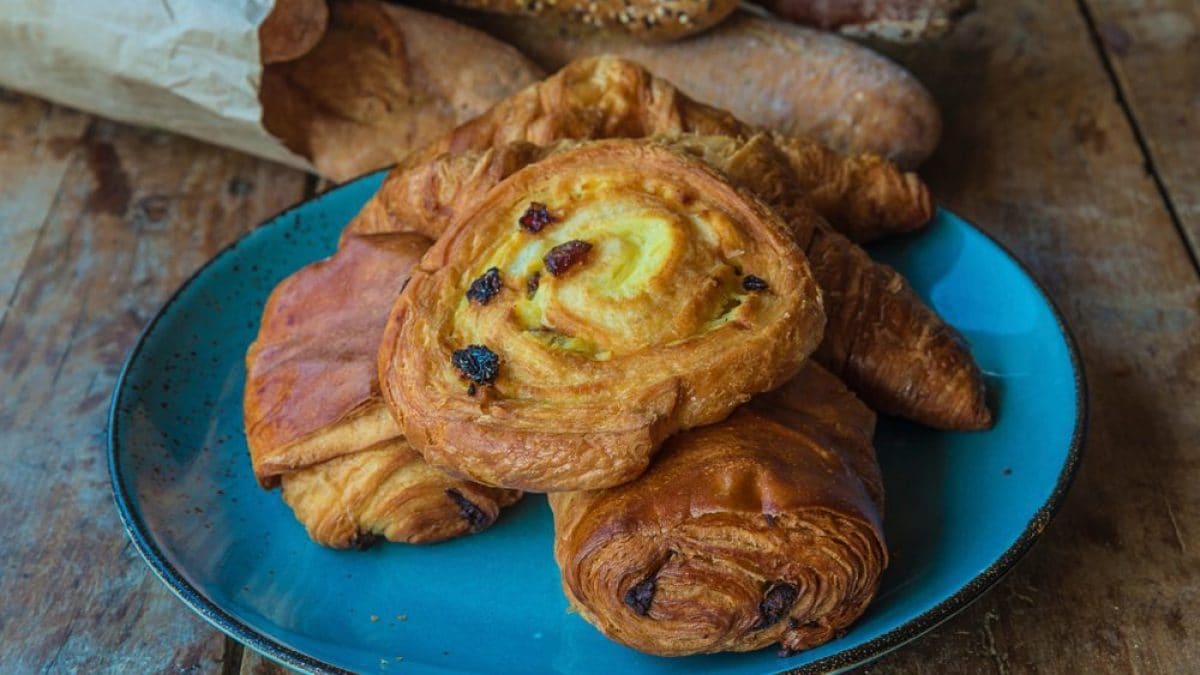
The windows of Parisian patisseries and boulangeries are their natural habitat, but viennoiserie has conquered every continent with its unique blend of sophistication and indulgence: croissants, pain au chocolat, and brioches are among them, perfect for enjoying with coffee and cappuccino, or to take away and nibble on the go. These iconic French treats, a bridge between the art of baking and pastry making, cannot go unnoticed for their taste and essential, scenic appearance, the result of high-quality raw materials and production techniques that are meticulously crafted. Let's discover them.
Viennoiseries Delicacies, From Past to Present
Despite its association with Paris, etymologically, viennoiserie takes us back to another elegant, cosmopolitan, and sophisticated city, a key figure in European politics and culture for centuries and the capital of the Habsburg Empire. We're talking about Vienna, with the term meaning "in the Viennese style," recalling those leavened dough-based products enriched with butter that have become an icon of the French breakfast over time. But that's not all: this word now tends to also include other irresistible wake-up (or snack) sweets from all over the world, from traditional Swedish kanelbulle to original cruffins, a cross between croissants and muffins, through to the most exclusive reinterpretations by pastry chefs, where rigor and imagination blend perfectly, as taught, for example, by Cédric Grolet, with his boutiques that have become veritable places of pilgrimage.
Rather than explaining, French viennoiserie is meant to be eaten, as it encompasses a wide variety of baked specialties that are known for being rich, fragrant, and crumbly. These products are prepared using a similar technique to bread, but, due to the presence of certain ingredients (such as butter, milk, cream, and sugar) and the use of leavened, flaky, and rolled dough, they are closer to pastry, despite not using a predominant amount of cream or toppings. They are generally eaten in the morning for breakfast, but can be found at practically any time of day, as a snack or a light bite.
1. Croissant

The croissant is undoubtedly the most famous symbol of French Viennese cuisine, often compared to the Italian cornetto, despite important differences: it is distinguished by its typical crescent shape, whose origins lie in Turkish-Austrian tradition. It is generally hollow inside and made with pâte à croissant, a leavened puff pastry: this process, which alternates layers of dough and butter, gives the product a layered, light, and crumbly texture. The result is a crispy exterior and a soft, airy interior, with a rich flavor due to the abundant presence of butter.
2. Pain au Chocolat

Right after the croissant in terms of fame, we find the pain au chocolat, which shares the same basic dough but comes in a completely different shape. It is a compact rectangle, similar to a small parcel, inside which one or two bars of chocolate are inserted. During baking, the chocolate partially melts, creating a soft and intense center that contrasts with the crispy pastry exterior. It is particularly appreciated for its simplicity and balance between sweetness and texture.
3. Pain aux Raisins

Among the most visually recognizable products is the pain aux raisin, characterized by its spiral shape. Also made with leavened puff pastry, it is enriched with raisins sprinkled throughout the dough and often topped with a layer of pastry cream. This dessert combines different textures: the crumbly pastry, the softness of the cream, and the slightly caramelized sweetness of the raisins. It is a popular choice for breakfast or a snack.
4. Chaussons Aux Pommes

Chaussons aux pommes, literally meaning "apple slipper," is a triangular or semicircular pastry. It's made of puff pastry folded over and filled with apple compote: a soft, fragrant filling that contrasts with the crisp, golden exterior. This dessert has a more rustic, homey feel than other Viennese pastries, while maintaining elegance and technique.
5. Brioche

Unlike puff pastry products, brioche is distinguished by its rich and soft leavened dough: made with flour, butter, and eggs, it has a puffier and softer, almost "cloudy" consistency. It can be plain or filled, and is a very versatile base in French patisserie. Its less layered but more elastic structure makes it particularly suitable for sweet or savory accompaniments.
6. Pain Suisse

At first glance, the pain suisse resembles the pain au chocolat in shape, but it stands out for its richer filling: it can be made with either puff pastry or brioche dough, and is filled with custard and chocolate chips. The result is a creamier and more enveloping dessert, where the softness of the inside plays a key role. It's a less basic but decidedly more indulgent variant, beloved by those seeking a richer experience.
Viennoiserie's History, from Vienna to Paris
We can say that Viennoiserie was born from the encounter between Viennese and French traditions, with roots stretching back to the 17th and 18th centuries, when baked goods such as the kipferl were already widespread in Vienna. This crescent-shaped pastry is considered the main ancestor of the croissant and became a success in Paris when it was imported to the City of Light by the Austrian entrepreneur August Zhang, who opened the famous Boulangerie Viennoise at 92 Rue Richelieu in 1839. Here he introduced some innovations that made the difference: a steam oven, a mechanical mixer, and the use of high-quality brewer's yeast instead of the sourdough starter used to make Kaisersemmel and pain Viennoise. These innovations attracted the attention of French bakers, who catered to a wealthy clientele and reinterpreted them using techniques and ingredients they knew well, such as laminating puff pastry, with layers of dough and butter that made the final result both rich and light. In the 19th century, viennoiserie was synonymous with luxury and refinement, while in the following century it began to become more accessible, eventually becoming a mass-produced product.
Viennoiserie, Between Bread Making and Pastry Making
Typical viennese pastries can be purchased in both boulangeries, the classic French bakeries, and pâtisseries, or pastry shops. This is because they exist somewhere between these two worlds: on one hand, there are leavened doughs, which require the time, attention, and skill typical of bread making, while on the other, more indulgent ingredients come into play, such as butter, eggs, milk, and sugar, which make these specialties more elaborate, soft, and fragrant. Compared to desserts, however, classic viennese pastries remain more basic in their composition: they don't include icing, opulent fillings, or complex decorations, and are enjoyed fresh from the oven.

