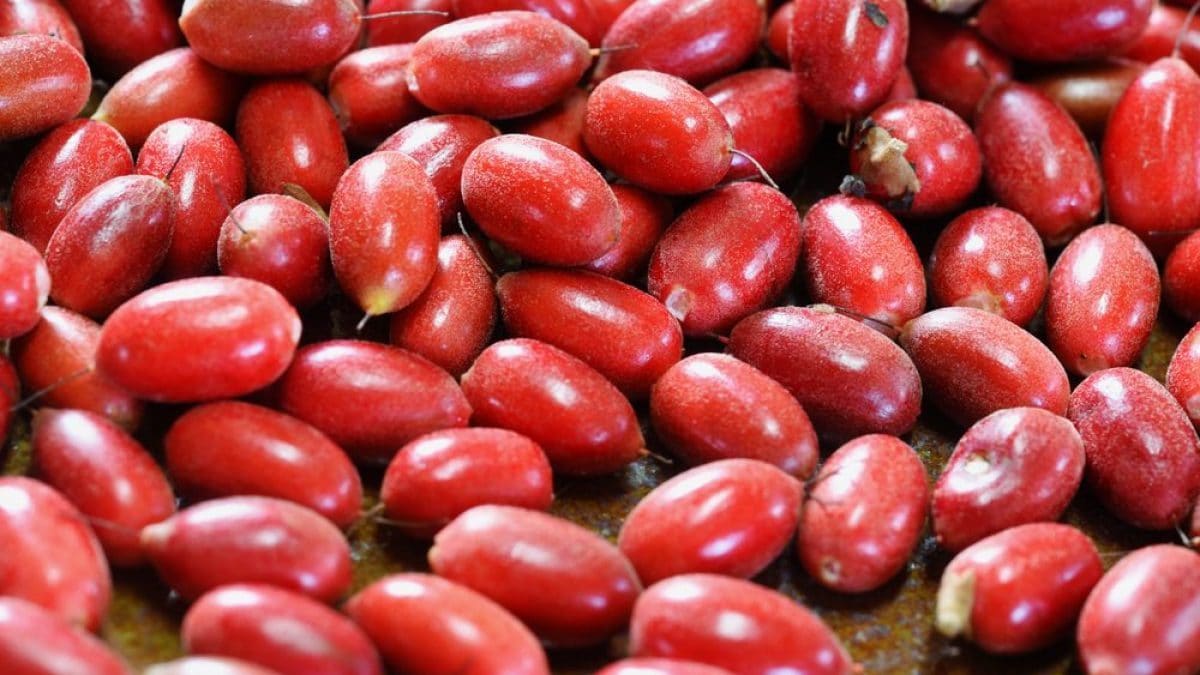
Have you ever heard of the miracle berry? We bet you haven’t tried it, especially since until recently this very special berry was effectively restricted in the United States. The FDA had classified the active compound, miraculin, as an unapproved food additive, limiting its sale as a flavor-altering product. Today, however, the legal status has become more flexible: miracle berries can be sold in the U.S. as whole frozen berries, tablets, or powder for personal consumption and “flavor-tripping” experiences, provided they are not marketed as a food additive or sweetener. What makes the tiny fruit so special is precisely this glycoprotein, capable of changing your perception of taste and, as if by magic, transforming even the most acidic and bitter foods into sweet ones. Hearing this description truly sounds like a miracle, but in reality it's just a masterpiece gifted by nature: this "magical" effect is simply due to the reaction that occurs between the substance and the pH of saliva and lasts only for a short period of time. The fact that it is a scientific explanation, however, does not make the miracle berry any less fascinating; on the contrary, it is yet another demonstration that nature, at times, is much more magical than our wildest fantasies.
What is a Miracle Berry And How Does It Work?
The miracle berry, actually called Synsepalum dulcificum, is a plant native to West Africa, particularly common in Ghana and widespread in tropical climates. It is an evergreen plant that grows wild, reaching up to 5 meters in height, but when cultivated it doesn't exceed 2 meters. Particularly resistant to scorching heat and drought but not suited to colder climates (which is why it is difficult to grow outside its native land), the plant develops berries similar to small, bright red tomatoes, with white flesh and a fleshy consistency.

The bright red color indicates the fruit's ripeness, the perfect time to harvest it, but once picked, it has a short shelf life: it should be consumed within two or three days at most, or processed to be dried or freeze-dried to prolong its shelf life. The miracle berry is not picked and consumed for its flavor (it is virtually flavorless) or any particular nutritional characteristics, but exclusively for the almost shocking effect it has on the palate, influencing the flavor of ingested food, making any sour or bitter food sweet for a certain period of time after consuming the berry.
The discovery of the miracle berry was first documented in 1725 by French explorer and cartographer Reynaud des Marchais during a trip to West Africa, when he observed that the locals were already traditionally using it. It was he who discovered the fruit's unique characteristics and gave it the nickname "miracle fruit" (miracle berry). In 1968, Japanese scientist Kenzo Kurihara isolated the active ingredient responsible for the flavor change, which he named miraculin, in honor of the fruit's nickname.
How Miraculin Works To "Change the Perception" of Taste
Miraculin is a glycoprotein with unique properties and is responsible for the "magic" that occurs when eating the miracle berry: the substance itself is flavorless, but once in the mouth, it reacts to the taste receptors in our papillae, sweetening our perception of the flavor of acidic or bitter foods ingested subsequently and accentuating any sugary substances present within them. The longer the fruit is held in the mouth, the greater and longer-lasting the effect, although always temporary.
When the pH of saliva becomes acidic, miraculin attracts protons, overloading the sweetness receptor proteins. As a result, these receptors become hyperactive, sending continuous signals to the brain, causing it to perceive any food you eat as sweet. In practice, if you eat Synsepalum dulcificum and then a lemon, the lemon will taste sweet in your mouth: your mind will say "lemon," but your palate won't associate the fruit with its typical acidic flavor; miraculin, in fact, is approximately 5,600 times sweeter than sucrose.

Caution: despite its amazing properties, miraculin doesn't actually change the taste of the food we eat: it has no effect on its chemical structures; it only acts on the receptors in our mouth and changes our perception of the food we're eating, not the food itself. For this very reason, miraculin should be used sparingly, as the risk is that we consume more acidic foods than permitted and, consequently, trigger problems related to the overuse of these types of foods.
How Long Does The Effect of Miraculin Last and What Does It Depend On?
We've mentioned it, but it's worth repeating: as miraculous as the miracle berry is, its effect is temporary, and the taste alteration it produces lasts for a limited period of time. The berry's maximum effect is felt immediately and becomes more intense the longer you hold it in your mouth, but it fades within 30 minutes to 2 hours, until the taste receptors return to normal. The effect doesn't disappear suddenly, but gradually decreases in intensity until it disappears completely. The duration of the miracle berry's effect depends on several factors: primarily, it's determined by the time it takes saliva and the biological processes in the mouth to remove the glycoprotein bound to the sweetness receptors on the tongue, but it's also influenced by the pH of the food (it's inactivated by highly alkaline substances) and the heat of the food you eat (temperatures above 212°F/100°C denature the protein and nullify its effect).
How And Why Should You Use Miracle Berries?
The miracle berry is primarily used as a natural sweetener, partly because it has a significant advantage: miraculin is a glycoprotein that does not cause a significant increase in blood sugar levels, making it an alternative for diabetics. Furthermore, it contains virtually no calories, making it perfect for those following a diet or watching their weight. The fruit spoils very easily, which is why it is usually sold in dehydrated bars, more rarely in frozen pulp, or in the form of actual tablets.

Miracle berries are very popular in the United States, so much so that there are even companies that grow them and process them to produce a frozen pulp specifically designed to sweeten smoothies, yogurts, and juices. The same goes for Japan, where the berries are very popular among the population: here, it's more common to find them freeze-dried and transformed into tablets to be dissolved in the mouth a few minutes before eating particularly acidic foods. Miracle berries have also proven to be a curiosity in the gastronomic world, particularly following the spread of molecular gastronomy: the American chef Homaro Cantu, for example, made them a feature in his iNG restaurant in Chicago.
And in Europe? The European Union initially banned the marketing of miracle berries: they were considered a "novel food," meaning a food product consumed so inconsequentially that there was no definitive scientific evidence regarding their safety. Despite not having any particularly harmful effects, the miracle berry was blocked by the authorities precisely because it needed to be studied more thoroughly. The situation has recently changed: in 2021, the EFSA issued a favorable opinion, allowing the dried fruit to be placed on the European market.
Miracle Berry's Risks and Contraindications
Miracle berries currently have no specific side effects reported by science, but like all foods, they should be consumed sparingly and not overindulged. The main risk of consuming excessive amounts of the fruit is that, influenced by its effects, you may indiscriminately eat excessive amounts of foods that are normally avoided due to their flavor, such as acidic citrus fruits rich in aromatic oils. Always remember that miracle berries remove acidic flavors, not acidity, and therefore the side effects caused by excessive consumption of acid-rich foods remain the same.

Miracle berry is not recommended for those with allergies to red fruits or berries, as it falls into both categories. Consult a doctor if you need to take it during certain health conditions, such as pregnancy or breastfeeding, if you are undergoing medication, or if you suffer from certain medical conditions. Miracle berry is sometimes recommended for patients undergoing chemotherapy to combat a metallic taste, but even in this case, it's always best to consult your doctor.
;Resize,width=767;)
