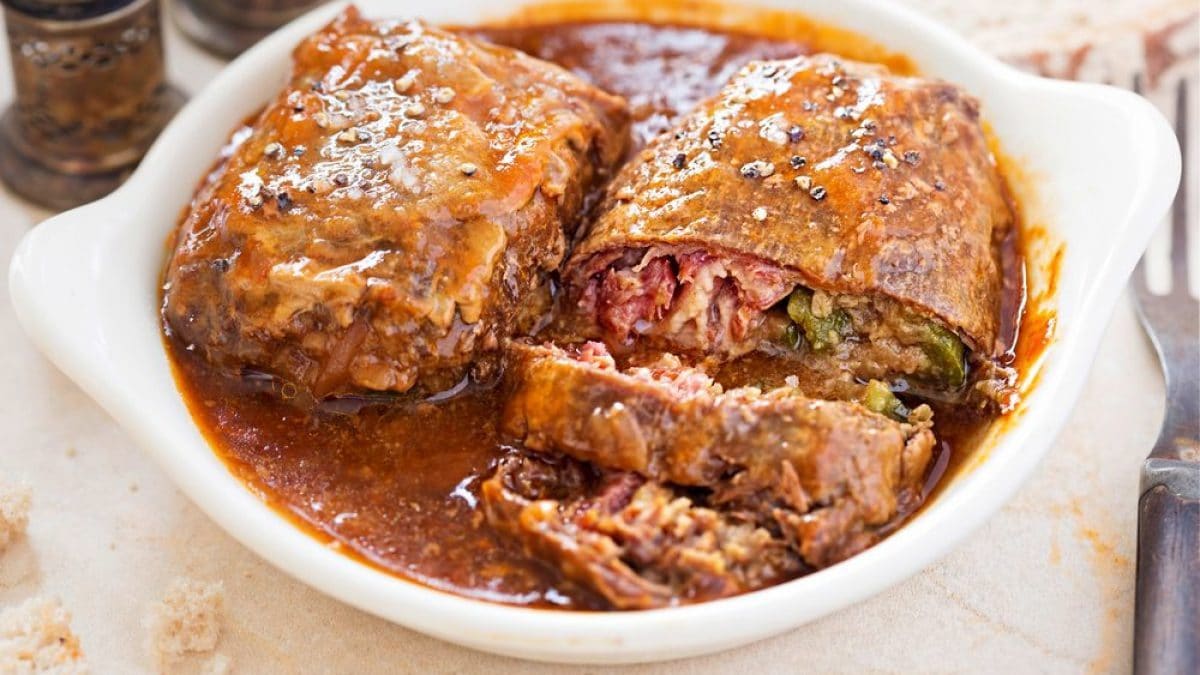
Meat rolls are a true dinner-saving recipe, ideal when you're craving something quick and easy, or simply want to eat meat in a slightly different way. There are countless variations of meat rolls, made with all kinds of meat, but also with vegetables for a vegetarian version. This type of recipe is very popular in the U.S., but even more deeply rooted in Eastern Europe, where it's a typical culinary preparation: meat rolls are found almost everywhere in Ukraine, Lithuania, Hungary, Slovakia, and Belarus, but it's in Poland that they're considered classic dishes of the most traditional cuisine.
In Poland, zrazy are a fairly old recipe that has become a symbol of Polish gastronomic culture, where meat dishes generally play a prominent role. Polish zrazy are usually made with beef (but there are many variations). They are distinguished by the tenderness of the meat, the rich filling made with local ingredients (such as sauerkraut or potatoes), and the inevitable, succulent sauce that accompanies them.
What Are Zrazy?
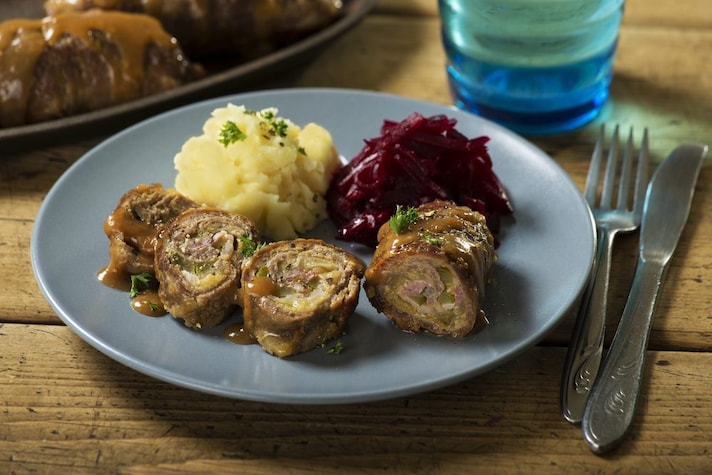
Zrazy are one of the most typical and well-known Polish dishes: they are rolls that, in the most common recipe, are made with thin slices of beef seasoned with salt and pepper and usually stuffed with vegetables (including green onions), mushrooms, eggs, potatoes, pickles, and bacon. These particular rolls, whose name in Polish literally means "slice of meat," exist in countless varieties more or less common throughout the country, making the recipe remarkably versatile and variable.
Furthermore, zrazy aren't just found in Poland, even though that's where they're most deeply rooted: they're a recurring dish in many Eastern European countries, particularly popular in Lithuanian cuisine (which has long disputed the origins of the original recipe with Poland), but also in Ukraine, Hungary, and Latvia. This widespread popularity of zrazy isn't a coincidence, but is rooted in the history of this area itself: it seems, in fact, that the first traces of a similar recipe date back to the times of the Polish-Lithuanian Commonwealth, the federal state composed of Poland and Lithuania and governed by a common monarch who was both King of Poland and Grand Duke of Lithuania.
The Confederation, officially founded in 1569 but effectively established as early as 1386, reached the height of its power in the early 17th century. Once the Confederation dissolved at the end of the 18th century (with the subsequent partition of its territories between Austria, Prussia, and Russia), the two former allies, Poland and Lithuania, began to claim ownership of the zrazy, and continue to do so today.
It's actually quite difficult to pinpoint the exact date of zrazy's invention, although it's thought it probably occurred as early as the 14th century among the nobility, given the refinement of their preparation. There are no written records from this era; in fact, the first written mention of zrazy is relatively recent, thanks to the famous Polish writer Adam Mickiewicz, who mentions zrazy twice in his 1834 work Pan Tadeusz (Mr. Thaddeus). The poem notes that 19th-century Polish nobility ate the rolls for breakfast, accompanied by a soup made from beer, pieces of cheese, eggs, and cinnamon.
The Most Popular Types of Zrazy
All varieties of zrazy share the same method of preparation and serving. Regardless of the ingredients, the rolled meat is always secured with either kitchen string or toothpicks to prevent the filling from leaking out during cooking. Once secured, the zrazy are quickly fried in oil and then stewed with herbs and vegetables. Sometimes the sauce is thickened with flour or added with sour cream to create a delicious sauce, which is then drizzled onto the plate.
Various options are available to accompany them, but the most common are a side dish of potatoes or a side dish of grains such as buckwheat, oats, rye, or barley. Since zrazy are best enjoyed the day after they are prepared, they are usually not eaten immediately but rather stored in the refrigerator or a cool place. The most famous Polish zrazy are those made with very thin slices of stuffed beef or pork, with the filling varying depending on the person making the recipe (it can be made with other meats, vegetables, cheese, potatoes, etc.).
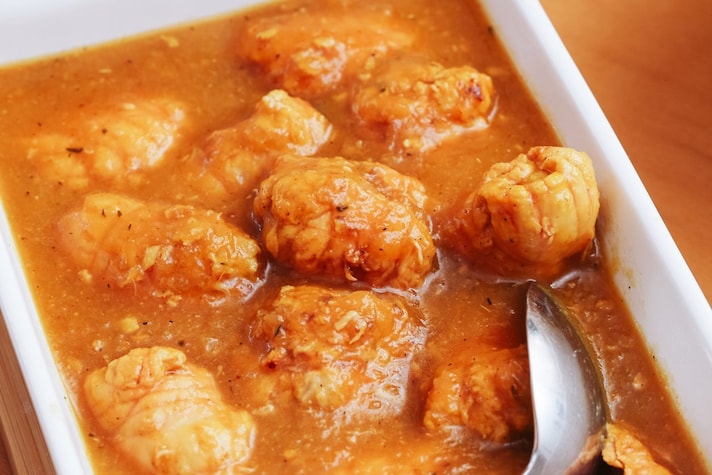
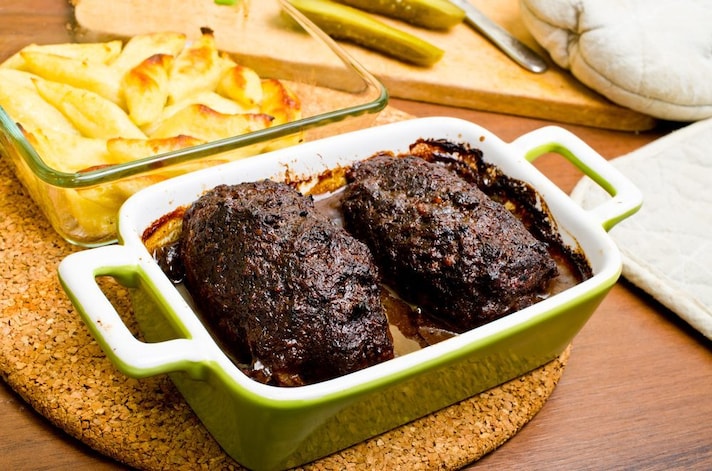
Despite being the most popular variant, beef zrazy are not the "original": the oldest recipes called for the use of venison, which is why it is thought to be a recipe of noble origin, or for minced meat, not slices. Even today, in the Silesia region, minced meat zrazy are prepared: a small meatball made of minced chicken, pork, or a combination, flattened and rolled up and simply fried in vegetable oil, without filling, but accompanied by mushrooms, hard-boiled eggs, cheese, or vegetables.
Potato zrazy are also particularly popular, the most popular variant even outside of Poland, especially in Ukraine, Belarus, and Russia. In this case, the roll is not made with meat, but with boiled potatoes kneaded to accommodate a variety of fillings: the most popular is ham and cheese, but all kinds of fillings are available, from vegetables of all kinds to mushrooms, from minced meat to offal.
Zrazy are evolving and, today, there are versions of every typical version of the basic recipe: in the most contemporary ones, for example, slices of white meat, especially chicken, and fish are also used as the external casing of the roll.
;Resize,width=767;)
