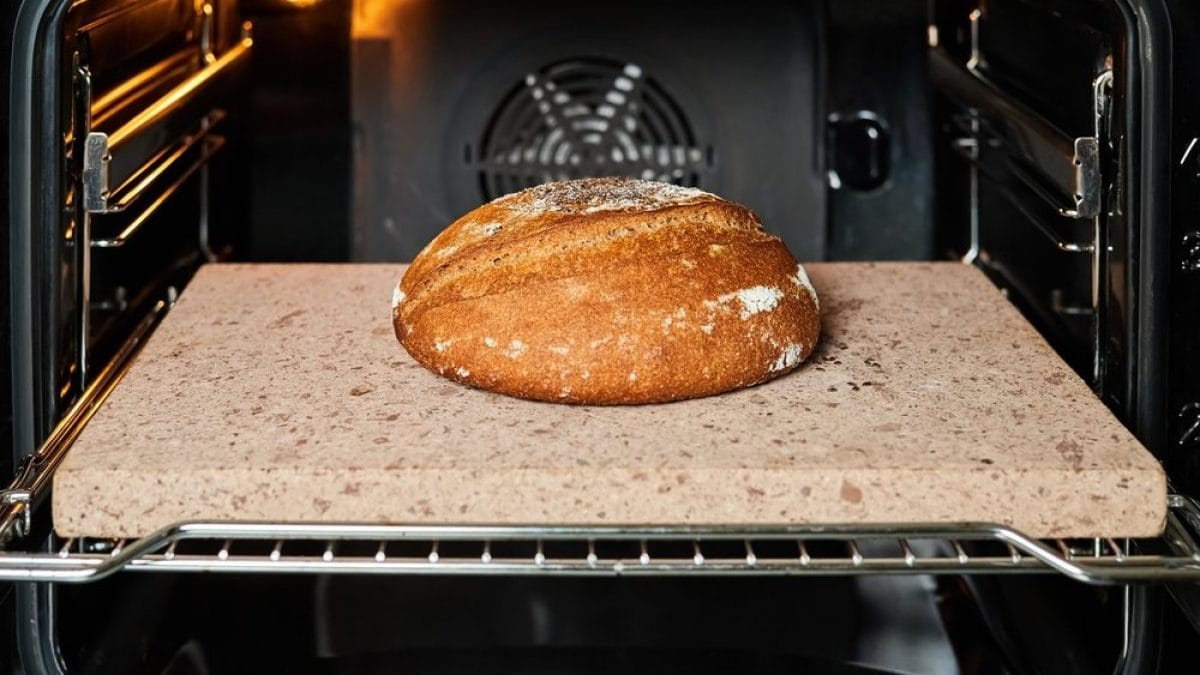
Bread and pizza are among the most loved and consumed foods, but also the ones most often made at home when you want to try your hand at making something yourself: homemade bread and pizza have a unique flavor and are also fun activities to do with the whole family. If you're passionate about making bread and pizza yourself, there's one tool you absolutely must have: a baking stone, a simple yet valuable slab made of refractory materials, capable of withstanding high temperatures, absorbing moisture from the dough, and retaining heat for a long time, distributing it evenly for perfect baking.
Thanks to its characteristics, baking stone can partially replace both the home wood-fired oven and professional or particularly powerful ovens, allowing you to make bread and pizza worthy of a professional at home. It's such a valuable tool, so much so that even bakeries and restaurants often use it: for example, in the traditional Neapolitan oven, the so-called "Sorrento biscuit" is used, a clay base created over 300 years ago that is, in effect, a refractory stone.

If you're curious about this particular tool, you're in the right place: here's a complete guide to making the most of your baking stone, not only during cooking but also during cleaning, a delicate phase that requires careful attention to ensure your stone lasts a long time and is in the best possible condition.
What is a Baking Stone?
A baking stone is a kitchen tool that allows you to bake homemade bread and pizza, ensuring a cooking experience very similar to that of a professional pizzeria or bakery oven. It's a plate made of resistant, "refractory" materials (such as clay or cordierite, which can withstand very high temperatures) to simulate baking on the bricks of wood-fired ovens. Its main feature is precisely that of allowing excellent heat distribution, thus ensuring very uniform and consistent cooking, with a perfectly crispy base.
The porosity of the material this baking tool is made of allows it to absorb moisture from the dough, thus maintaining the right humidity level, improving the cooking process and also speeding up cooking times. The refractory stone is mainly used for homemade pizza and bread, but in reality it is suitable for cooking any type of leavened product, even sweet ones; it is generally used in the oven, but can also be used on the grill and barbecue thanks to its resistance to very high temperatures.

For use in a home oven, a pizza stone at least 1.5 cm–2.5 cm thick is recommended. The shape and size can be chosen based on the size of your appliance: pizza stones come in all types and sizes, rectangular or round, large or small, and often come with handles. Color also varies depending on the material the pizza stone is made of, so you'll find lighter or darker products, often sold with a wooden board with a short handle for transferring the pizza from the work surface to the oven.
How to Use Your Baking Stone
The baking stone isn't a difficult tool to use, but as with all tools, it requires some care to maximize its capabilities and avoid damaging it. First, let's start with a tip that might seem obvious, but isn't: the baking stone should be placed in the highest possible compartment inside the oven, close to the highest possible heating element, so that it receives the strong, direct heat needed to maximize its cooking performance.
Always insert it while the oven is still cold to prevent thermal shock and breakage. Once inserted, wait before placing the food you're cooking on it: first wait for the oven to gradually heat the stone, then leave it at room temperature for at least 15–30 minutes so it has time to absorb the heat. Only then should you place the bread or pizza on top: it will cook better and in much less time. When cooking, pay close attention to the surface of the product you're cooking, especially if it's pizza with toppings, because being close to the top heating element could cause the leavened dough and its toppings to burn.

There's no fixed cooking time; it depends on several variables, including the type of oven you have at home, the type of leavened product you're cooking, and the type of stone you're using. On average, if you set your oven to around 482°F/250°C, cooking times are halved and vary from 5-6 minutes to 20 minutes depending on the type of recipe you're cooking (pizza is usually quicker, bread takes longer). Remember not to use oil or other fats, because the refractory stone is very porous, absorbs them immediately, and stains are impossible to remove. To prevent food from sticking to the bottom, use a dusting of flour or cornstarch. Also, never cut pizza or bread while they're still on the stone; transfer them to a cutting board or other surface first, as blades, even the most delicate pizza cutters, can easily damage it.
How to Clean a Baking Stone Without Ruining It
To have a refractory stone that lasts a long time and performs at its best, you must learn to perform correct maintenance on the instrument, starting with cleaning: you must always carry out this when the refractory stone has completely cooled, to avoid a thermal shock that could create tension in the material and break the stone, and you can choose between different procedures.
The most common way to clean it is by hand, using a delicate rubber, hard plastic, or wooden spatula: avoid metal or steel, which could damage the surface when scraping away any food residue. After gently removing any remaining material from the stone, if it's not very dirty, simply wipe it with a damp cloth and let it dry thoroughly before storing it. If the stone is dirty and requires more thorough cleaning, you can use a non-abrasive sponge and a little water, but strictly without adding detergents or soaps: the stone is porous, so it would tend to absorb these, and the flavors of our subsequent recipes would be altered. For the same reason, don't soak it, as it could absorb excess and end up ruining it. Again, once all the dirt has been removed, dry the stone carefully and only store it when it's completely dry.

If there's a particularly stubborn stain or buildup, you can create a gentle paste by mixing equal parts hot water and baking soda. Cover the surface you want to clean with this paste, let it sit for about half an hour, then remove it using a soft spatula or cloth. If any stains still remain (no food residue, just stains), don't worry, as the baking stone develops a patina that becomes more and more adherent over time, and the stains won't affect the cooking process. Remember to always dry your stone thoroughly, as placing it in the oven while it's still damp will cause the thermal shock to crack it. Also, remember to store the baking stone horizontally, preferably inside the oven, even when the oven is turned off: this position allows you to maximize its ability to store and release heat during cooking.
;Resize,width=767;)
