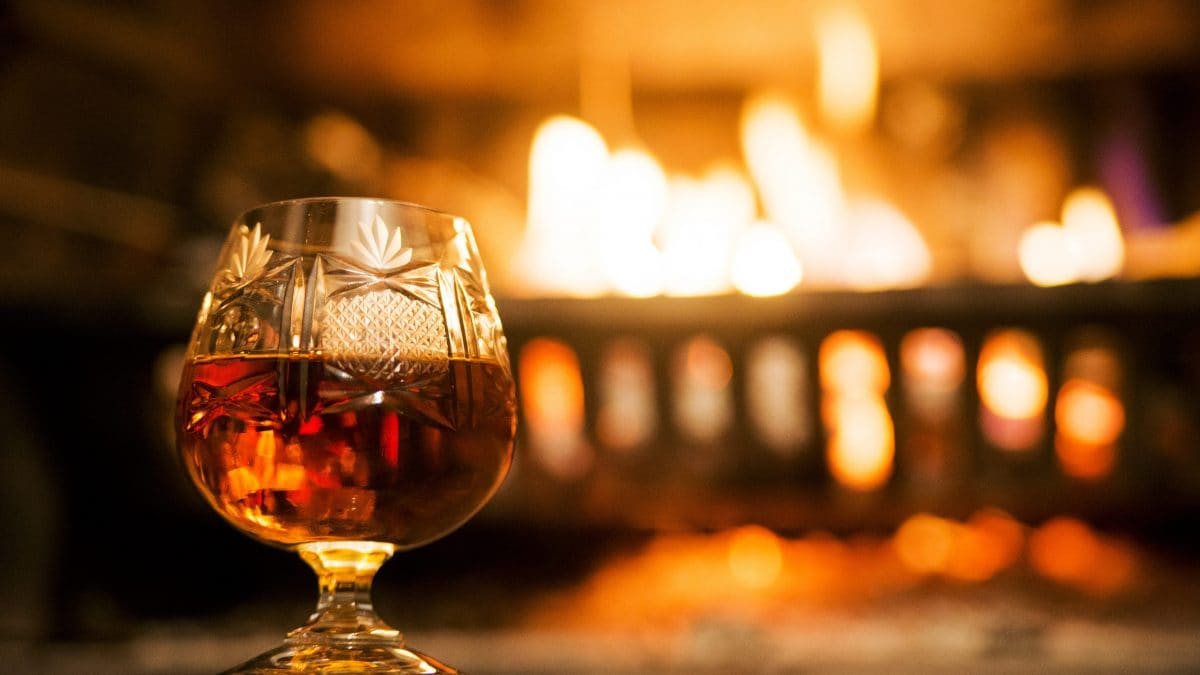
Armagnac is a wine distillate produced in the Gascony region of southwest France, a product of great excellence, elegance, and an incredible history. It is a complex eaux-de-vie, with an intense and enveloping flavor, with notes ranging from dried fruit and vanilla, chocolate and tobacco, to spicy and woody nuances. Perfect for sipping neat: so good and prestigious that it is rarely used in mixology, it would almost be a waste and would overprice cocktails. We are talking about a profound and complex spirit, a rich, intense, and never boring drink, best enjoyed slowly, perhaps in front of a fireplace or after an important dinner, to fully enjoy its extraordinary evolution. If you like full-bodied spirits full of personality, Armagnac could become your new favorite.
What is Armagnac?
When you think of France and spirits, cognac probably comes to mind, but if you truly want to explore the authentic soul of French brandy, you absolutely must know Armagnac. Just like cognac, it is protected by the Appellation d'Origine Contrôlée (AOC), but unlike its more famous cousin, Armagnac retains a closer connection to its terroir and traditions. It is still made today very similarly to when it was invented and is produced almost exclusively by small distilleries.

This product's distinctive feature lies in the grape varieties used to make it: Ugni Blanc, Colombard, Plante de Grèce, and Baco, all highly disease-resistant vines. Today, the most common variety used for Armagnac is Ugni Blanc (75% of Armagnacs made from this grape), but it is also the most expensive because it can be used both in winemaking and as a table grape thanks to its splendid flavor.
The best production area is Bas-Armagnac, thanks to its sandy soil, low in limestone and rich in marine sediments. The Grand Bas-Armagnac micro-zone is also highly regarded, producing more harmonious and elegant spirits. The intermediate zone, Ténarèze, still has some sandy soils, but is predominantly clay-limestone and clay-sandy. This part of France doesn't produce much Armagnac because it is heavily devoted to the production of table grapes and cereals, a more agricultural and less viticultural area.
Armagnac's History and Origins
It is undoubtedly the oldest brandy in France: the first mention of it is found in a book from 1531 derived from a manuscript dating back to 1310. The work is kept in the Vatican Apostolic Library in Rome, and was written by Vital du Four, abbot of the monastery of Eauze in the heart of the county of Armagnac. Like all brandies and liqueurs of the Middle Ages, Armagnac was also created for medicinal reasons. The manuscript itself lists all forty "medical" virtues that the alcoholic drink is said to possess, including the ability to preserve youth and cure various illnesses.

If we ignore the literature and focus on alcohol instead, we discover that the first traces of Armagnac date back to the Middle Ages, but during this period it was called aygue ardente (aqua vitae). Production for luxury use began around the mid-15th century (much earlier than other products), and about half a century later, the cask trade developed, primarily to boost the economy and export the distillate. The Armagnac, loaded onto wagons as far as Mont de Marsan or Auch, was then transported by river to Bayonne or Bordeaux, and from there exported by Dutch merchants to the Netherlands, the United Kingdom, and even the Baltic countries. This marketing process unwittingly favored Cognac, whose region has several rivers, a very large commercial port, and connections with southwestern France. It is precisely for this reason that Cognac became much more famous than Armagnac despite having been born centuries later and still today it maintains this advantage over its cousin in the derby of French spirits.
How Armagnac is Produced
Armagnac is the result of a winemaking, distillation, and aging process that follows ancient traditions. Unlike cognac, whose production is more industrialized, Armagnac is still a craft product, crafted by small family distilleries, preserving techniques passed down through generations. Each step has a fundamental impact on the final characteristics of the spirit and influences the flavor we experience in the bottle.

It all starts with the grapes: the basis of this spirit is white wine made from 10 grape varieties, those accepted by the regulations. In most cases, however, you'll find these four varieties:
- Ugni Blanc, the most used, with a high acidity and a low sugar content, ideal for distillation, so much so that 75% of the region has this type of vines planted;
- the silkworm introduced in the 19th century after the phylloxera crisis;
- Folle Blanche, the main pre-phylloxera grape variety. A very delicate but highly prized vine;
- and Colombard, the grape that more than any other is able to make Armagnac complex, with citrus and spicy notes.
Once harvested, the grapes are pressed and fermented spontaneously, without the addition of sulfites or artificial yeasts. Fermentation takes place in large steel or concrete vats and lasts about a week, transforming the sugars into alcohol. The result is a white wine with a low alcohol content (7-12% vol.), high acidity, and little aroma (very unpleasant to drink), two essential characteristics for preserving the freshness of the aromas and ensuring excellent distillation. On the other hand, if the wine from these vines were as drinkable as it is, Armagnac would probably never have been created.

We then have the distillation phase, which in this case occurs in a single step, in a copper column still patented in 1818 and still used in its original form, so much so that it is called "Armagnacais." This still consists of a distillation column divided into several perforated plates: the wine is slowly heated, and the alcoholic vapors rise through the column, gradually condensing and separating from impurities. The process takes place at low temperatures (around 52-60°C) and produces a distillate with an alcohol content of between 52% and 60%. The choice of this type of distillation, maintained despite two centuries of age and technological advances, allows Armagnac to retain a large quantity of aromatic compounds, not found in other spirits. Once this process is completed, a colorless liquid is obtained, which is collected and placed in large black oak barrels from Gascony for aging.
Armagnac's color is achieved precisely at this stage because the chosen wood, a fine wood rich in tannins, modifies its flavor, color, and structure. The time spent in the barrel determines the Armagnac's classification: VS (very special) is aged for one year, the minimum time, up to a maximum of three years; VSOP (very superior old pale) is aged between 4 and 9 years, XO (extra old) is aged 10 to 19 years, and XO premium is aged for over 20 years. There is then a further category, Armagnac Millésimé, which is aged at least 10 years and is produced with grapes from a single vintage. Typically, the older the Armagnac, the more it develops complex aromas of dried fruit, spices, leather, cocoa, and tobacco, so the most valuable ones are those that have had the longest time to mature. Once the desired maturity is reached, the Armagnac is brought to the final alcohol content, usually between 40% and 48%, and bottled unfiltered, cold, to preserve its aromas.
Cognac Vs. Armagnac: What Are The Differences?
We've now arrived at the crucial question everyone asks, because they're often used synonymously. No, Cognac and Armagnac are not the same thing, and the differences go far beyond the different terroirs they come from: one, Armagnac, comes from Gascony, a region in southwest France, characterized by green hills and a warmer climate; the other, Cognac, comes from the Charente region, further north, near the Atlantic Ocean, with a cooler, more humid climate. These climatic differences influence the final character of the distillate: the sandy and clayey soils of Gascony give Armagnac greater aromatic intensity, while the limestone soils of Charente make Cognac more delicate and refined. Another very important issue is the grape varieties, because Armagnac, as we've seen, has several options to start with, while Cognac relies almost exclusively on Ugni Blanc.

The most important difference, however, is in the distillation process: Armagnac is distilled only once with the Armagnacais still, while Cognac undergoes double distillation with the Charentais still, which produces a purer and lighter spirit. As for aging, Armagnac is aged in black oak barrels from Gascony, while Cognac is aged in Limousin or Tronçais oak barrels.
All these processes lead to a strong, spicy, and rustic Armagnac, with notes of dried fruit, leather, plum, tobacco, and spices. It's a wilder, less polished spirit, but incredibly captivating for those who love intense, deep flavors. Meanwhile, it's a smoother, more elegant, and refined cognac, with hints of vanilla, honey, fresh fruit, and sweet wood.
;Resize,width=767;)
