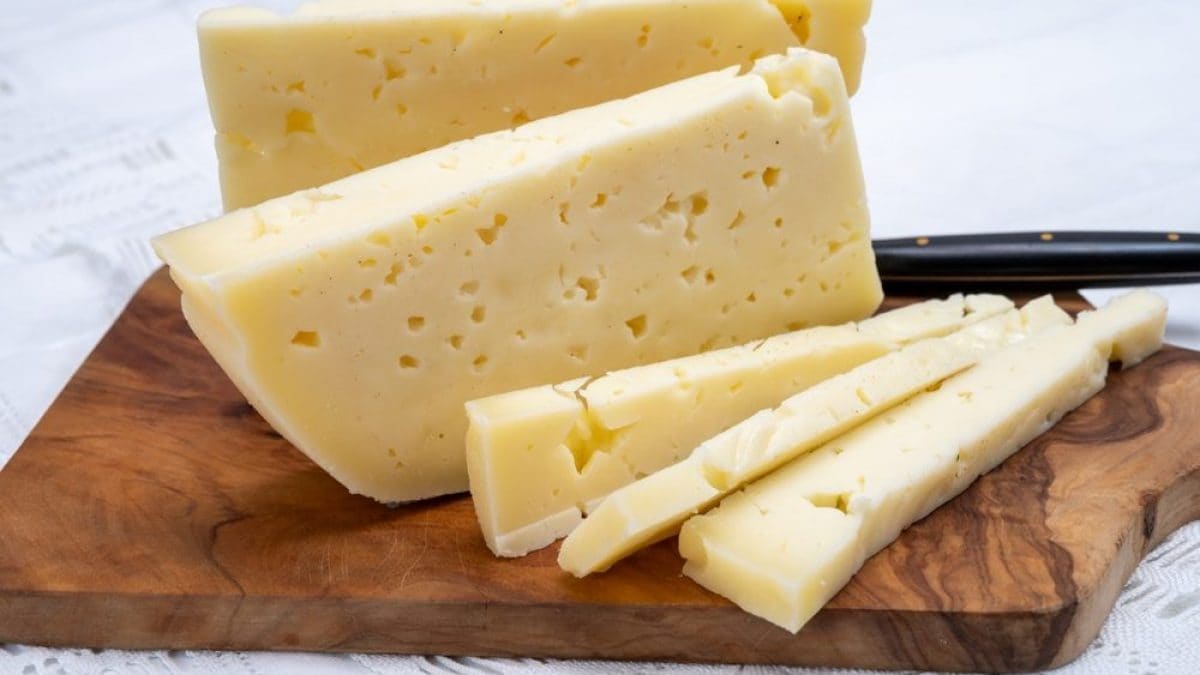
Some prefer sweet, delicate cheeses, others prefer intense, bold ones: Asiago Cheese embodies both these souls in a product typical of Italy, but now widespread throughout the U.S.. We're talking about a cheese specialty that is a true all- rounder in the kitchen, and whose origins date back to the Middle Ages, when sheep's milk was used instead of cow's milk. The territory is that of the Altopiano dei Sette Comuni, also known as the Asiago Plateau, which includes the entire territory of the provinces of Vicenza and Trento and portions of the provinces of Padua, Treviso, and Belluno. A place rich in pastures and mountain pastures, perfect for creating a semi-cooked cheese, which can be semi-hard or hard, and which in 1978 obtained the Designation of Origin, then recognized as a PDO (Protected Designation of Origin) at the European level in 1996, with the creation of the relevant Consortium. Let's discover it.
Asiago Cheese, Fresh or Aged
Asiago cheese can be purchased fresh or aged: depending on the length of the maturation period —but not only—it acquires specific characteristics. For both, production is tied to specifications, which regulate all aspects of processing: the common raw material is cow's milk, sourced from the entire provinces of Vicenza and Trento and from specific areas in the provinces of Padua, Belluno, and Treviso, which are also home to the dairies. Let's look at the differences between the two types and the other by-products found within them.
Fresh Asiago PDO
Let's start with Asiago DOP Fresco, historically also known as "pressato": the sweetest and most delicate, white or straw-yellow in color and with a slightly acidic flavor reminiscent of butter and yogurt. It begins with whole milk, which can be raw, thermized (reaching temperatures of 135°F/57°C to 155°F/68°C), or pasteurized, which is coagulated with bovine or vegetable rennet (a variant permitted by the regulations) to form the curd. The curd is broken using a tool called a lyre (because the strings resemble those of a musical instrument) and then heated to 111°F/44°C before being extracted. The curd is cut, excess liquid is drained, portioned, and formed into special molds: it is compacted by pressing it in manual or pneumatic presses, and then passed into cheese molds, where the Asiago brand is stamped on the edge. Then comes the moment of freshness, with the cheeses left to rest in relatively cold (50-60°F/10-15°C) and humid (80-85%) environments, followed by the dry or brine salting phase. The final phase is that of maturation, which lasts at least 20 days. It is also divided into:
- Asiago Dop Fresco Riserva: when matured for at least 40 days, with a slightly more aromatic and intense flavour, but maintaining the classic sweetness.
- Fresh Asiago Dop with vegetable rennet: when the rennet does not come from the slaughter of cattle, but is extracted from the thistle, thus effectively falling within the category of cheeses suitable for vegetarians.
- Fresh Asiago DOP Mountain Product: This is a specialty of the mountain dairies, made with milk collected and processed in areas above 600 meters above sea level. The maturing process must also take place for at least 30 days, always in mountain environments. The aromas and flavors associated with the pastures therefore stand out, with hints of grass, hay, and sometimes floral.

Aged Asiago PDO
The other major player is the Aged Asiago PDO, known as d'Allevo (because it is raised, or matured). Here, the cow's milk is not whole, but partially skimmed by surfacing, raw, or thermized. The processing also differs somewhat from that of the previous type. The cheeses, in fact, are not pressed —although a settling and light compacting phase still occurs—but after being shaped and branded, they move directly to the cooling and salting phase, and then rest for several months. Depending on the maturation period, we have:
- Asiago Dop Mezzano: from 4 to 10 months, it has a compact and elastic straw-yellow texture, with small-medium sized eyes, while in the mouth it tends towards sweet and buttery, with notes of dried fruit.
- Asiago Dop Vecchio: from 10 to 15 months, the paste becomes grainy, intense yellow, up to ochre and a richer and more intense aroma and flavor.
- Asiago Dop Stravecchio: after 15 months, the cheese becomes even more complex, with a penetrating and elegant aroma, and a flavor in which notes of toasted hazelnuts and spices can be recognised. Produced in limited quantities, it is a real gem.
As with fresh Asiago, aged Asiago can be made with vegetable rennet (Asiago DOP Stagionato con Caglio Vegetale) and in mountainous areas, giving rise to Asiago DOP Stagionato Prodotto della Montagna. Compared to the former, however, it has the advantage of being naturally dairy-free (i.e. with a residual quantity of less than 0.1 g/100 g), thanks to the long maturation process, thus making it suitable even for those with lactose intolerances.

How to Use Asiago Cheese in The Kitchen
Asiago is a cheese that lends itself to being particularly versatile in the kitchen thanks to the many nuances of flavor, aroma, and consistency it acquires with different degrees of aging: the combinations are practically infinite, from classic grilled vegetables to radicchio and polenta in all its forms (such as baked polenta), as well as asparagus, passing through speck and ham, without forgetting fruit, including strawberries. The young varieties have a delicate flavor and a softer texture that is easy to cut into slices or cubes and can be enjoyed either raw, for example to enrich cold pasta dishes or rice salads, or cooked, as a filling for savory pies, omelettes, meatballs, and meat or vegetable rolls. With the aged varieties, which can reach 30-35 months, you can play more with the intensity levels as you would with a Grana or Pecorino, perfect for making fondues and sauces that give personality to risottos and pasta dishes. Both fresh and aged Asiago are ideal on a platter of cured meats and cheeses for a brunch, accompanied by jams and honey.
;Resize,width=767;)
