Balsamic vinegar is one of the most well-known and widely used Italian products in the world, but also one of the most misunderstood. Behind a familiar name lie diverse histories, complex production practices, and a strong connection to the Emilian region. Often imitated and simplified, over time it has become a symbol of quality and tradition, still capable of expressing a precise understanding of flavor, rooted in craftsmanship, patience, and a deep understanding of time. Talking about balsamic vinegar therefore means going beyond a simple condiment and understanding how it is created, what distinguishes it, and why it is used so differently in the kitchen.
Origins and Meaning of The Term "Balsamic"
The origins of balsamic vinegar lie in the Modena and Reggio Emilia areas, where cooking grape must and slowly transforming it were common practices since the Middle Ages. The term "balsamic" doesn't so much refer to a specific ingredient as to a function: balsamic as "beneficial," "curative," associated with therapeutic and digestive uses. For centuries, in fact, this product was not an everyday staple, but a precious commodity, often kept in family attics as a kind of heritage to be passed down.
The Different Souls of Balsamic Vinegar
Talking about balsamic vinegar necessarily means talking about territory, but also clearly distinguishing products that, despite sharing a similar name, belong to different worlds. The historic heart of balsamic vinegar lies between the provinces of Modena and Reggio Emilia, an area where climate, grape varieties, and family tradition have given rise to a unique product. This is where two distinct denominations of traditional balsamic vinegar are born, both DOP: Modena and Reggio Emilia. In both cases, exclusively cooked grape must is used, sourced from local grape varieties such as Trebbiano and Lambrusco, and the minimum aging is twelve years, often much longer. The differences between the two lie primarily in production practices and sensory profiles: Modena tends to be more concentrated and sweet, while Reggio Emilia often has a stronger acidity and a slightly drier structure.
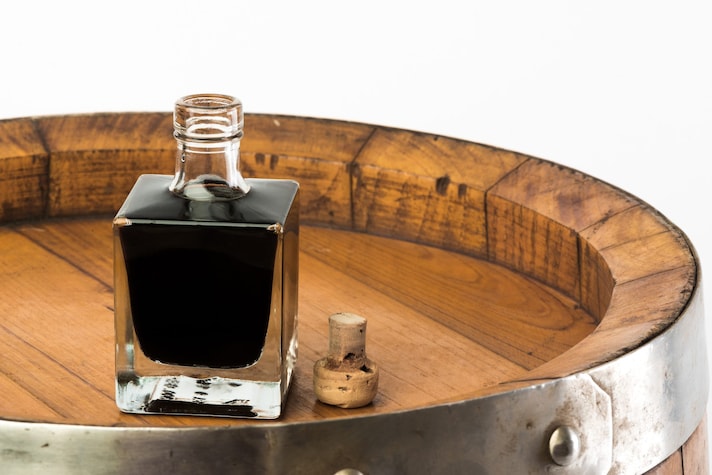
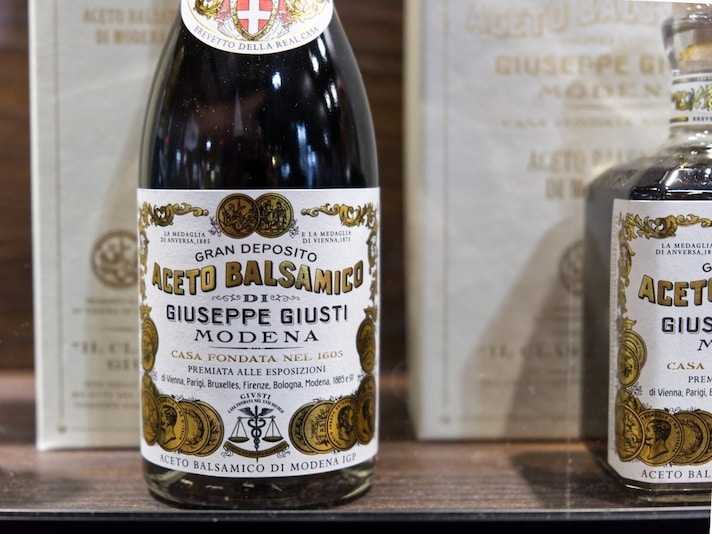
Alongside these artisanal excellences, there is Balsamic Vinegar of Modena PGI, the most widespread and internationally renowned variety. This product originates in the Emilia-Romagna region identified by the PGI regulations, which include Modena and other neighboring provinces, but with a different production approach than the Traditional one: it is based on a blend of wine vinegar and cooked or concentrated must, with shorter maturation times and a less restrictive regulations. It is precisely this flexibility that makes it more accessible and suitable for everyday use in the kitchen. However, within the PGI, very different qualities coexist: they range from young, more acidic and light versions, to balsamic vinegars aged longer in wood, with greater roundness and aromatic complexity.
Understanding these distinctions is essential to using the product correctly: the traditional one is a condiment to be contemplated, to be used in drops and raw; the Balsamic Vinegar of Modena PGI instead takes on the role of a true gastronomic ingredient, suitable for cooking, reductions and a more generous use.
How Is Balsamic Vinegar Made?
Balsamic vinegar is based on grape must, generally obtained from typical local grapes such as Lambrusco and Trebbiano. The must is slowly cooked until it reduces and concentrates, acquiring color and density. From here begins a long and silent process: alcoholic fermentation, acetic transformation, and above all, aging.
In the case of traditional balsamic vinegar, the product is transferred through a series of barrels of decreasing size, made of different woods— oak, chestnut, cherry, juniper, ash —each contributing specific aromatic notes. There is no standard “short” time: we're talking about at least twelve years, but often much longer.
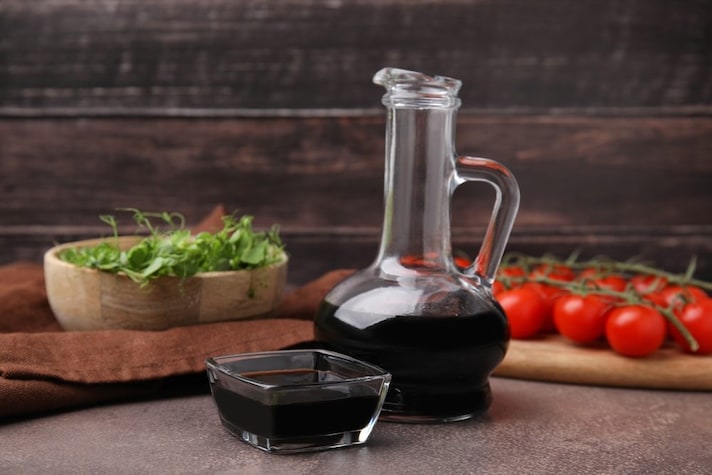
In the case of Aceto Balsamico di Modena PGI, the production process follows a more flexible logic. It is based on a blend of wine vinegar and cooked and/or concentrated grape must, in proportions that vary according to the regulations. After fermentation and the start of the acetic phase, the product undergoes a maturation period that can take place in wooden containers or other suitable materials. The minimum aging period is sixty days, while for versions labeled "aged," the maturation period cannot be less than three years. This approach allows for a more versatile balsamic vinegar, with profiles ranging from fresh and acidic notes to softer and more rounded expressions, depending on the length and method of aging.
Balsamic Vinegar's Sensory Profile
From a sensory perspective, balsamic vinegar is an exercise in balance. The sweetness of the concentrated must is complemented by a never-aggressive acidity, which supports the flavor without overwhelming it. The aromas range from caramel to cooked fruit, from wood to spices, to almost balsamic and ethereal notes in the more mature products. The consistency, especially in the traditional version, is dense but not syrupy, enveloping the palate without weighing it down.
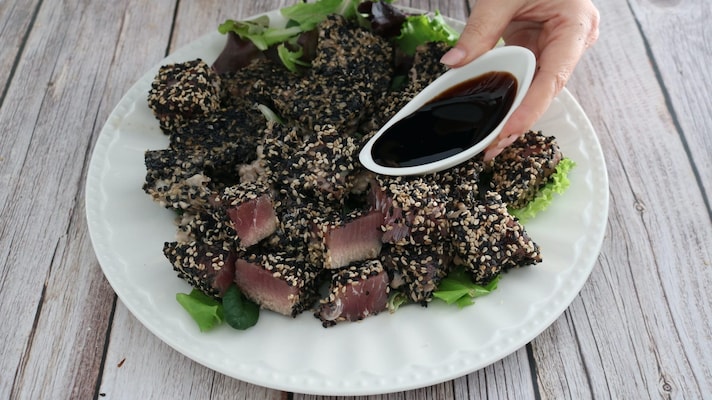
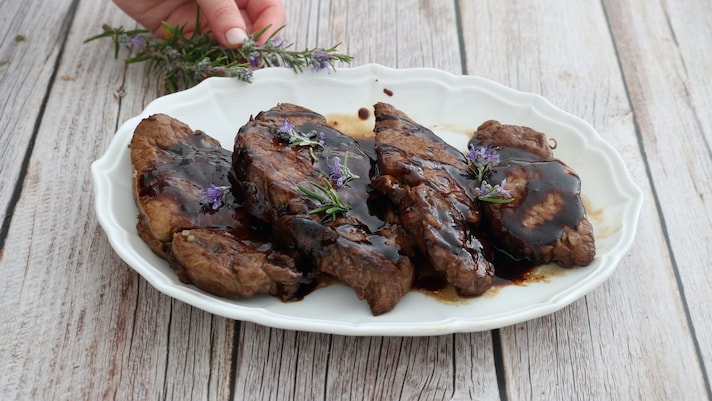
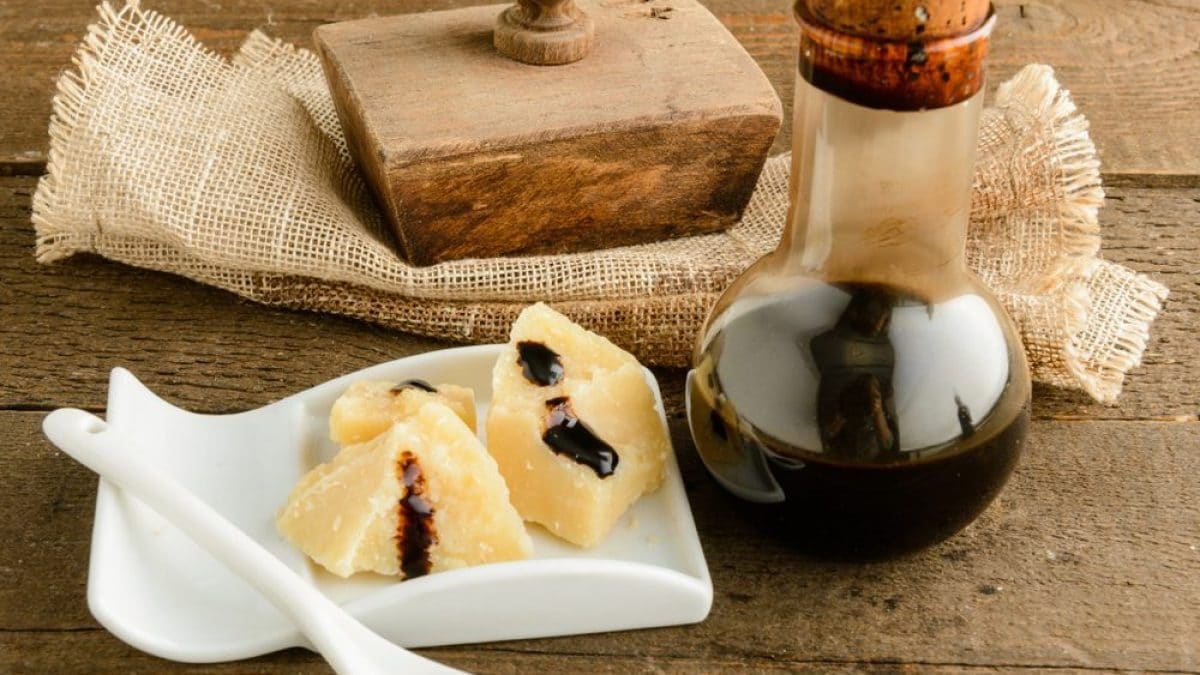
Traditionally, balsamic vinegar was used raw, as a finishing touch: a few drops on aged cheeses, fresh strawberries, omelettes, or roast meats. This "respectful" use remains the most effective with high-quality products today.
In contemporary cuisine, especially with everyday balsamic vinegar, its use has expanded: as a reduction for glazing meats, a salad dressing, and an accompaniment to seared swordfish or tuna. Chefs play with its sweet and sour notes to create contrasts, working it into sauces, gels, or powders, but always taking care not to distort its character.