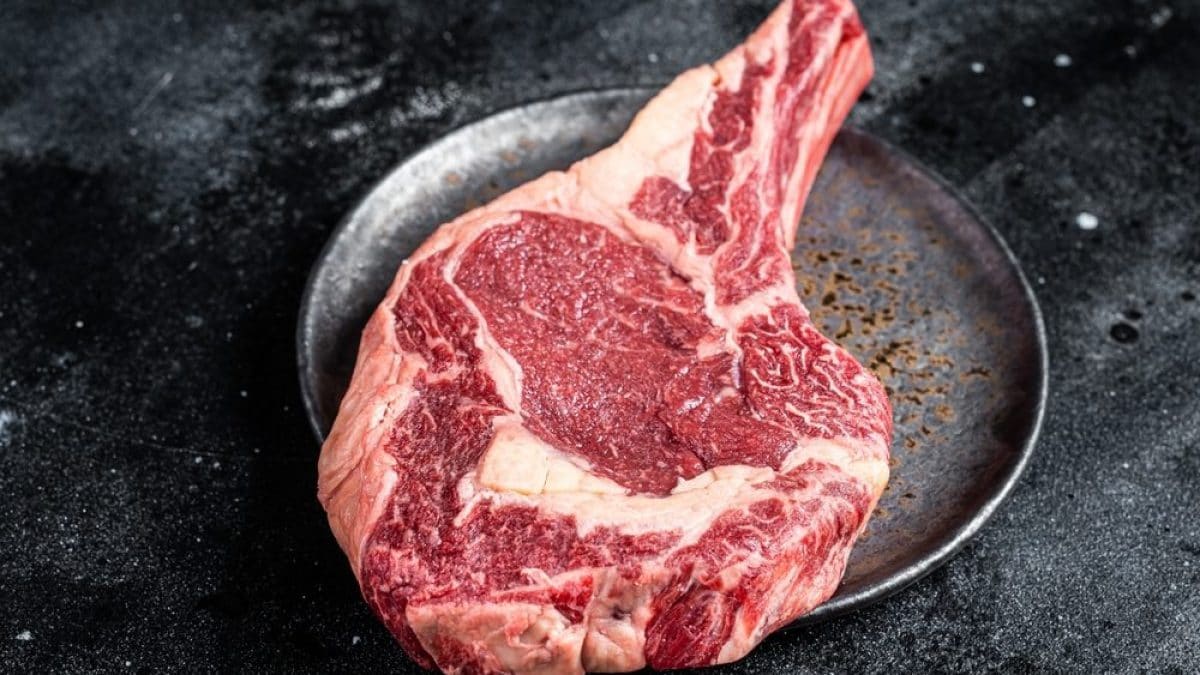
Characterized by bone, marbling, and tender fiber, the rib eye steak is one of the most popular cuts for quick, high-heat cooking. Juicy, flavorful, and textured, it's a classic choice for those seeking intense, well-balanced meat. Also known as bone-in sirloin or rib eye steak, the rib eye steak is a traditional butcher's cut, also widely used in international cuisine. It's distinguished by the presence of bone and its evident marbling, which contributes significantly to its flavor and juiciness. If you're unsure how to cook it, no problem: here's everything you need to know about rib eye steak (or veal steak), including the best cooking methods and those to avoid, the differences with similar cuts, and how to best choose it at your butcher's.
What is Beef Rib Eye?
The rib eye comes from the central part of the bovine's back, an area that's rarely subjected to movement, characterized by relatively short fibers and a good distribution of intramuscular fat. This combination makes the cut suitable for short, intense cooking, where the meat retains its tenderness and develops complex flavors without the need for lengthy marinades or elaborate preparations.
Among the loin cuts, the rib eye is considered a middle ground between tenderness and intensity: less delicate than the fillet, but richer and more flavorful; less imposing than the Florentine steak, but easier to manage even in a domestic context.
The term “rib eye” comes from the presence of the rib, intentionally left attached to the meat: the bone contributes to a more gradual and uniform cooking and helps preserve the internal juices during exposure to direct heat.

A Premium Cut From the Animal's Back
The beef rib eye comes from the loin, located in the upper back of the cow, between the neck and the thigh. It is classified as a prime cut due to its natural tenderness and balance of lean and fat.
The fiber is compact but not tough, with a fine grain that facilitates chewing. Marbling is one of the key elements: the intramuscular fat melts during cooking, enhancing juiciness and conveying the typical aromas of beef. Compared to other cuts from the same area, the rib eye has a more irregular texture, but also a greater flavor complexity.
Beef Rib Eye's Nutritional Profile
Beef rib eye is a medium-fat cut, with a higher fat content than lean cuts, but well-balanced by a high protein content, approximately 18–20 grams of protein per 100 grams of product. It is a good source of heme iron, zinc, and B vitamins, particularly B12 and B3, which are beneficial for energy metabolism and muscle function. Intramuscular fat contributes to satiety, making this cut suitable for a main course, served in moderate portions. It is not recommended for those following strict low-calorie diets, but it fits well into a varied and balanced diet.
How to Use Beef Rib Eye in The Kitchen
Beef rib eye steak is designed for short, intense cooking. The high temperature promotes the formation of a crust on the surface, limiting the loss of liquid and enhancing the meat's natural flavor.
1. Grilled or Barbecued

This is the most traditional method for showcasing beef ribeye. The meat is cooked quickly and thoroughly on a hot grill: the high temperature allows for the formation of a thick crust that retains the juices and enhances the meat's natural flavor. The embers add distinctive aromatic notes, provided you avoid direct flames that could burn the surface fat. After cooking, it's essential to let the meat rest to allow the juices to redistribute.
2. Pan-Fried or Griddled

A cast iron griddle or heavy-bottomed skillet is an excellent alternative to the grill at home. The high heat allows for effective browning, while the presence of the bone helps regulate the temperature more gradually within the cut. Any seasonings such as butter, garlic, or herbs should be added only at the final stage to prevent them from burning and overpowering the flavor of the meat.
3. Indirect Cooking For Thick Ribs

Thick ribs require more careful heat management to prevent the outside from being overcooked while the inside remains raw. After searing thoroughly on the grill or in a pan, it's helpful to finish cooking with a gentler heat. The easiest way is to move it to a cooler area of the grill or transfer it to a preheated oven. This way, the inside cooks slowly without burning the outside, keeping the meat juicy. Once the rib eye is reached, remove it from the heat and let it rest for a few minutes before serving.
4. Reverse Searing

Reverse sear is a technique suitable for very thick, high-quality ribs. The meat is initially brought to temperature slowly with gentle heat, then quickly seared at a high temperature. This method allows for extremely even cooking and a well-developed final crust, keeping the interior tender and juicy. Even in this case, final resting remains an essential step.
Differences Compared to Other Similar Cuts
The rib eye is often compared to other cuts from the same anatomical region, particularly those from the sirloin and back of the beef. In reality, despite sharing the same area of origin, these cuts have very different characteristics in terms of structure, fat content, and cooking performance.
- The most immediate comparison is with the Florentine steak, which also comes from the loin but comprises two distinct muscles: the sirloin and the tenderloin, separated by the characteristic T-bone. The Florentine steak is therefore larger and thicker, designed for substantial cooking and sharing. The rib-eye steak, on the other hand, includes only the sirloin and is distinguished by greater marbling: less overall volume, but a concentration of intramuscular fat that makes the flavor more intense and the meat juicier.
- When considering the sirloin, the difference is primarily structural: the sirloin, in fact, is nothing more than a boneless rib eye. The fiber and flavor profile remain similar, but the absence of the bone affects cooking: the heat penetrates more directly and uniformly, making the cut more practical but slightly less protected and, in some cases, less succulent than the bone-in rib eye.
- Finally, the fillet is almost the opposite of the rib eye. It's the most tender cut of all, with a very fine grain and very little fat, but for this very reason it has a more delicate flavor. It requires great precision when cooking and is unforgiving of errors. The rib eye, while less tender, offers superior aromatic complexity and greater heat tolerance, making it more satisfying for those seeking intensity and character.

Is it a tomahawk? The rib eye has a bone, but it's relatively short: it complements the steak without stealing its spotlight. It's the "classic" cut, the one you find at the butcher's, designed to be cooked and eaten without too much ceremony, with all the flavor of the meat to the fore. The tomahawk, on the other hand, is always a bone-in ribeye, therefore still a ribeye in terms of cut: the difference is that the rib bone is left very long and carefully cleaned. In the US, this presentation has become iconic and is called tomahawk steak precisely because it resembles an axe. The meat is often thicker, and the steak is designed to impress even before being eaten.

How to Choose It at The Butcher's
A quality rib eye is instantly recognizable. The color should be bright, vibrant, and uniform, free of dark or opaque areas that betray careless preservation. The marbling, fine and even, should run through the meat like a discreet weave, distributing itself throughout the muscle and not just along the outer edge: it's this marbling that ensures juiciness and flavor during cooking. The fat, an element far from marginal, should appear light, compact, and pearly, never yellowish or soft.
Thickness also plays a crucial role: a rib steak that's too thin quickly loses moisture and character, while a generous cut allows for balanced cooking and a satisfying texture. Finally, the bone must be intact, clean, and well-trimmed, a sign of careful preparation that respects the raw material, as well as contributing to heat retention and the aromatic depth of the final result.
Choose the Rib Eye If…
- you love grills and griddles, where they can best express their character and aromas;
- you are looking for juicy, intense and flavourful meat;
- you want a textured, satisfying cut, but relatively simple to cook;
- you appreciate the presence of the bone, which contributes to the taste and cooking stability.
Don't Choose the Rib Eye If…
- prefer very lean and dry meats;
- you have to deal with long cooking times, stewing or braising;
- are you looking for an economical cut or one suitable for everyday consumption;
- you want a quick and light meat, rather than the protagonist of the dish.
;Resize,width=767;)
