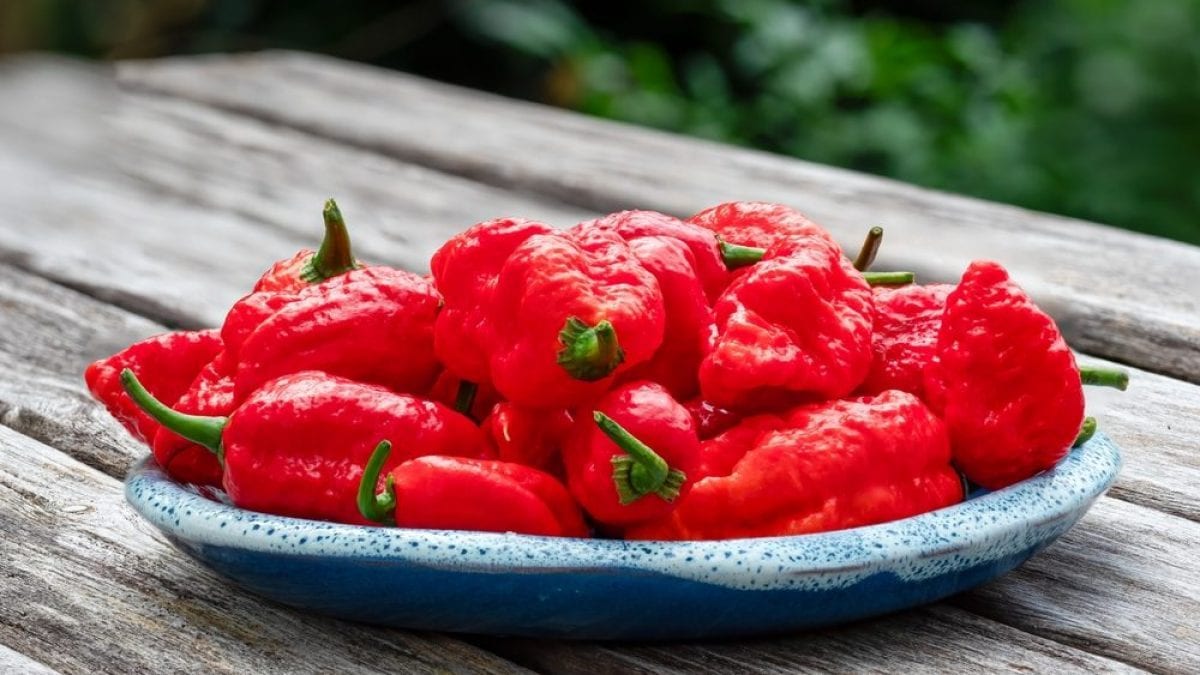
Chili peppers are a food that arouses both curiosity and fear in the kitchen: there are countless varieties around the world, some of which are part of the gastronomic identity of a country or region—just think of Mexico. While there are cultivars that tend toward the sweetish, those that most tantalize the palate are the spicy ones, which often become famous for causing veritable fires in the mouth. Here we introduce the Carolina Reaper, which since 2013 has appeared in the Guinness World Record for the hottest chili peppers around: let's see why it's so famous and how it's used in cooking.
What is a Carolina Reaper?
When it comes to the spiciness of chili peppers, there's one that's considered a real star and, not surprisingly, even appeared various episodes of cooking shows. We're talking about the Carolina Reaper, a chili pepper belonging to the Capsicum chinense species, known for including some of the hottest varieties in the world, including the Habanero and the Dorset Naga. This variety contains a very high concentration of capsaicin, the substance responsible for the burning sensation in the mouth —and therefore the spicy flavor—which, in this specific case, is particularly intense.
Carolina Reaper, a Chili Pepper Born to Be Extremely Hot
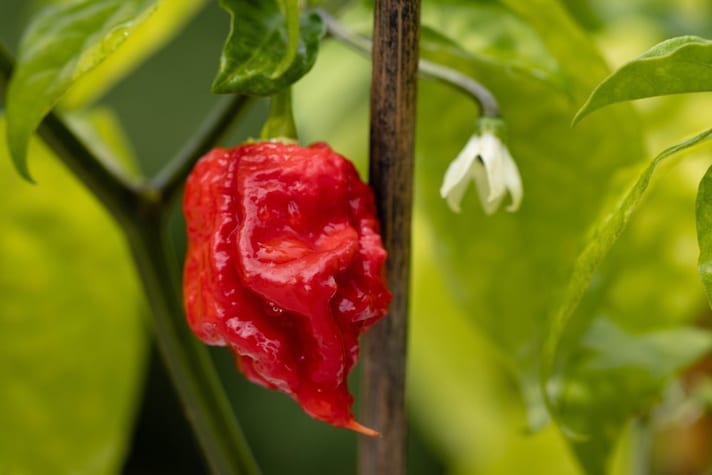
The Carolina Reaper was crowned for the first time as the king of hot peppers in 2013, officially entering the Guinness World Records, but its history begins under the name of HP22B, where HP stands for High Power, 22 designates the number of the pot it was contained in (pot number) and B the specific plant. That's right, the Carolina Reaper is not born in nature, but is the result of a specific selection to obtain a "monster" of spiciness. Its creator is Ed Currie, an American farmer born in 1963 who developed it in his company, the PuckerButt Pepper Company, located in South Carolina: a well-known personality among lovers of extreme peppers, given that he is also the father of the one that conquered the top in 2023, namely the Pepper X. The Carolina reaper is a cross between a chili pepper from the Naga family (such as the Bhut Jolokia) and a sweet red Habanero: it generally has a rounded, slightly elongated shape and is easily recognizable by the tip opposite the stalk that resembles a scorpion's tail, while the surface is wrinkled, full of protuberances. The skin changes from green to bright red during the ripening process, which reaches its peak from mid-summer to early autumn: on average, the chili pepper measures 3 to 5 cm and develops a crunchy, juicy pulp. Its appearance, linked to its reputation as a food with a “deadly” spiciness, has led to the folkloristic name of Carolina reaper, in reference to the Grim Reaper's scythe.
How Spicy is It Really?
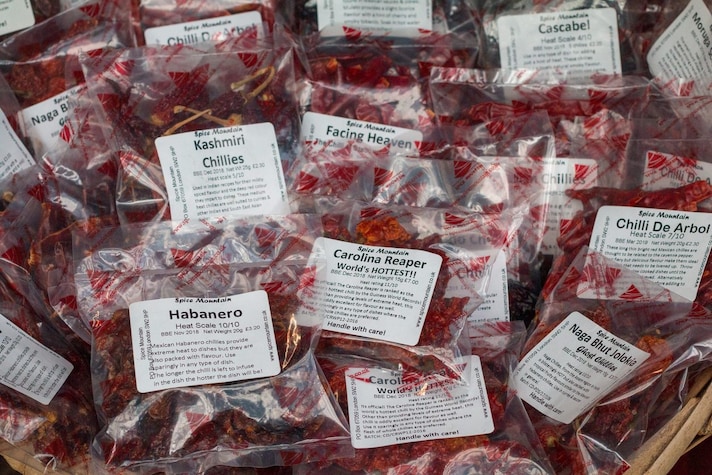
The image just described emphasizes the spicy power of the Carolina Reaper, which is indeed remarkable. The degree of spiciness of a chili pepper is obtained through a proven and universal classification method, the famous Scoville Scale, which was created in 1912 by the chemist and pharmacist Wilbur Scoville and takes as its reference point the quantity of capsaicin present within it: this is identified with certain scientific tests, to then convert the result obtained into the unit of measurement called SHU: zero is the lowest value and 16,000,000 is the highest, or the value of pure capsaicin. Where does the Caroline Reaper rank? Very high: on average it stands at around 1,569,300 Scoville units, but several specimens have reached as high as 2,200,000 SHU. The previously mentioned Pepper X reached the unprecedented peak of 2 million 693 thousand SHU, while the Habanero, which is considered a very hot chili pepper, is placed “only” between 100,000 and 350,000 SHU depending on the variety.
How to Use the Carolina Reaper in Cooking
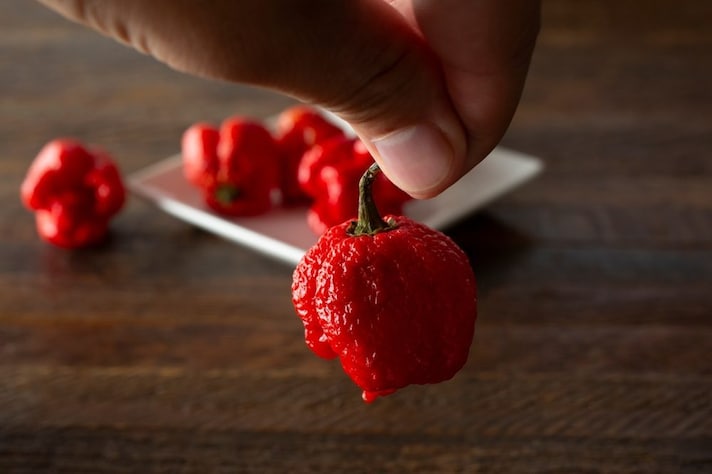
Carolina Reaper peppers are distinguished by a sweet, fruity flavor with notes reminiscent of chocolate and cinnamon, followed by an intense spiciness that continues to build and lingers in the throat for a long time. These characteristics mean they are used sparingly in cooking , particularly in highly concentrated hot sauces or creamy pastes, where only a small amount is needed to make its presence felt in a dish, such as chili, meat stews, and soups, but also as a topping for chicken wings and noodles. They can also be dried and ground, and are available in a very fine powder, to be used like a classic spice.
Some Final Recommendations
The concentration of capsaicin in this type of chili pepper can be highly irritating, which is why the fresh Carolina Reaper must be handled and treated with care. Finding it "au naturel" is not easy, as it is considered a niche product and is therefore relatively easy to find already processed into sauces, powders, pastes, or minced meat. Eating it raw and whole is an act that belongs to the world of extreme challenges among enthusiasts rather than the gastronomic universe: with a bite, in fact, the burning sensation of the palate and tongue caused by the capsaicin activates the pain receptors present in the mouth and mucous membranes. The brain triggers an immediate physiological response: the unpleasant effects can include increased sweating, an accelerated heartbeat, tearing, strong salivation, and sometimes hyperventilation. In short, tests of courage are not recommended. If you get it on your hands, also wear gloves and protect your eyes to avoid burning.
;Resize,width=767;)
