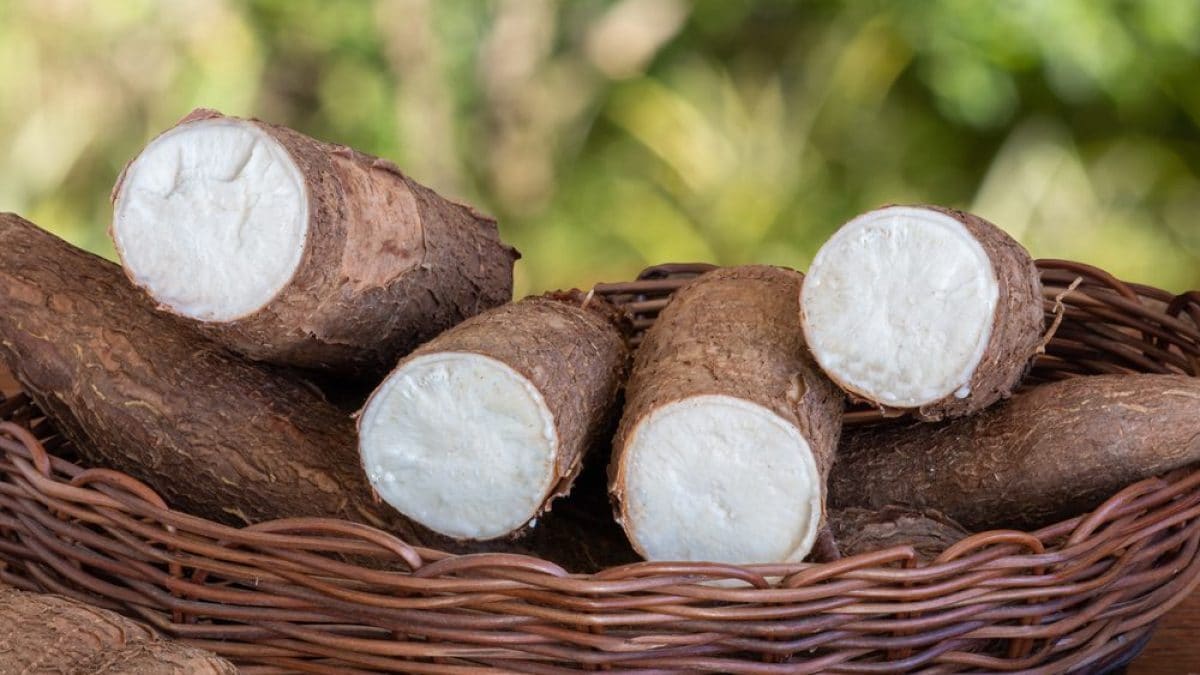
The name is probably familiar to you: cassava is a term that is entering common parlance because it appears more and more frequently in recipes originating from South America (such as Brazilian acarajé and farofa), Africa, and Asia. It is a tuber-shaped root that has been consumed for centuries and can be used in cooking like potatoes: boiled as a side dish, fried like chips, or pureed. But that's not all: it is a plant that can be used to make bread, just like wheat or corn, and is considered of primary importance in the diet of millions of people. Furthermore, you may also be familiar with the word tapioca, closely related to cassava, which is used to make a gluten-free flour. Let's discover them.
What is Cassava?
Also known as cassava or yuca, manioc (scientific name Manihot esculenta) is a plant native to Latin America – its homeland is probably Brazil – already known and used as a food by pre-Columbian civilizations. With the trade and colonization that followed the discovery of the New World, it spread to many tropical and subtropical areas, from sub-Saharan Africa to Asia, where it is still cultivated today.

Until recently, it had the advantage of being resistant, able to grow in rough terrain and not requiring much water, so much so that in 2013 the FAO included it in its sustainable agriculture program Save and Grow: in 2025, the same organization, due to climate change, deforestation, lack of innovation and regulation of farmers' work, included it among the crops at risk of being halved by 2100 (alongside coffee, wheat and beans). It appears as a perennial shrub belonging to the Euphorbiaceae family with particularly developed roots that constitute its edible part: their appearance is that of a firm and elongated tuber, covered with a hard, brownish peel, while the internal pulp is white or yellowish.
How Cassava is Used
In many parts of the world, especially where it is grown, cassava is considered a staple food, like rice, corn, and potatoes. The reason? Just look at its nutritional profile and versatility. For millions of people, it is one of the main sources of carbohydrates: 100 grams contain 38.06 g (including 1.70 g of sugars and 1.8 g of fiber), while fat (0.29 g) and protein (1.36 g) are negligible. Mineral salts, however, include phosphorus, magnesium, calcium, sodium, manganese, zinc, iron, and, above all, potassium (271 mg) and vitamins (A, B, C, and K). Compared to similar foods it is more caloric: 160 kcal per 100 grams. Furthermore, it is rich in starch and is gluten-free.

How should cassava be eaten? First of all, never raw: it contains cyanogenic glycosides, natural plant compounds that can release hydrocyanic acid, a powerful poison. For this reason, it should always be eaten peeled and cooked: the pulp can be boiled, steamed, pureed, or fried. There are two varieties, sweet and bitter, with the former becoming the most popular. Its consistency is similar to that of potatoes, with a slightly sweet, almondy flavor and a hint of spice. In South America, it is very popular cut into rounds, like chips, to be enjoyed as a snack or as a side dish. The main role of cassava in food, however, is undoubtedly that of its flour: by grinding the whole root, most of the macro and micronutrients are retained, resulting in a substantial powder with a lower glycemic index than wheat flour, which is used to make bread.
How to Use Tapioca Flour Extracted From The Tuber
Why are we suddenly talking about tapioca when referring to cassava? Simple: because it's its most famous byproduct, the starch extracted from the tuber, which in turn gives rise to various foods. The most fashionable are undoubtedly tapioca pearls: small white spheres that, once cooked in boiling water, take on a gelatinous, translucent texture. They became famous thanks to colorful bubble teas, where the "bubbles" are, in fact, made. You can make them homemade, but they are easily found ready-made in stores. The balls are also used in many pudding-style desserts: in Vietnam, combined with a cream of coconut milk and bananas, they are transformed into a traditional dessert, chè chuối.

It's hard to not have heard of tapioca flour, not to be confused with the aforementioned cassava flour. In this case, the flour is made only from the starch (tapioca), which is separated from the rest of the pulp and dried to obtain a white powder that takes on characteristics similar to those of potato starch. It is used in particular as a thickener in soups, sauces, and creams, and gives doughs greater lightness without altering the flavor, as for example in the South American pao de quejio, soft rolls that combine tapioca flour with fresh cheese, eggs, yeast, and salt. Compared to cassava, it has a lower concentration of nutrients: it is composed of almost 90% carbohydrates, lacking vitamins and gaining calories, 332 kcal per 100 g. Therefore, it has no particular properties, but it is an excellent ingredient for gluten-free preparations.

;Resize,width=767;)
