
Extra virgin olive oil has always been one of the iconic ingredients of the Mediterranean diet, so much so that it has earned the nickname "green gold" for its numerous beneficial properties. Recently, a new format, unlike the bottle or can, has found its way onto the shelves: the spray. We're not talking about empty bottles with a spray nozzle to fill with oil you already have at home, but actual ready-to-use cans —like those for hairspray—produced even by the most well-known traditional brands. If you haven't yet encountered them or aren't sure how to use them, let's take a look at what they are and what they're for.
What is Cooking Spray?
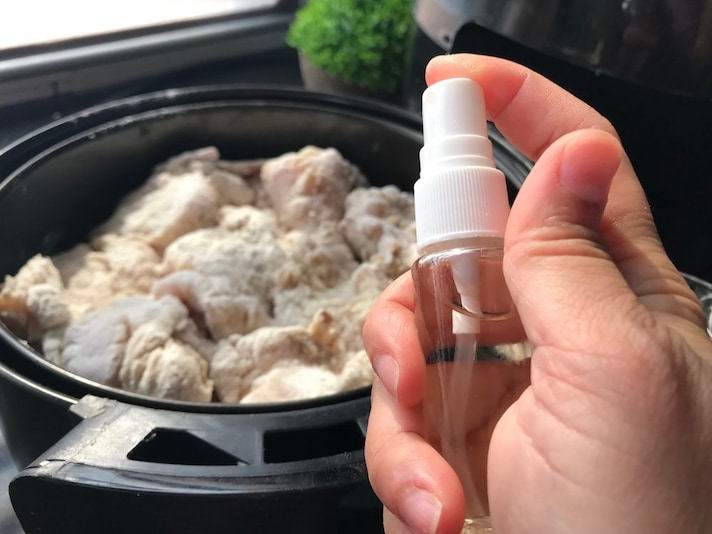
Let's get one thing straight: the air fryer was the trigger. Yes, because it's largely thanks to its success that spray oil is becoming so widespread, sparking the interest of most of its users. The reason? To cook with this convenient appliance, you only need a small amount of oil distributed evenly over the food, and with the traditional method, pouring directly from the bottle or using a spoon, you always risk overdoing it and resulting in uneven cooking. So here's the solution: pour the oil directly into containers equipped with a pressure dispenser, with the classic mechanism that allows the liquid to be transformed into a fine mist. There are numerous variations on the market, from extra virgin olive oil-based sprays to blends flavored with spices and herbs, through to seed oils, especially linseed, peanut, sunflower, and corn: there are even specific versions designed specifically for cooking in an air fryer.
As with oil sold through traditional outlets, it's important to read the label to verify traceability, processing method (such as cold extraction or organic origin), nutritional values, and quality. A good-quality spray oil contains no additives, artificial flavors, or even propellants (compressed gases used to propel the contents). The lack of these is often highlighted with clearly visible writing on the packaging. Pay attention to the wording indicating whether the oil is flammable or not, which is important for proper storage away from heat sources.

How to Use It When Cooking
We've talked about the air fryer, but its uses in the kitchen aren't limited to spraying foods that need crispiness. The spray is handy for greasing pots, pans, and baking molds instead of a brush or paper towel, it's useful for seasoning grilled vegetables and salads, and it can also be sprayed on meat and fish before or after cooking. In short, its goal is to reduce the amount of food you use, adding flavor to dishes without weighing them down, and saving on product, since it's easy to measure out, meaning you use less than a classic tablespoon or teaspoon: it's no coincidence, in fact, that the sprays aren't one-liter, but the standard size is around 200 ml. The main advantage, therefore, is that it gives certain recipes a crispy, dry browning and adds flavor without the need for excess fat, while keeping calorie content in check (one spray corresponds to 2 kcal). Furthermore, it tends to make less of a mess, with no drips or trickles running down and no need for additional utensils, such as the spoons and brushes mentioned above. It is also easy to transport, a useful feature when away from home, for example during a picnic.
Cooking Spray Oil Vs. Bottled Oil
Has spray oil come to replace bottled oil? Not really, but it can become an excellent right hand. Bottled oil, in fact, remains indispensable for those preparations that require a lot of it for the success of the recipe, therefore in a functional key, such as for deep frying, browning and sautéing, as well as for sweet and shortcrust pastry doughs, marinades and jarred preserves.
Spray oil, on the other hand, stands out for its precise dosing and uniform distribution, characteristics that allow you to use less product without sacrificing the taste and texture of your dishes.
However, as with any oil, even in this case the quality of the raw material makes the difference: choosing a spray made with 100% Italian extra virgin olive oil, cold-pressed and sourced from traceable supply chains, guarantees not only a better aromatic profile, but also a higher intake of natural antioxidants and healthy fats.
A quality spray oil can also be recognized by its simple composition: few ingredients, no propellants or additives, and a clear label indicating the origin, type of oil, and extraction method. In this way, the spray becomes not only a practical ally, but also a tool for preserving the authentic flavor and nutritional value of the oil, making cooking lighter without compromising on taste.
;Resize,width=767;)
