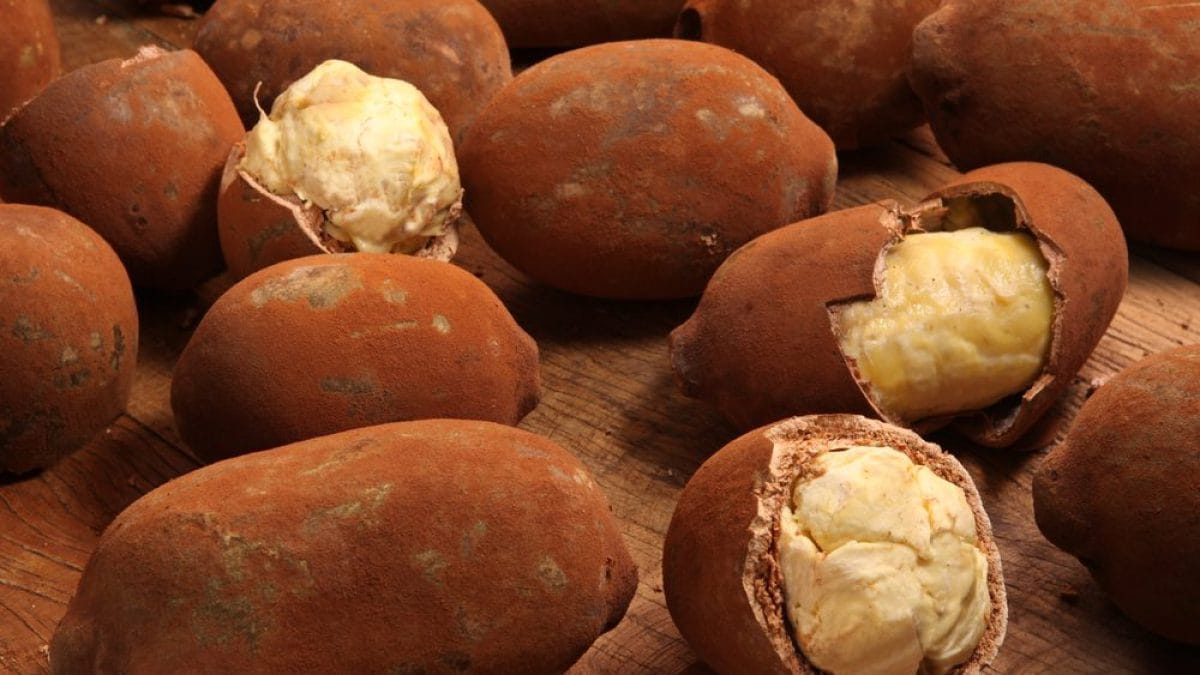
Hailing from the Amazon is a fruit that's difficult to find in our latitudes and, like many exotic fruits, arouses great curiosity: we're talking about cupuaçu, a typical Brazilian product that's becoming known beyond national borders for its irresistible cocoa, pineapple, and banana flavor, perfect for juices, sorbets, and puddings. But that's not all: its seeds are used to make a butter widely used in cosmetics, which nourishes and protects skin and hair from aging. Let's discover it.
What is Cupuaçu And Why Is It Called "White Cocoa"?
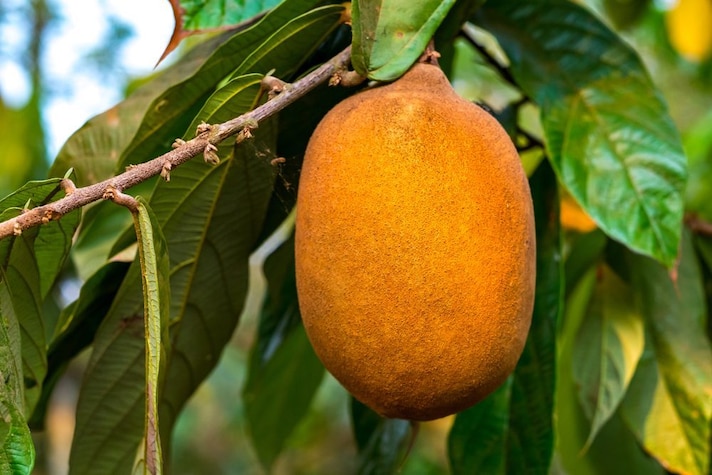
The scientific name is Theobroma grandiflorum and refers to a tree that grows in the rainforests of Brazil, Ecuador, Colombia, and Peru, known for its distinctive fruits: they are brown, elongated, and weigh an average of 1.5 kg. They resemble a large pod containing a creamy white pulp with a flavor reminiscent of pineapple, banana, and chocolate. It is no coincidence that cupuaçu is also called “white cocoa”: the plant is a close relative of the cocoa plant, Theobroma cacao.
Cupuaçu's Origins and Characteristics
In the U.S., cupuaçu is not as well known as it is in the Amazon rainforest, especially in Brazil, its native territory. It is a tree that belongs to the Theobroma genus, like the more famous cacao, with which it also shares the Sterculiaceae family, a group of exotic plants widespread especially in tropical and subtropical areas of the world. In the case of cupuaçu, called copoazú or copoasu, the tree reaches 15-20 meters in height and is characterized by large, long leaves, which can reach 30 cm: the real stars, however, are the fruits, prized for their flavor and aroma, as well as being rich in beneficial properties.
Cupuaçu's Unique Flavor
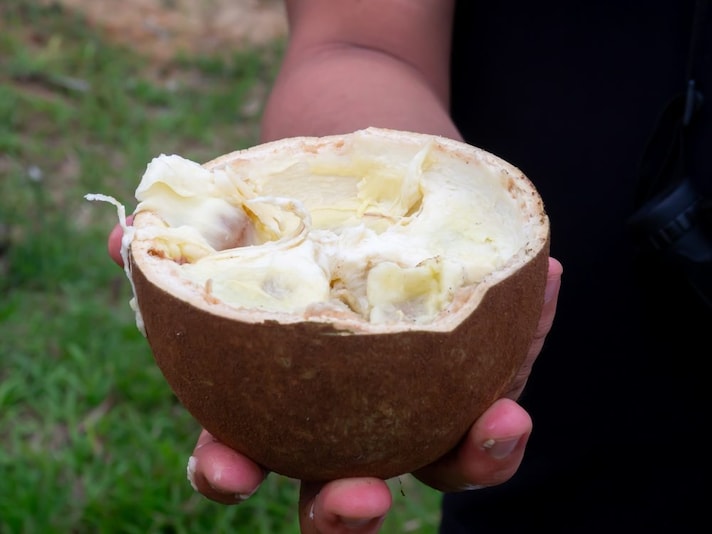
The term cupuaçu, which in Brazil primarily refers to the fruit of the eponymous plant, is thought to derive from the indigenous Tupi people, who combined the words kupu (meaning similar to cocoa) and uasu (large), although its traditional meaning is often that of "fruit of the gods," given its many virtues. What makes cupuaçu special are the peculiarities of its pulp, which is contained within the hard, woody exocarp, covered in a kind of brown fuzz. The pulp, in fact, is famous for its chocolate-like flavor and its aromas, reminiscent of banana, papaya, and pineapple, in a perfect balance of sweetness and acidity: it is divided into sections, each containing seeds.
How Is Cupuaçu Used in Cooking?
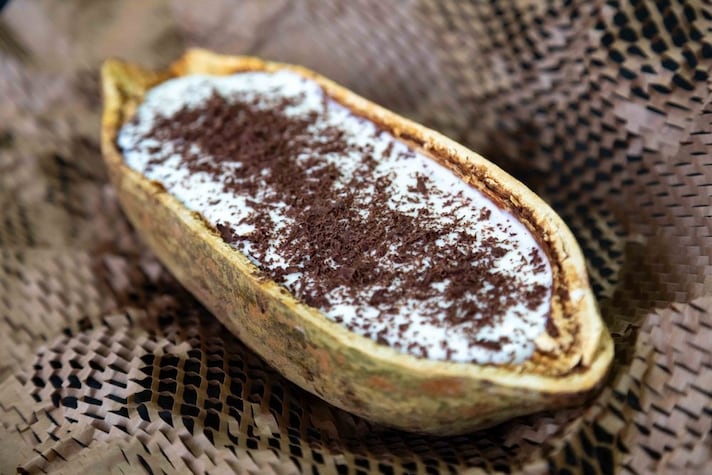
The pulp proves to be a versatile ingredient: the whole fruit is not easy to find outside of Brazil, it is possible – with difficulty – to find the fresh or frozen pulp for sale, ready to use. Due to its dense, creamy consistency and pleasantly fragrant note, it is mainly used in juices, smoothies and drinks in general, or as a base for puddings, ice creams, sorbets and semifreddos. From the cupuaçu seeds, a spreadable cream similar to that made with chocolate (less expensive and without caffeine), called cupolate, can also be obtained. For years, this cream has been at the center of a major biopiracy case: in fact, the name cupuaçu was appropriated by a Japanese company, making it an exclusive trademark of the Land of the Rising Sun, thus creating serious problems for the use of the fruit in its country of origin. The legal issue was resolved in Brazil's favor, with the word cupolate officially “patented” by Embrapa (Empresa Brasileira de Pesquisa Agropecuária), a state institution that deals with the technological development of Brazilian agriculture and livestock.

Cupuaçu's Properties and Benefits
Cupuaçu is a tree that is part of Brazil's biodiversity, and its many potential was already understood by the indigenous people. From a nutritional and therapeutic standpoint, cupuaçu is considered a true superfood. Its pulp is rich in vitamin C, essential fatty acids, polyphenols, and other antioxidants that help fight free radicals and prevent inflammation. It also provides fiber and minerals such as potassium and magnesium, so much so that it is also used as a food supplement. One of its best-known uses is in cosmetics: cupuaçu butter is extracted from the seeds, which is nourishing, hydrating, and protective for both the skin (found in body creams and lotions) and the hair (in shampoos and conditioners).
;Resize,width=767;)
