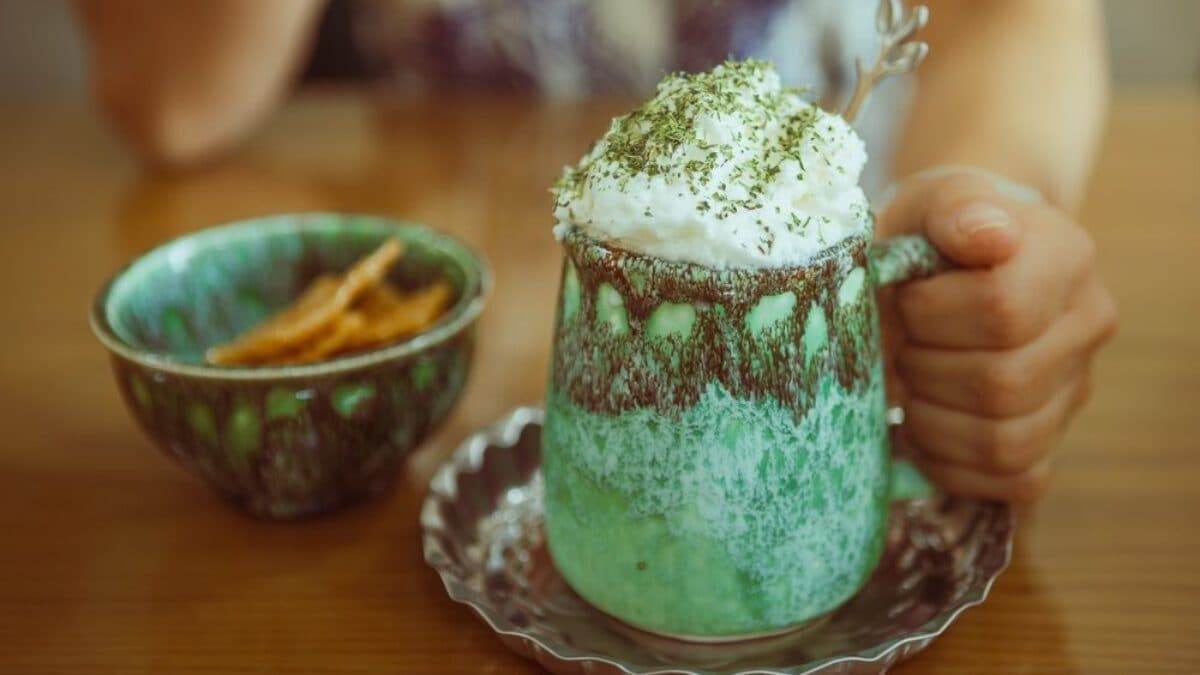
Fresh, slightly sparkling, and with a tart flavor that surprises at first sip: doogh is much more than just a simple drink. Originating in Iranian tradition, but now widespread throughout the Middle East in many variations, this yogurt-based drink made with water and aromatic herbs has been a staple on Iranian tables for centuries, especially during meals. Its secret lies in its simplicity: few ingredients, a delicate balance between creaminess and freshness, and often an unmistakable hint of mint. Served very cold, doogh is the ideal companion to rich, spicy dishes, as its freshness balances the intense flavors of Iranian cuisine. Let's discover everything there is to know about this fascinating drink with an ancient history.
What is Doogh, The Drink Born From Persian Tradition
Doogh is a savory drink made from yogurt diluted with water, often flavored with dried mint and, in contemporary versions, made with sparkling water if it's mass-produced. It's one of the most distinctive elements of the Iranian table, but it belongs to a much larger family of fermented milk drinks that spread from Anatolia to Central Asia and the Middle East. To truly understand doogh, and its importance in Iranian culture, we need to step away from the modern idea of a "yogurt drink" and look at the history of dairy products in pastoral societies.
The Iranian plateau was located at the center of a huge cultural area that included Iran, Central Asia, the Caucasus, Anatolia, and the Near East. In these societies, sheep, goat, and cow's milk were a precious resource, but fresh milk was perishable. Transforming it into yogurt, sour milk, cheese, and other derivatives allowed it to be preserved longer and transported: it is no coincidence that it was precisely the shepherds and nomads of the Iranian plateau and Central Asia who played a fundamental role in the diffusion of yogurt and other dairy product production techniques. Doogh is part of this tradition: the drink is the expression of an ancient food technique, that of transforming milk through fermentation and then making it liquid again, light and suitable for drinking.
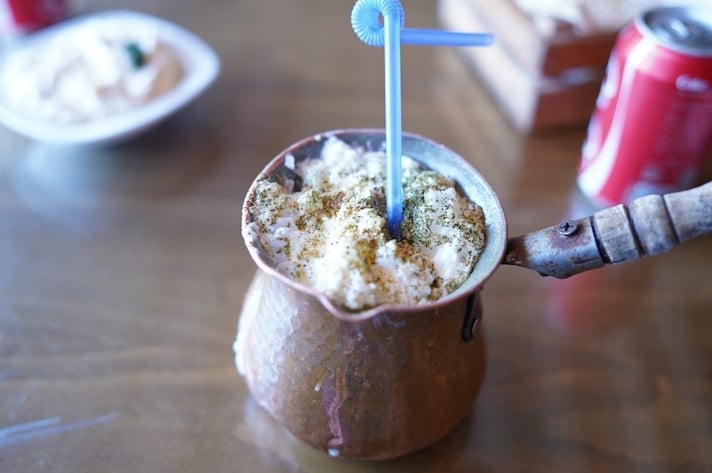
Establishing the precise origin of doogh is not easy, but we know for certain that it is a very ancient recipe: the term dūgh has been documented in the Persian language since at least the 11th century. The historical and linguistic evolution of this Iranian national drink highlights its deep connection with Persian culture. The name doogh derives from the Persian dūgh, a term linked to the tradition of dairy products and milk processing. Its linguistic origin recalls the Persian verb meaning "to milk," testifying to the drink's deep connection with Iranian pastoral culture; between the 3rd and 4th centuries AD, the term began to specifically indicate "sour milk," and then, in the Persian Middle Ages, it finally came to describe yogurt diluted with water. Beyond its etymology, the consumption of doogh is also widely documented in medieval Persian medical and scientific literature; the famous physician Avicenna (Ibn Sina) himself praised it in his Canon of Medicine, describing it as a panacea for health.
Traditionally, doogh was linked to the processing of fermented milk, which was vigorously churned inside animal skin bags called mashk. This process allowed the butter to be separated from the liquid, which could be consumed as a cool, tart beverage: the liquid was vigorously churned until the fat separated and then drunk. In modern times, the procedure has become much simpler: the yogurt is churned or blended and diluted with water, then salted and flavored, often left to ferment to obtain a "fizzy" effect.
Doogh's Original Recipe and Its Variations
In its original version, doogh is born from the combination of four ingredients: yogurt, generally white and unsweetened; water, which makes it drinkable and reduces its density; salt; aromatic herbs, especially mint, but also other herbs depending on the region and the recipe. To make doogh, use goat's or sheep's yogurt —although cow's milk is often used today—to which an equal volume of plain water is added, along with a pinch of salt. The mixture is emulsified until frothy, then mixed with crushed ice and mint leaves; fresh mint can be replaced with dried mint, and the amount of water can be adjusted according to the desired result. Adding more water will result in a thinner, less creamy drink.
Traditional doogh, the one prepared at home by hand, is usually left out of the refrigerator for 2-3 days to allow the yogurt culture to mature and make the drink fizzy. In commercial versions, however, the fizziness can be achieved by adding carbon dioxide or sparkling water, depending on the production method, which is why it is generally fizzier than the traditional version. As for the consistency, it varies depending on the area of Iran where the drink is prepared: in the North it is more liquid and less salty, while in the South it is thicker, very savory, and with a greater quantity of yogurt.
Although it is a typical Iranian drink, doogh is widespread throughout practically the entire Middle East in different variations. Among the main ones are:
- Ayran (Turkey): This is the most famous version internationally. It's made with yogurt (often cow, sheep, or goat), water, and salt, but it's usually not carbonated or flavored with herbs like Iranian mint.
- T'an / Tahn (Armenia): is the Armenian variant made with diluted yogurt and salt, often enriched with pieces of fresh cucumber or aromatic herbs.
- Laban rayeb (Egypt): This is a traditional fermented milk drink with a tart taste and variable consistency. Although it belongs to the same large family of fermented dairy products, it differs from doogh in its preparation method.
- Afghan Doogh (Afghanistan): Very similar to the Persian version, it combines yogurt, fresh water, salt, and dried or fresh mint, served chilled over ice.
- Salted lassi (India and Punjab): Although found outside the Middle East, this is the drink's closest Asian relative; in the salted version (namkeen lassi), it is diluted and spiced with roasted cumin, black salt, or coriander.
What Does Doogh Taste Like?
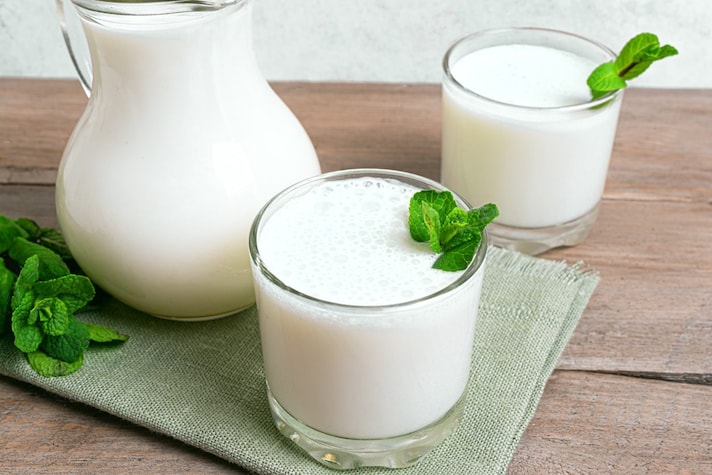
Iranian doogh has a fresh and pleasantly tart flavor, complemented by a delicate saltiness and a pleasant balsamic and fragrant note from mint or other aromatic herbs. Its consistency is liquid and slightly creamy, designed more for quenching thirst than for consumption, although as explained, this can vary depending on the area of Iran where it is prepared. It's not just a drinkable yogurt: doogh is less sweet and much more savory, and it doesn't focus on creaminess or a soft lactic component, but on a balance of acidity, freshness, and saltiness.
Because it's made with yogurt, a popular food in the Middle East, it's often confused with other drinks that share similar ingredients but aren't made with the same recipe. One of the preparations with which doogh is most often confused is ayran, a drink widely enjoyed in Turkey and throughout Central Asia. This is no coincidence, as it's its closest relative: ayran is also made from a combination of yogurt, water, and salt, but doesn't include any herbs. To make it, place everything in a blender and blend until the drink is smooth and slightly frothy, then serve chilled with ice cubes.
Doogh is often compared to kefir, which, however, belongs to a different category of beverages. It is made by directly fermenting milk (cow's, goat's, or sheep's) using kefir grains, a symbiotic colony of beneficial bacteria and yeasts. It has a fluid yet velvety consistency, a markedly acidic flavor, and a characteristic, light fizz due to natural alcoholic and carbonated fermentation (it contains minimal traces of alcohol, usually under 0.5%). Even when diluted and consumed as a beverage, it generally has a more complex and pungent flavor, with higher acidity and a characteristic fermentative note.
When is Doogh Served and Drinked
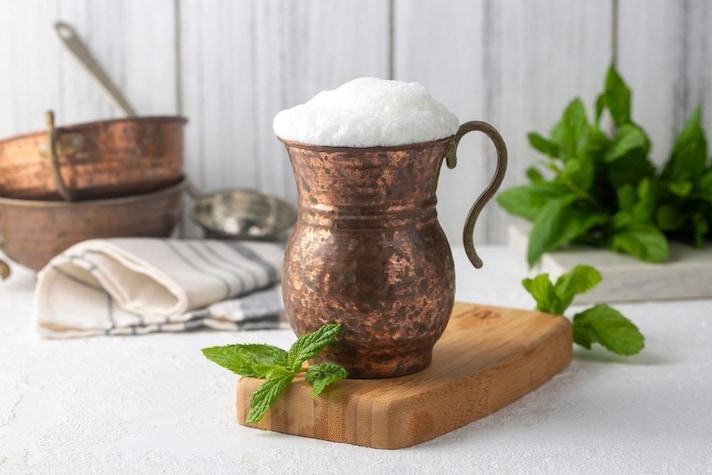
Despite being made with yogurt, doogh is traditionally served as a meal accompaniment in Iranian cuisine. While it can be enjoyed as an aperitif or on its own, it's typically consumed at the table. Its refreshing flavor and tart notes make it a perfect match for the rich, spicy flavors of Iranian and Middle Eastern cuisine.
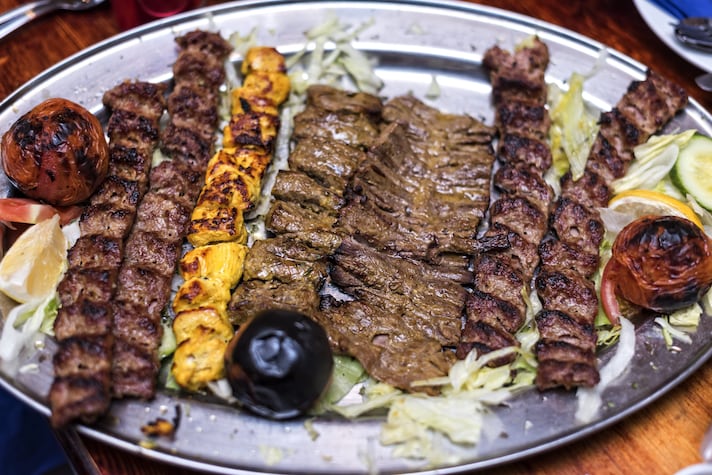
One of the most classic pairings is drinking doogh when eating kebab, especially with chelow kebab, Iran's national dish consisting of saffron-flavored white rice and grilled meat skewers. Speaking of rice and rice and meat: doogh is always on the table when preparing these two dishes, even more so if they are flavored with spices like saffron, aromatic herbs, or dried fruit, and, in the case of meat, if it is grilled or roasted. Doogh is also useful as an accompaniment to particularly spicy dishes, such as stews, because milk has the property of toning down the sensation of spiciness and strong flavors. It also pairs well with vegetable-based dishes, such as kashk bademjan, an Iranian specialty prepared with eggplant and kashk, the traditional ingredient obtained from the processing of fermented milk, which gives the dish its characteristic acidic flavor.

