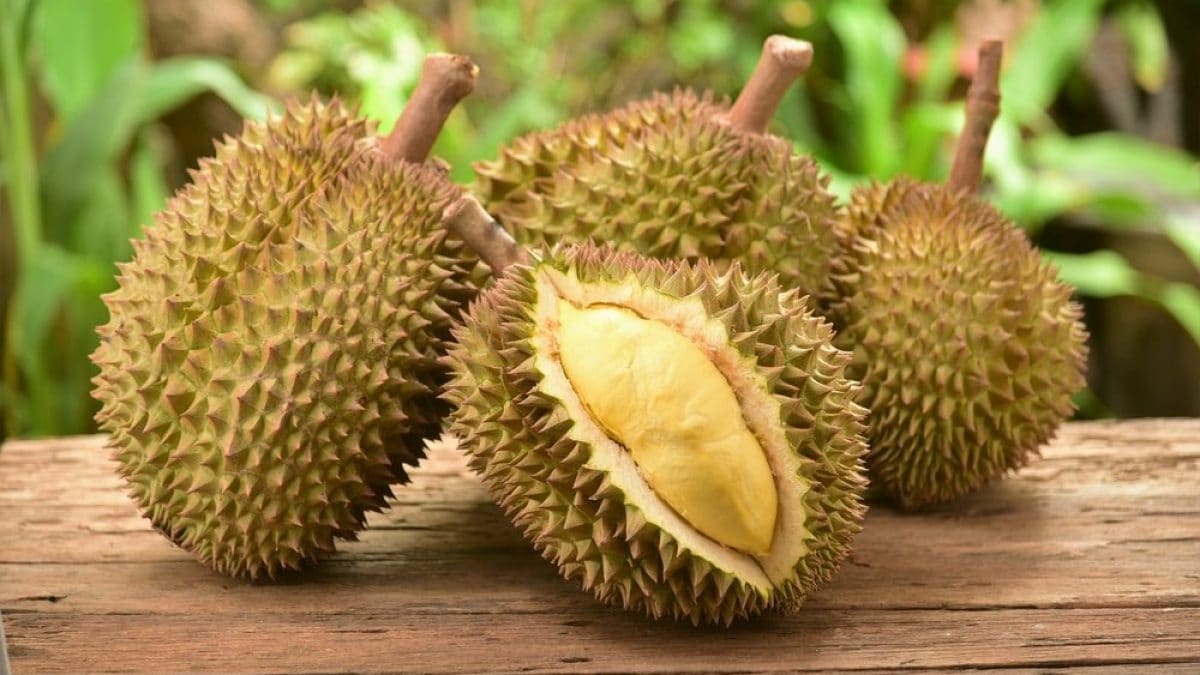
There's a fruit that's just starting to appear on Western markets, but it's not yet very widespread (luckily, you'll soon add), while in Southeast Asia it's particularly loved and consumed. It's called durian, and apparently, it has no positive aspects: expensive, sticky, with a peel full of thorns and a strangely textured flesh, it's become famous above all for its truly awful natural odor.
The stench is so strong that, in almost all of Southeast Asia, it is forbidden to eat it on public transport and in public places, precisely to avoid "infecting" people with its odor. So what is it that makes durian so popular in its homeland? Those who have managed to look beyond the smell and taste the fruit swear that it actually tastes very good. Furthermore, it has a truly rich nutritional profile, so much so that a few years ago a Thai space project sent baked durian into orbit to study its behavior with a view to including it in the astronauts' diet.
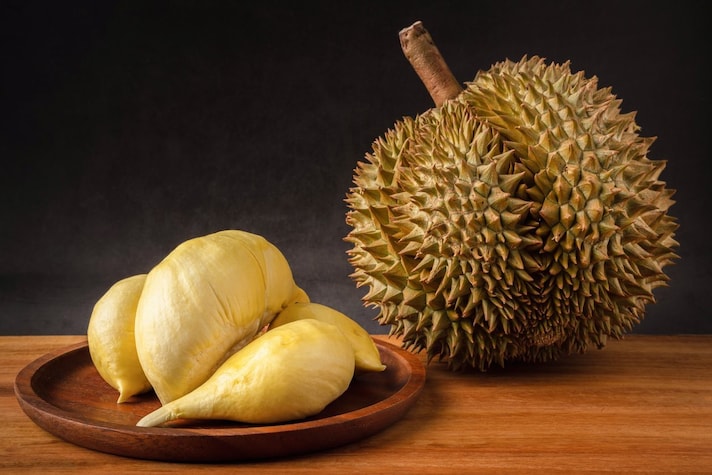
So durian does indeed have some positive qualities, despite being mostly known for its more "negative" characteristics, including its cost: while it's easy to imagine that it's rare in the West and therefore sold for several dozen dollars per kilo (even 60 dollars), in reality it's not an economical fruit even in its producing countries, where it can be found for around 10 dollars per kilo. Not a popular price, especially considering that the average worker here earns the equivalent of just over 230 dollars a month, but it's dictated above all by the rarity of the product, which grows on a tree that produces fruit once every three years.
Yet the durian market consistently exceeds half a billion dollars a year, with over 400 tons of this stinky bomb traded worldwide. What are the characteristics that make durian so popular despite everything, and how do you eat such a unique fruit? Here's everything you need to know about the world's smelliest fruit.
What is Durian?
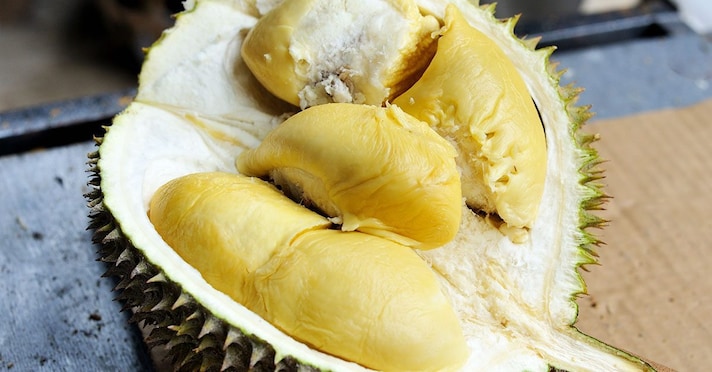
Durian, a word derived from the Malay duri (thorns), is a fruit typical of Southeast Asia that can weigh up to 3 kilos, be 30 centimeters long, and have a diameter of 15 centimeters. It grows on trees that can reach 40 meters in height, and for this reason, the fruit is usually harvested after it has fallen naturally, once it has reached maturity. Ovoid in shape, protective gloves are required to handle it due to the large number of thorns on the peel.
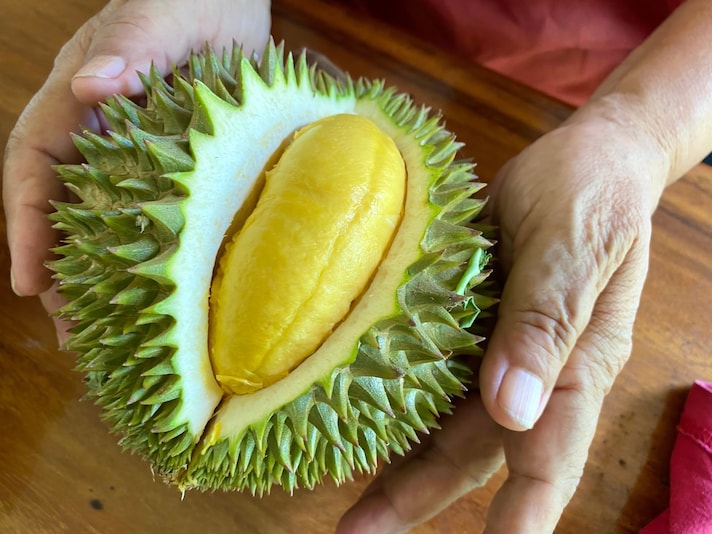
Once past the spiny shell, you'll find the pulp and seed, both edible parts of the durian. Depending on the species, it appears straw-yellow or reddish in color, with a particularly soft and creamy consistency, reminiscent of butter or a ripe avocado. It's no coincidence that one of the techniques for determining whether the fruit is ripe is to shake it (using protective shakers) to detect any internal movements. If you feel any, it means the durian is ripe and ready to eat.
The first written representation that described it that reached the West dates back to 1300, when a Venetian merchant spoke of it in this way upon returning from a trip to Sumatra: “… they (the inhabitants of the island, ed.) have a green fruit that they call Duriano which is green and the size of a watermelon, in the middle of which, when opened, you find five fruits like sarian oranges, but a little longer, of excellent flavour, which when eaten seem like curdled butter”.
Why Does Durian Have Such an Unpleasant Smell?
In Southeast Asia, including Indonesia, India, and New Guinea, it's not uncommon to find durian street vendors: most set up their stalls on the roadside, allowing its pungent (and repulsive) odor to waft through the air without catching the noses of passersby and tourists, thus deterring them from approaching. In supermarkets, however, durian is sold tightly sealed in special packaging, which, however, only limits the spread of its distinctive odor. In the countries where durian is consumed, national laws even prohibit the transport of durian on public transport, and most hotels don't allow guests to bring the fruit into their rooms.
Certainly not the most appropriate treatment for what locals consider the king of fruits, but necessary "containment" measures to ensure that people (especially foreigners) aren't nauseated by its odor. But what does durian smell like that makes it so unbearable? Those who have smelled it have described various odors; some compare it to spoiled cheese, some to mold, but some even recall the smell of feet or gasoline. The late French chef Anthony Bourdain's famous comment, after tasting durian, that "your breath will smell like you've French-kissed your dead grandmother," became famous.
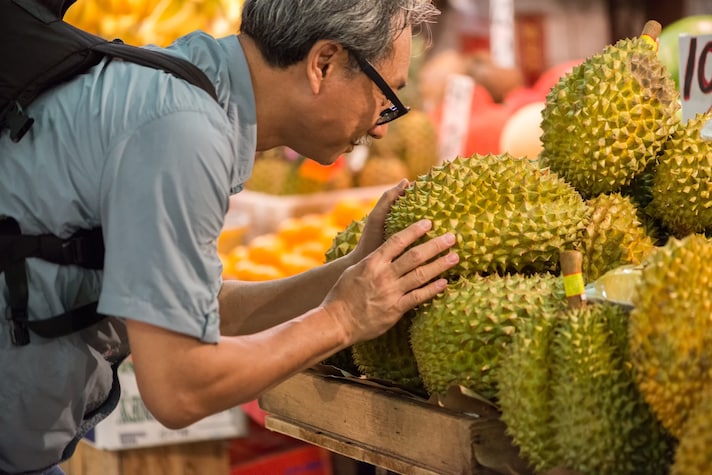
Not exactly the best advertisement for this fruit, which not everyone dares to taste after inhaling its peculiar stench. And if you're wondering why durian has such a terrible smell, know that there's no real explanation: many studies have attempted to understand why the fruit's volatile substances, released when it's opened, are so smelly, but no specific reason has been identified. Many studies have concluded that durian contains many compounds that, taken individually, should smell good, but together they produce a nauseating odor. Essentially, therefore, it's simply a quirk of genetics and nature.
What Does Durian Taste Like and Why Is It So Popular, Despite Everything
In light of all this, you might spontaneously wonder how a fruit with such an unbearable smell can be so successful in Southeast Asian countries, where it is firmly embedded in the local gastronomic culture. The secrets to its success are two: its flavor and its nutritional profile. Regarding its flavor, there are conflicting opinions: some hate it, like chef Bourdain, and others swear that, if you can force yourself to get past the smell, once in your mouth it is very good, with a creamy consistency and a flavor comparable to an incredible variety of foods. Some people compare it to onion, others to coconut or pineapple, some compare it to mango, carrot, chicken or potatoes, some think it reminds them of eggs, others even of popcorn.
In short, it's a rather difficult taste to perceive clearly, and perhaps this complex range of taste sensations is the secret to durian's success. Added to this, durian's nutritional profile makes it a veritable health powerhouse: it's a powerhouse of vitamins C and B, carotenoids, anthocyanins (pigments with antioxidant and anti-aging properties), and flavonoids (molecules that reduce the risk of chronic diseases). It's also a powerful cholesterol regulator and helps prevent atherosclerosis. A true king of fruits, despite its more negative characteristics.
How to Use Durian in Cooking
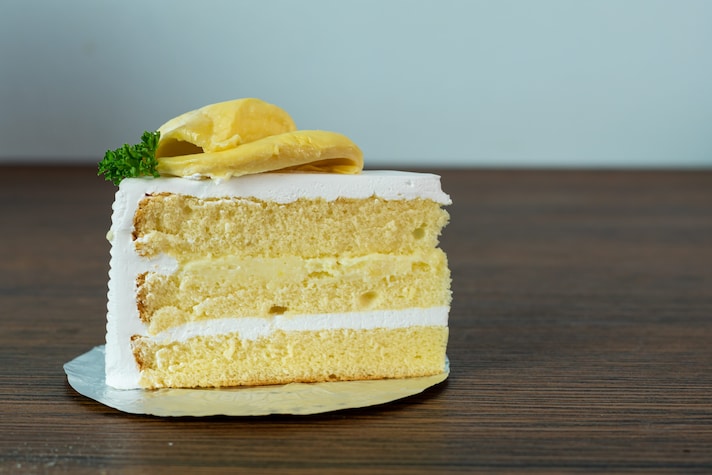
Another of the peculiarities that makes durian so popular in the countries where it is grown and traded is its great versatility in the kitchen: it is used in both sweet and savory recipes, and can be eaten in its entirety, both the pulp, which is generally eaten raw, and the hard seed inside, which is only edible when cooked (boiled or roasted). In Southeast Asia, you can find durian inside a wide variety of sweets, from biscuits to cakes, to prepare juices and sweets, and even in ice creams made with this fruit. As for savory dishes, however, it is common to use durian in the preparation of rice or fish soups, or in some areas (for example, Sumatra), it is common to use the dried pulp to make crunchy chips; in Malaysia, it is also found as the basis for sweetened or savory preserves.
;Resize,width=767;)
