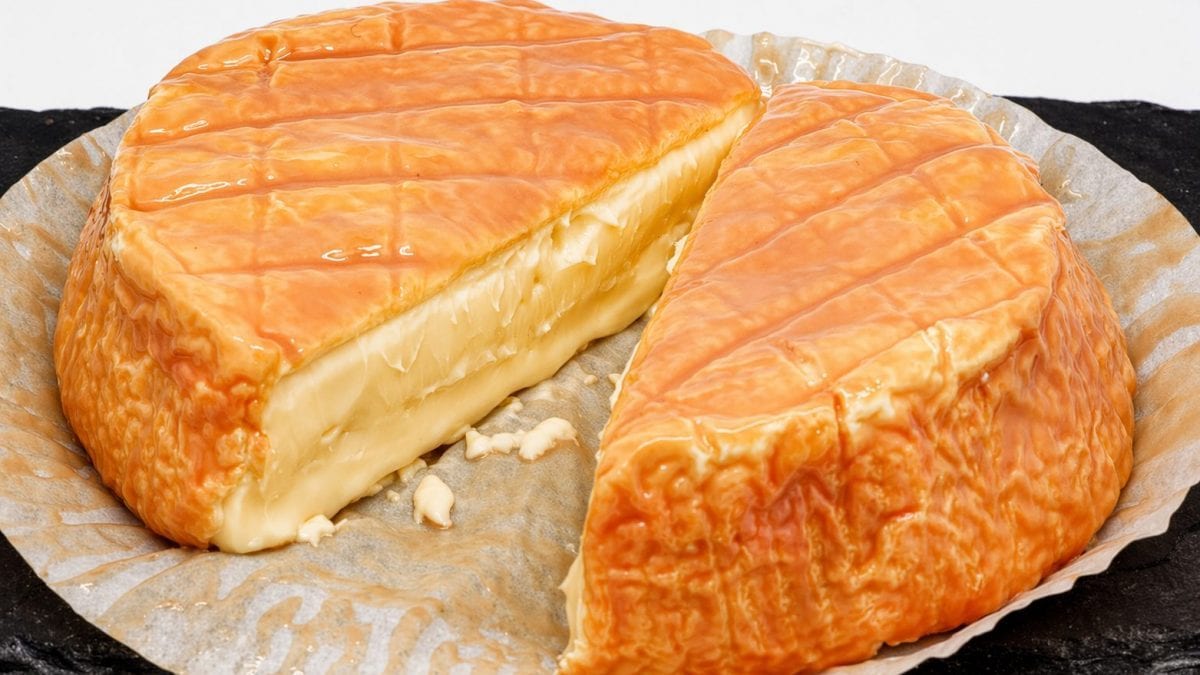
France is known as the land of cheese, and for good reason. The French produce over a thousand varieties, with true excellences such as Comté, Roquefort, Brie, and Camembert, internationally renowned cheeses enhanced by certifications such as AOC, the French quality mark that stands for Appellation d'Origine Contrôlée, and AOP, the European certification of protected origin that stands for Appellation d'Origine Protégée. Today we want to introduce you to one of the many excellent French cheeses, but less well-known than the ones mentioned above: Époisses de Bourgogne, a soft, washed-rind cheese that takes its name from its homeland, the small town of Époisses located in the Burgundy region, an area renowned for its rich cuisine, local produce, and, of course, its wines and spirits.
With an intense, penetrating aroma and a flavor more delicate than its scent suggests, yet rich and complex, Époisses de Bourgogne has ancient origins: it was produced by the monks of the local abbey as early as the 16th century, then fell into disuse, only to return to popularity in the 19th century, when farmers resumed its production, passing down the manufacturing techniques from generation to generation. Today, Époisses de Bourgogne is a great example of French cheesemaking excellence, and also one of the most expensive cheeses, generally ranging from 60 euros to over 80 dollars per kg. Why is it so expensive, what are its characteristics, and how is it best consumed? Let's reveal all the secrets of Époisses de Bourgogne.
What is Époisses de Bourgogne and Where Does It Come From?
Époisses de Bourgogne is a soft cheese with lactic curd and a washed rind, produced with whole cow's milk from cows of the Brune, Montbéliarde or Simmental Française breeds raised in Burgundy; its production area, in fact, is closely linked to the region of origin and includes part of the departments of Côte d'Or, Yonne and Haute -Marne.
The cheese, which boasts two certifications of excellence (AOP and AOC), is among the oldest cheeses of Burgundy and is considered one of the historic cheeses of the French tradition: it dates back to the 16th century, when it was produced by the Cistercian monks who lived in the Abbey of Époisses.
When the monks left the area, they passed the recipe on to the local farmers, especially the village women: tradition holds that it was they who refined and perfected its production over the following centuries. The cheese's fame grew until it attracted the attention of France's most illustrious tables —it is said to have been served at the court of Louis XIV, introduced by the Count of Guitaut, and later became one of Napoleon Bonaparte's favorite cheeses—and in the early 19th century, it was dubbed the "king of cheeses" by the famous gastronome Brillat-Savarin.

Until the early 1900s, Époisses de Bourgogne was a renowned excellence, with around 300 small producers of this prized cheese. However, the First World War left farmers and producers with little time and energy to manage its complex production process. This marked the beginning of a major crisis for Époisses de Bourgogne, so much so that by the 1950s, the cheese had practically disappeared from the market.
Its memory, however, was not lost: a resident of Époisses decided to recover the cheese and produce it again, drawing on the experience and know-how of older producers to restore it to its former excellence. It's a story with a happy ending, because not only is Époisses de Bourgogne once again available on the market—among the most well-known is the one produced by Gaugry— but it has also been awarded important quality certifications that guarantee its origin and production method, particularly the AOP and the AOC, which is the French mark of origin.
All of Époisses de Bourgogne's Production Secrets
The production of Époisses de Bourgogne is closely linked to its territory of origin, Burgundy, and although it is a cheese that is marketed internationally, it remains a niche product: there are only four recognized producers, who make the cheese according to ancient methods and respecting the AOCE standards, producing around 900 tons of Époisses de Bourgogne per year; of these four, three are industrial productions, while one is an “Époisses Fermier”, or cheese produced on the farm and therefore even more of a niche.
Why is a cheese with such an ancient history and so renowned for its organoleptic characteristics produced by so few cheesemakers? Because Époisses de Bourgogne requires a long, careful, and unique process. The milk, collected from cows raised on 80% of the feed sourced within the production area and grazed throughout the entire period on at least 50% pasture and green grass, is initially heated to around 86°F/30°C and undergoes a very slow curdling process, lasting from 16 to 24 hours. Once the resting period is over, the whey is drained, another rather lengthy process: first, the curd is placed in molding containers, equipped with special holes that allow the whey to be eliminated naturally and gradually; this step is crucial for the cheese's final consistency and structure and takes around 48 hours.

After two days, and after being turned twice, the cheese is dry-salted and then left to dry in a cool, ventilated room, where it is placed on straw. The final stage is maturation: it takes place in cool, humid environments (traditionally cellars or maturation rooms), where each wheel is washed three times a week with water that, in the final stages, is enriched with Marc de Bourgogne, a prized brandy that gives the cheese its natural brick-red color due to the pigmentation of surface bacteria. After approximately 28 days, during which it acquires its characteristic orange hue, the Époisses de Bourgogne is finally ready.
Why Does Époisses de Bourgogne Cost So Much?
Époisses de Bourgogne is a very expensive cheese: its price generally ranges from 70 to over 90 dollars per kg, and a standard 250-gram package often costs between 17 and 25 dollars, placing this specialty at the high end of French cheeses. What accounts for this high selling price? The high price of Époisses de Bourgogne is the result of a combination of production, regulatory, and gastronomic factors that limit its supply and increase its perceived value.
First of all, the production regulations themselves make it a niche cheese, produced only in a very limited geographical area of Burgundy, with milk from select breeds and strict animal feeding requirements. These territorial constraints are necessary to maintain its quality and authenticity, but they also significantly reduce the volumes available. Added to this is the processing of Époisses de Bourgogne, which, as we've explained, is slow and artisanal, with fairly long resting and maturing periods and manual processes that require time and great expertise.
Furthermore, it must be considered that the yield is relatively low: the use of whole milk and traditional techniques leads to a limited production per unit of milk, increasing the cost per wheel; furthermore, production is concentrated in very few dairies (only a few licensed producers), which creates a structural scarcity. Finally, the gastronomic value of the cheese must be considered, which is a decisive factor in its final price. Époisses de Bourgogne, precisely because of its intense, complex, and multifaceted organoleptic profile, is considered truly unique in the world of cheeses and is highly sought after in haute cuisine. The high demand, combined with the limited quantities produced and the artisanal production process, therefore makes Époisses de Bourgogne not only one of the most prized French cheeses, but also one of the most expensive.

Époisses de Bourgogne's Taste, Texture and Aromatic Profile
The taste, texture, and rich aromatic profile of Époisses de Bourgogne are what make this cheese so unique, sought-after, and appreciated well beyond the borders of France. It comes in two cylindrical forms, a smaller one weighing between 250 and 350g and a larger one weighing between 700 and 1100g, with a washed, smooth or slightly wrinkled outer rind, ivory-colored, tending toward orange or brick red, and a soft, unctuous, light beige-colored, and slightly salty interior.
The first striking characteristic of Époisses de Bourgogne is its unmistakable aroma: it is intense and penetrating (which is why not everyone appreciates it), with notes reminiscent of wet straw and umami, but with a more pleasant underlying aroma, with traces of dried fruit and hazelnut. On the palate, the cheese has an even fuller and more complex flavor, which is particularly delicate compared to its strong aroma: it is very rich, with a flavor halfway between sweet and salty, reminiscent of cooked butter and cream, with an aftertaste of dried fruit and a slightly spicy finish.
There is also a hint of alcoholic and vinous flavors, derived from washing the cheese with Marc de Bourgogne, a brandy obtained from the distillation of the pomace, that is, the skins, seeds, and stalks that remain after pressing the grapes. Another peculiarity of Époisses de Bourgogne is its consistency, one of its most beloved characteristics: the cheese is incredibly creamy and smooth, almost like a dessert, a softness that contrasts with the slightly rubbery rind, making this cheese even more of a product of high gastronomic value.

How to Best Enjoy and Pair Époisses de Bourgogne
Époisses de Bourgogne expresses its qualities best when consumed at room temperature (around 64-68°F/18–20°C), an essential condition for the cheese to reach its typical creamy consistency and fully release its complex aromatic bouquet. It is therefore advisable to remove it from the refrigerator at least 45–60 minutes before serving. It is traditionally enjoyed by spoonful when very ripe, either on its own or spread on lightly toasted rustic bread, baguettes, or crackers, often by removing the top crust and scooping the creamy interior directly from the inside of the cheese with a teaspoon.
Époisses de Bourgogne is also an excellent ingredient for more complex recipes. A classic recipe involves heating the cheese in the oven to create a particularly flavorful fondue: it's made by piercing the crust, adding garlic and rosemary, drizzling with a little white wine or Marc de Bourgogne, and baking the cheese until the inside becomes creamy. This French cheese is also used in savory pies, paired with potatoes, onions, and bacon. It's excellent for making flavorful soufflés, especially when enriched with walnuts. It can also be melted in quiche fillings or used to flavor pasta dishes with particularly creamy sauces.
Precisely because of its production process, which includes treatment with Marc de Bourgogne, Époisses de Bourgogne pairs particularly well with wines, but which are best suited to support and harmonize the rich structure and pronounced aromas of this cheese? The ideal pairing is with fresh, structured white wines, such as those from Burgundy (for example, oak-aged Chardonnay), which, thanks to their acidity, cleanse the palate and enhance the lactic, buttery notes. Alternatively, light, low-tannin red wines can work, but it is especially with more structured or slightly oxidative wines that an interesting dialogue is created. Historically, the most distinctive pairing is with Marc de Bourgogne, also used in the cheesemaking process: its warm, alcoholic character amplifies the aromatic notes of the washed rind, creating a unique sensorial continuity. If you're looking for a more unique pairing, try pairing the Époisses de Bourgogne with a glass of Normandy or Brittany apple cider: with its natural sweetness and bubbles, it can refresh the palate and counteract the creaminess of the cheese.
;Resize,width=767;)
