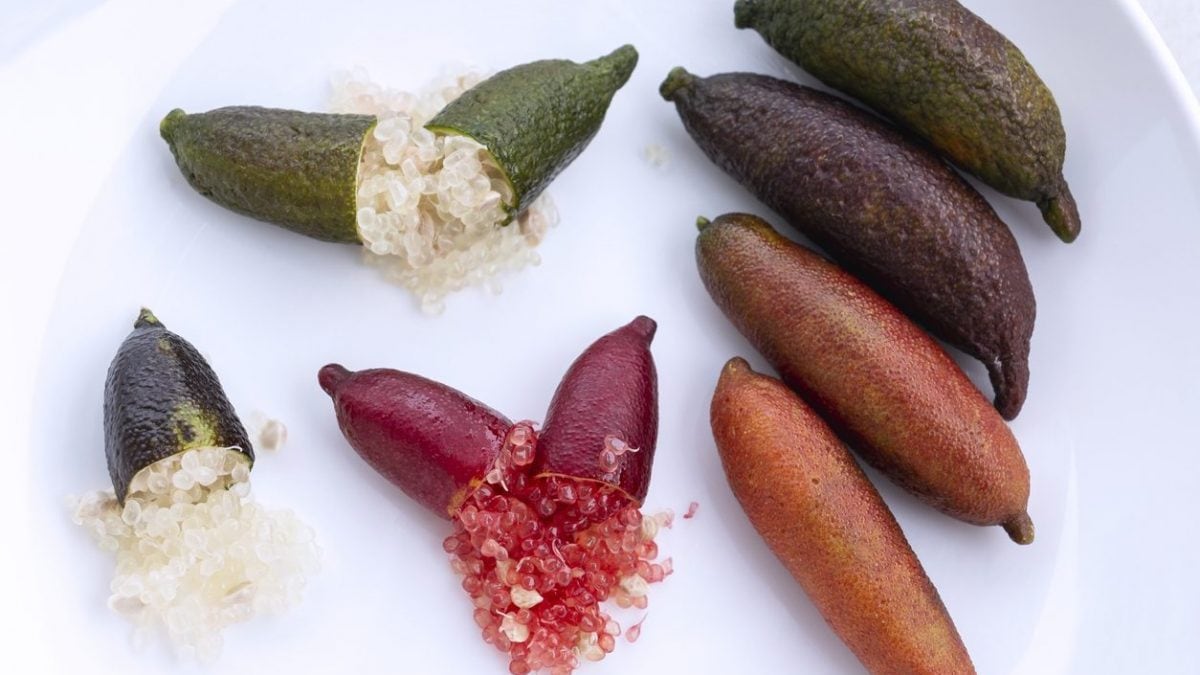
Chefs from all over the world are in love with it, and there's no high-end restaurant that doesn't offer it: we're talking about the finger lime, a citrus fruit of ancient Australian origins with a distinctively tangy and refreshing flavor. The finger lime, scientific name Microcitrus australasica, is also known as lemon caviar, due to the consistency of its pulp composed of tiny pearls. Used by Aboriginal communities for its numerous beneficial properties, the finger lime is sure to get a lot of buzz: let's find out everything there is to know about the finger lime, from the different varieties to its possible uses in the kitchen.
Finger Lime, The Citrus Fruit You Don't Expect
Native to the subtropical coastal areas of Australia, the finger lime is the latest rising star of international cuisine that everyone's talking about. A citrus fruit that was until recently unknown to most, whose plant grew wild only in certain areas of Kangaroo Island, the finger lime is a citrus fruit with a decidedly unique appearance and flavor: the fruit, more or less long depending on the ripeness of the plant, resembles very squat fingers in shape; inside the fruit we find the pulp composed of tiny pearl-like balls, true concentrates of flavor and aroma. What does the finger lime taste like? We're talking about a citrus fruit with a tart flavor and a fragrant, pungent aroma whose range of flavors varies between lime and grapefruit, even passing through a tangy pomegranate.

Finger Lime Varieties
Also known in the culinary world as caviar lemon due to the characteristic shape of its pulp which is reminiscent of caviar, the finger lime comes in four different varieties, each suitable for a specific use:
- Emerald: dark green fruit skin and bright emerald green internal pearls, the emerald variety is the most used in cooking, particularly in combination with fish and shellfish.
- Byron Sunrise: highly prized in pastry making, this variety is recognizable by its red pearls and its flavor reminiscent of pomegranate.
- Pink Ice: pink zest and pulp, and a flavor reminiscent of the aroma and scent of grapefruit. Much loved in the world of cocktails.
- Yellow Gold: Green skin and yellow, golden flesh. This variety is often used as a lemon substitute because it is very similar in flavor.
Properties and Benefits
Like all citrus fruits, finger limes boast a significant nutritional profile and numerous beneficial properties. Rich in minerals such as sodium, calcium, iron, and potassium, as well as vitamin C, vitamin B1, and vitamin B2, finger limes are primarily water, which is why they are low in calories and have a diuretic and purifying effect. A valuable ally of our immune system, finger limes were widely used in natural medicine by Aboriginal populations, particularly to protect and stimulate skin collagen and vision. Last but not least, finger limes are antioxidant and antibacterial, and thanks to the presence of folic acid, they are particularly recommended during pregnancy. What have we forgotten? Just a few drops are enough to achieve an incredible and immediate refreshing and thirst-quenching effect.

Uses in Cooking
How to use this curious ingredient in the kitchen? The pulp of the finger lime is consumed, which can be extracted after cutting or squeezing the fruit. Fresh, tangy, and almost spicy, the finger lime, due to its intense flavor, is often used as a decoration or garnish for dishes, adding an aromatic and refreshing note. Those who have decided to experiment with this citrus fruit in more elaborate dishes assure us that the finger lime pairs perfectly with fresh fish, especially products like salmon, whose sweetness finds the perfect balance with the acidity of the lemon caviar. How much? Just a few pearls of pulp are enough to make your dish simply unforgettable.

;Resize,width=767;)
