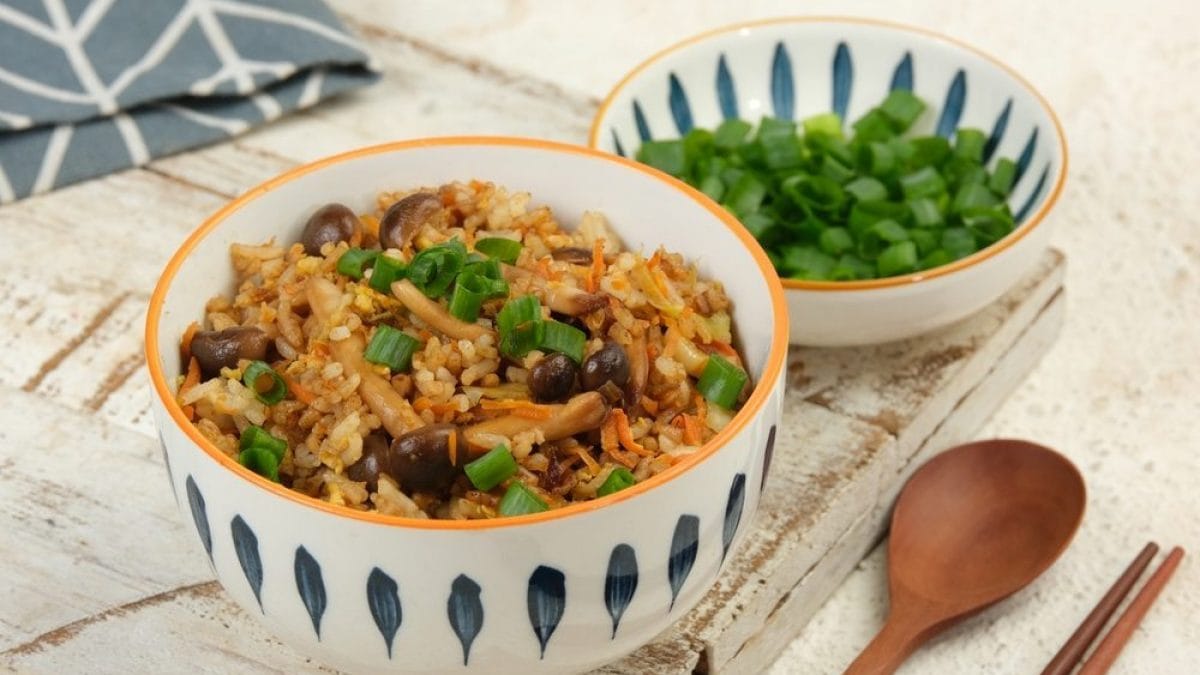
You've probably seen a movie or animated series set in Japan, and you've surely noticed how Japanese tables always feature a bowl full of white rice. This represents one of the most deeply rooted Japanese food customs, where rice isn't just a staple in other recipes, but an essential part of every meal, much like our bread. An integral part of the country's cultural and spiritual identity, a symbol of prosperity and gratitude, so much so that it's often offered during religious ceremonies, white rice, or rather gohan rice, is a staple of every meal, from breakfast to dinner.

Be careful not to mistake it for simple boiled rice, because gohan is not the classic white rice we're used to cooking in the U.S.: the dish requires a long cooking process that requires care and attention to achieve the right consistency, and it's not made with just any rice, but with short-grain Japanese rice, ideal for achieving the right soft and elastic consistency. It's precisely this consistency that makes gohan a "companion" rice, to be used alone or alongside other typical Japanese dishes, or as a base for sushi. Here's a guide to better understand this iconic Japanese white rice, from its history to how to prepare it, and how to use it in the kitchen.
What is Gohan Rice and Why It's Called Like That?
Gohan rice is typical Japanese steamed white rice, a staple in the Japanese diet, often used as a neutral and versatile side dish made with short-grain rice varieties, washed and cooked without seasoning (or almost). The importance and use of gohan rice for the Japanese are on a par with that of bread in American cuisine, so much so that the word "gohan" is used not only to refer to this preparation, but in general is synonymous with meal, food in general: asa-gohan is in fact the morning meal, i.e., breakfast; hiru-gohan the meal of the day, i.e., lunch; ban-gohan, the evening meal, i.e., dinner.

A bowl of white rice is rarely missing from any Japanese table, whether eaten alone or as an accompaniment to grilled meat, roasted fish, or raw fish. Just as bread is always on the table in our country and can be eaten alone or combined with other ingredients, gohan rice also fulfills this function for the Japanese. A concrete example of this bread-like use are onigiri, the classic white rice balls seen in anime and manga, prepared with ghoan and used by the Japanese as a packed lunch, exactly the same way Americans use sandwiches.
Gohan Rice Vs. Other Rice Varieties
The key to preparing gohan rice is choosing the right rice, as not all varieties are suitable for the right consistency. Gohan rice is short-grained, very fine, and perfectly white, pearly, almost translucent. The flavor is strictly neutral and non-aromatic, clean but fragrant in the mouth, and the consistency after cooking should be springy, almost "sticky," which is also why it is easier to eat with chopsticks.
In Japan, gohan is typically prepared with shari rice, a round, plump variety that holds its shape perfectly when cooked and contains just the right amount of starch. Its price can be a bit high, but you can alternatively use Calrose rice, a particular American rice with short, round grains (the Japonica variety), known for its high capacity for absorbing liquids and releasing starch, which makes it creamy and soft.

Avoid all types of rice with longer grains, the ones you typically use for salads, risottos, or side dishes. These types don't have the right amount of starch to become as sticky and compact as short-grain rice, a consistency we've explained is essential to Japanese cuisine because the grains must bind together, both to be eaten with chopsticks and to be compacted in other recipes, such as sushi. Long-grain rice tends to remain separated, making it difficult to prepare the traditional dish and the culinary experience.
How to Cook Gohan Rice
Gohan rice might look like classic white rice, but the preparation process is decidedly different from ours, which simply involves placing the rice in boiling water and letting it cook. To achieve the right flavor and consistency, gohan must be steamed following a precise procedure.
The very first step is to wash the rice in cold water, then soak it until the water turns milky; this process must be repeated at least three times to thoroughly clean the rice. Unlike our rice recipes, which require a lot of water, remember that the ratio for gohan must be equal. Once these preliminary preparations are complete, it's time to proceed with cooking, using a technique called pilaf: start with cold water until the liquid is completely absorbed; the ratio is 50-50 because using too much water risks overcooking and causing the rice to fall apart; using too little water risks having undercooked rice, still raw at the core.

Once the water and rice are boiling, close the lid and lower the heat until the water is completely absorbed by the rice: this will take about 10 minutes. Then turn off the heat and let the rice rest for about ten minutes. At this point, the rice is ready and, if you've cooked it properly, the grains will have retained some consistency, clumping together into a soft, fluffy mixture that's firm enough to eat with chopsticks. How do you know if gohan rice has been cooked properly? I take a grain between my index finger and thumb: if you can press it without too much difficulty, you've achieved the right consistency.
Traditional Recipes With Gohan Rice
The most typical way to consume gohan rice is hot and steaming in a ceramic bowl, on its own and without seasoning (at most dusted with a dried compound called furikake) but accompanied by other dishes, for example a miso soup and two slices of grilled salmon: this way you will have the most highly representative meal of everyday Japanese home cooking. Gohan rice is highly versatile, so in addition to being eaten on its own, it is ideal as an accompaniment to any meat or fish dish, but precisely because of its consistency, it is excellent as a base for other Japanese recipes, for example the aforementioned onigiri or, with the addition of rice vinegar and sugar, it is perfect for sushi.

Gohan Rice Vs. Sushi Rice
Speaking of sushi, you might wonder whether gohan rice and sushi rice are the same thing or whether they have some differences. The answer is simple: there's no real difference: gohan rice, as we've explained, isn't a type of rice but a term that refers to simple steamed white rice. In fact, gohan rice is the rice used for sushi, a preparation that requires a specific type of short/medium grain rice and a "sticky" consistency that allows it to be shaped. The only real difference is that gohan rice, intended for meals, is served unseasoned, while if it's used as an ingredient in sushi, it's seasoned with a mixture of rice vinegar, sugar, and salt, transforming into shari, which has a slightly tart and sweet flavor and a consistency that allows it to be shaped into nigiri, hosomaki, and all the other typical sushi recipes.

;Resize,width=767;)
