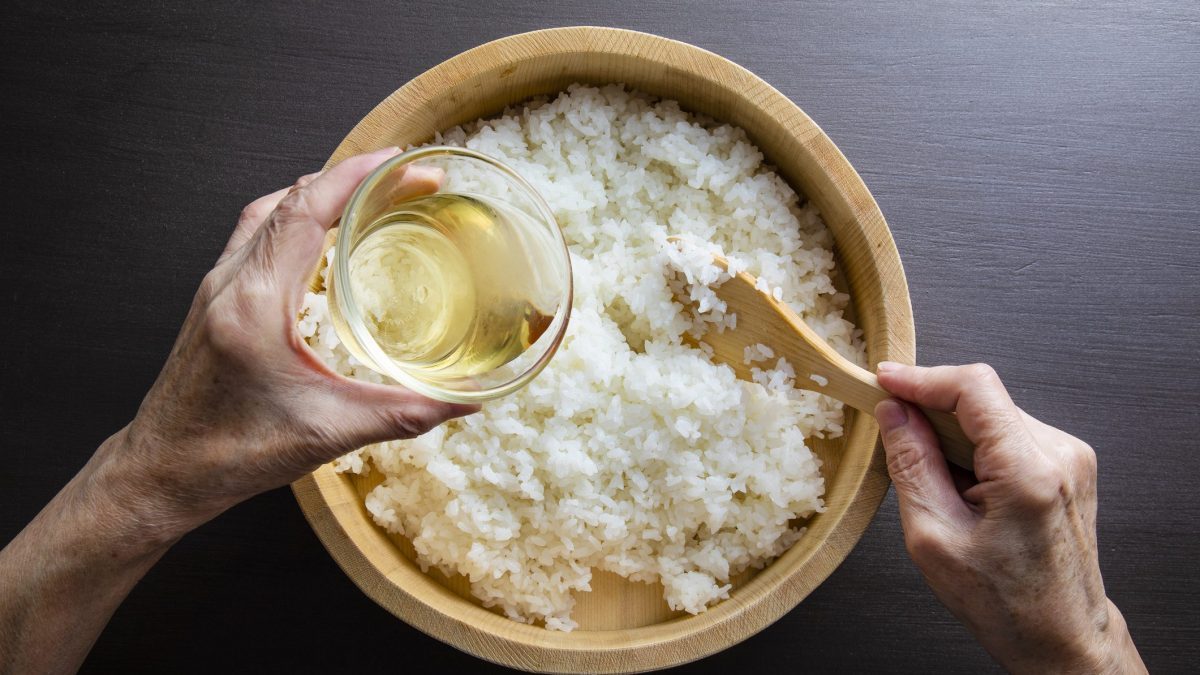
Are you a sushi lover and can't wait for the weekend to arrive so you can eat it at a great Japanese restaurant? Have you ever considered that behind this dish there's more than just the freshest fish, but an ingredient that ties it all together? We're talking about rice vinegar: an ancient, elegant, surprising, and versatile condiment that deserves a place of honor in your kitchen too.
A Bit of History and Tradition
To understand the history of this product, we need to travel back in time to China around 2,000 years ago. It was already being used there thanks to the fermentation of cooked rice. From the various historical sources in our possession, we know that the first documents mentioning rice vinegar date back to the Qin and Han dynasties. Here, rice was already a staple food, if not the main one, and was eaten every day. Rice vinegar was used not only for flavor, but also as a preservative. We're talking about a time when refrigerators and freezers did not exist, and food refrigeration techniques were still in their infancy.

Thanks to rice vinegar, foods like fish, meat, and vegetables could be preserved for longer. From China, it reached Japan, where it found its peak expression. It was here that it became essential for preserving fish: rice seasoned with vinegar helped extend its shelf life, giving rise to what we know today as sushi. In short, to put it bluntly, without rice vinegar, sushi would never have existed. Established in the 6th century, this product was also used for "hygienic" purposes. Its acidity curbed bacterial growth, making rice vinegar an indispensable ingredient in Asian cuisines.
How to Obtain It and How to Use It in The Kitchen
Making rice vinegar requires time, precision, and finesse. After cooking, the rice is cooled and combined with a microorganism similar to koji (a fungus used to make nihonshu, the fermented rice known as sake). The starches are converted into sugars, which, thanks to the action of yeast, are converted into alcohol. Instead of being transformed into a beverage, in this case the liquid is left to mature and inoculated with acetic acid bacteria, which convert the alcohol into rice vinegar.

There are several types: light, amber, or dark, obtained from the glutinous black rice common in China and Vietnam. This process creates a condiment that over the centuries has become a staple in many Asian cuisines and is becoming increasingly popular in the West. Besides sushi, rice vinegar is used in condiments (combined with soy sauce) and creates a simple and very flavorful dressing, typical of dumplings like gyoza. It can also be used in soups and hot dishes: a teaspoon is enough to add freshness and contrast, without overpowering.
;Resize,width=767;)
